
Indian cobra
Naja naja
Description
How to identify
The Indian cobra, scientifically known as Naja naja, is one of the most iconic venomous snakes belonging to the Elapidae family.
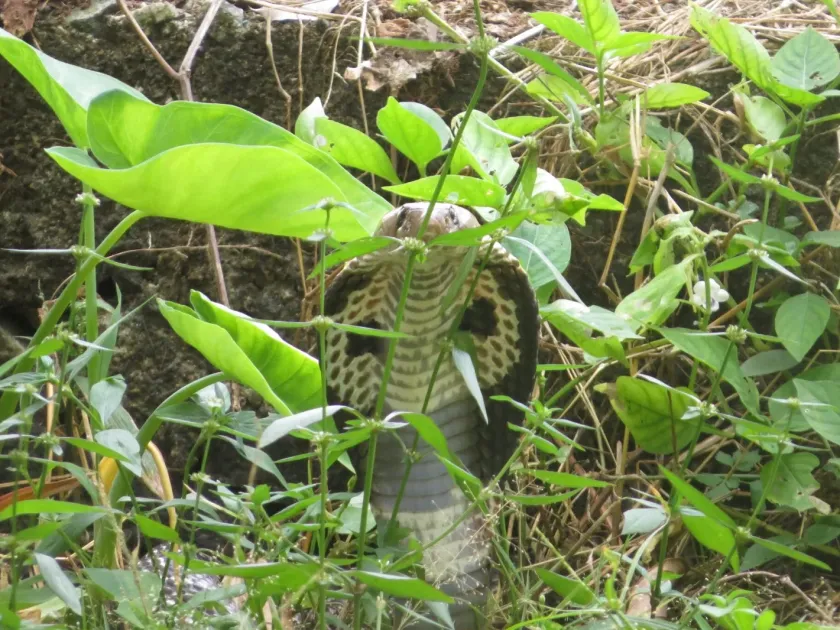
The snake is easily identified by its wide hood, which it displays when threatened, usually accompanied by a loud hissing sound to deter predators.
A distinctive spectacle-shaped mark is often visible on the dorsal surface of the hood, which is the primary feature used for field identification.
Adult individuals can grow up to 2 meters in length and possess a variety of body colorations ranging from brownish to dark grey or black.
As a highly venomous species, its biological role is primarily that of a predator, maintaining balance within its natural ecosystem.
What it damages
The Indian cobra is not classified as a plant pest; it does not consume, chew, or damage any part of crops such as rice, wheat, or sugarcane.
However, it poses a severe indirect risk to agricultural operations as its presence can lead to work stoppages and safety hazards for farm workers.
By hunting rodents, these snakes actually provide a service to agriculture, as they naturally control populations of pests that cause significant crop damage.
Their presence on farms is usually opportunistic, driven by the abundance of prey or the availability of suitable nesting sites provided by agricultural debris.
While the snakes themselves are not harmful to plants, the fear they induce in the workforce can impact labor efficiency in endemic areas.
When it appears
The activity level of Naja naja is heavily dependent on ambient temperature, showing increased movement during the warmer months of the year.
During the monsoon season, as burrows become flooded, these snakes frequently move to higher, drier ground, which may include barns or storage areas.
The mating season triggers specific behaviors, and females often seek out warm, secluded spots such as compost heaps or piles of agricultural waste to lay eggs.
Young cobras are frequently encountered during harvest time, as the removal of protective crop cover forces them to relocate across open fields.
In cooler winter months, the snakes tend to become less active and may seek refuge in deep burrows or sheltered underground areas.
Signs of infestation
One of the most obvious signs of a cobra's presence is the discovery of shed skin, which is left behind in hidden or sheltered areas on the farm.
Tracks on damp soil, especially after irrigation, can indicate the path and size of a snake moving across the agricultural land.
Warning displays, including raised hoods and loud hissing near dense vegetation or storage sheds, are definitive signs of an active snake.
Clutches of eggs discovered in organic debris or compost piles provide evidence of a breeding population in the immediate vicinity.
A sudden decline in rodent activity within specific grain storage zones can also suggest that a snake has taken up residence nearby.
Control measures
Safety is the primary objective when managing areas where the Indian cobra resides, focusing on prevention and personnel protection.
Good sanitation practices, such as removing piles of wood, rock, or organic waste, significantly reduce the number of potential hiding spots.
Farm workers should be equipped with appropriate personal protective equipment, including thick leather boots and trousers, when working in fields.
- Implement rodent control programs to eliminate the primary food source.
- Seal all entry points to storage buildings and farm structures.
- Maintain short grass around buildings and along field pathways.
- Provide training on snakebite prevention and emergency first-aid protocols.
Under no circumstances should non-experts attempt to capture or handle the snake; professional wildlife relocation services should be called instead.
Taxonomy
- Latin name
- Naja naja
- Family
- Elapidae
- EPPO code
- NAJANA
Discussion
No discussions yet — be the first.