
Cobra
Naja
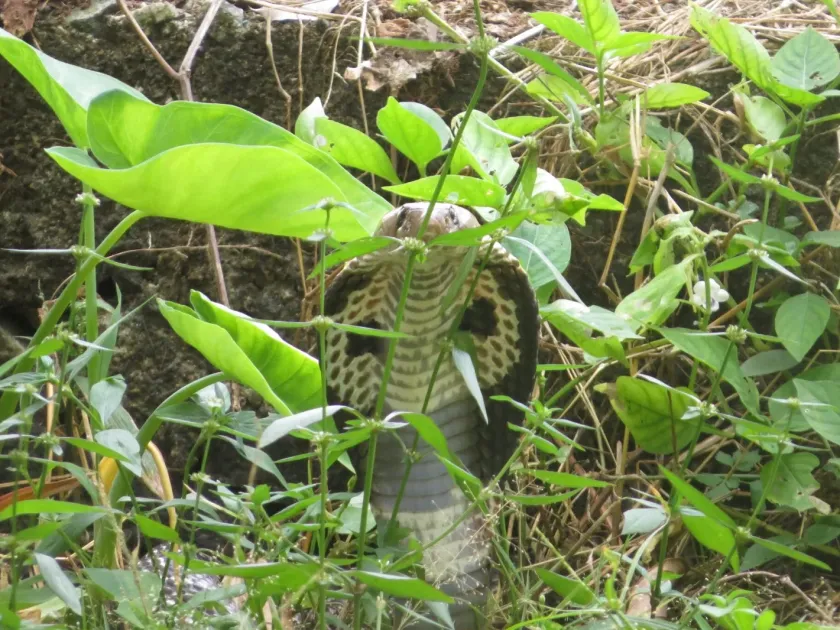
Description
How to identify
Cobra (genus Naja) refers to a group of venomous snakes belonging to the Elapidae family. While they are not classified as agricultural pests, their presence in fields is a common issue in tropical and subtropical regions.
The defining characteristic of a cobra is its ability to spread its neck ribs to form a wide, flattened hood when it feels threatened or defensive.
Adult cobras generally reach lengths of 1.5 to 2 meters, possessing colors that range from light brown to black, which provide excellent camouflage in dense vegetation.
They are primarily terrestrial but are highly capable of moving through various crop types, especially those providing dense cover like sugarcane or tall grasses.
Cobras are opportunistic predators. Their presence in agricultural landscapes is frequently driven by the availability of rodents, which are major threats to crop yields.
What it damages
Cobras do not cause direct damage to crops, as they are not herbivorous and do not feed on plant tissues, roots, or fruits during their lifecycle.
The primary agricultural impact is operational disruption, where the presence of venomous snakes forces the suspension of manual labor, harvesting, and field maintenance.
Incidental damage can occur to irrigation systems, specifically plastic tubing, if snakes use these areas as daytime shelters to escape heat and dryness.
The removal of snakes from an area can lead to an ecological imbalance, potentially triggering a population surge of rodents that cause significant economic losses.
In summary, cobras represent a logistical and safety challenge rather than a direct threat to the plant physiology or the health of the cultivated crops.
When it appears
Cobra activity is highly dependent on ambient temperature, as they are ectothermic and require environmental heat to regulate their metabolic rates.
Activity levels rise significantly during the spring and summer months, which often coincides with the peak agricultural season and vegetative growth.
Mid-summer heat forces these snakes to seek out humid environments, leading them to migrate toward irrigated fields where moisture is trapped under the crop canopy.
Reproductive behavior, including nesting and egg-laying, often happens during the summer, with females seeking secluded locations such as compost piles or debris.
As temperatures drop during the autumn, cobra activity declines as they seek out suitable environments for winter brumation, often moving away from active field areas.
Signs of infestation
One of the primary indicators of a cobra's presence is the discovery of shed snake skin (slough) found near irrigation canals or within the crop rows.
Movement trails, appearing as wavy or rhythmic patterns on soft or damp soil, are clear signs that a snake has recently passed through the field.
An unusual concentration of rodent burrows that appear abandoned or suddenly quiet may suggest the presence of a predator such as a cobra in the vicinity.
While difficult to detect for the untrained eye, a faint, musky odor may sometimes be present in areas where snakes frequently hide.
The most undeniable sign is direct visual contact with an individual snake, which requires immediate evacuation of the area and a pause in farming activities.
Control measures
The most effective management strategy is to maintain a clean field environment by removing debris, trash, and vegetation piles that offer shelter.
Regular maintenance of field margins, such as mowing weeds, significantly reduces the areas where cobras can hide or move safely.
- Mandatory use of personal protective equipment (high-cut boots and thick trousers).
- Effective rodent control to eliminate the primary food source that attracts snakes.
- Training workers on how to identify and react to snake encounters safely.
- Coordinating with professional wildlife control services if snake populations become unmanageable.
Chemical repellents are generally discouraged due to their lack of proven effectiveness and the high risk of environmental contamination of the crops.
Taxonomy
- Latin name
- Naja
- Family
- Elapidae
- EPPO code
- NAJASP
Discussion
No discussions yet — be the first.