
Coral snake
Micrurus
Description
How to identify
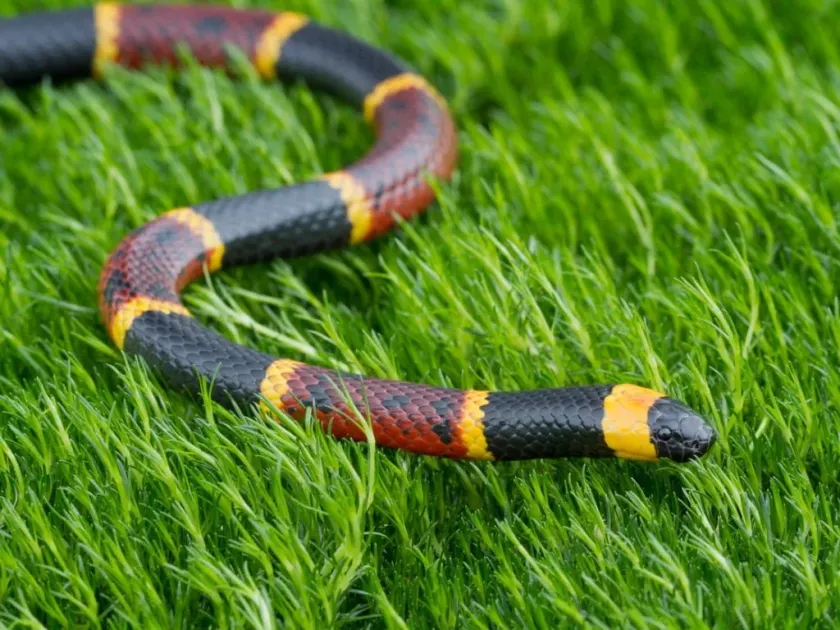
The coral snake (genus Micrurus) belongs to the Elapidae family. These venomous snakes are distinguished by their bright, ringed patterns featuring red, yellow, and black colors.
Typically measuring between 50 and 100 cm, they possess a slender body shape with a small, rounded head that does not show a distinct neck constriction.
Identification often relies on the pattern sequence; in true coral snakes, the red bands usually touch the yellow bands, a critical feature for distinguishing them from harmless lookalikes.
They are primarily elusive and reclusive, spending most of their time burrowed under soil, leaf litter, or debris in tropical or subtropical environments.
Due to their highly potent neurotoxic venom, correct identification is essential, though they rarely display aggressive behavior unless directly threatened or handled.
What it damages
It is important to state that coral snakes are not agricultural pests. They are strict carnivores that feed on other snakes, lizards, frogs, and small rodents.
These reptiles do not cause any harm to crop plants, as they have no interest in foliage, roots, fruits, or seeds, making them irrelevant to crop yield loss.
They play a role in the natural ecosystem as predators of small vertebrates, which can sometimes include pests like rodents, though they are not used as a biological control agent.
The presence of a coral snake in an agricultural area does not trigger any phyto-sanitary measures, as they have zero impact on the health or productivity of the vegetation.
Agricultural professionals should view these snakes as natural fauna that may incidentally inhabit parts of the farm, rather than as organisms to be managed.
When it appears
The seasonal activity of coral snakes is heavily influenced by humidity and soil temperature, as they are sensitive to environmental shifts.
They are most active during warm and humid periods, such as the rainy season, when movement through soil and leaf litter is facilitated by moisture.
During colder or extremely dry seasons, they become dormant and retreat into deep burrows to escape unfavorable conditions, minimizing surface activity.
Their activity patterns are independent of agricultural cycles; encounters are usually opportunistic and occur during regular field operations or land management tasks.
Because they prefer to remain concealed in shaded areas, their presence is often undetected unless specific landscape modifications force them into the open.
Control measures
There are no control measures designed for coral snakes as pests, as they do not threaten crops or agricultural infrastructure.
The primary concern regarding coral snakes is occupational health and safety; workers should be trained on how to avoid encounters in the field.
Wearing appropriate personal protective equipment, such as heavy-duty boots and gloves, is recommended when clearing dense vegetation or handling farm debris.
Avoiding the manual movement of logs, rocks, or large piles of organic waste without proper tools can significantly reduce the risk of accidental bites.
If a coral snake is sighted, the standard protocol is to vacate the immediate area and avoid any attempts to handle, trap, or harm the animal.
Taxonomy
- Latin name
- Micrurus
- Family
- Elapidae
- EPPO code
- MKRRSP
Discussion
No discussions yet — be the first.