
Ilex Hairstreak
Nordmannia ilicis
Description
How to identify
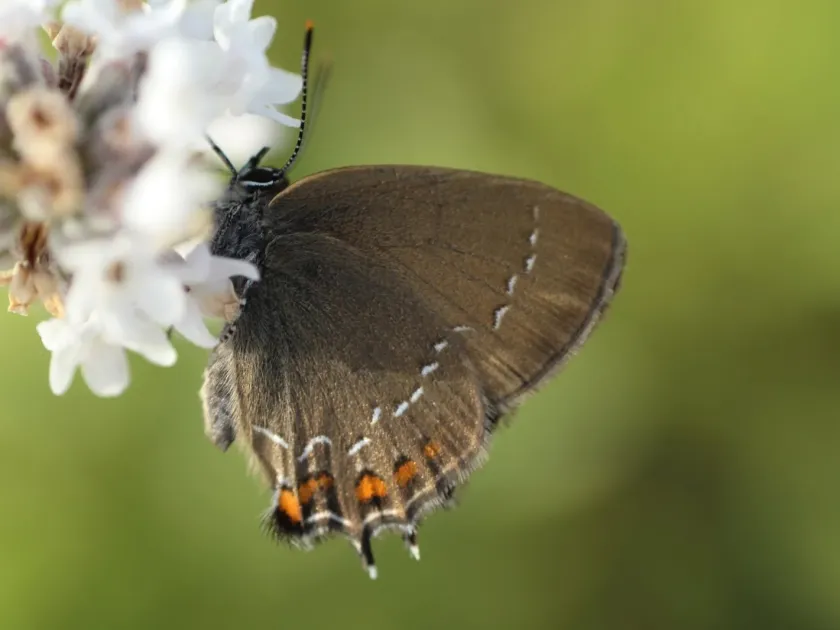
The Ilex Hairstreak (Nordmannia ilicis) is a small butterfly belonging to the Lycaenidae family. Adult butterflies typically have a wingspan ranging from 28 to 34 millimeters, making them discreet but distinctive in forest habitats.
The upper surface of the wings is dark brown. Males often display a small orange spot on the hindwings, while females exhibit multiple orange spots, which serves as a key characteristic for sexual dimorphism.
A primary feature of the species is the presence of delicate tails on the hindwings, characteristic of the genus Nordmannia. The underside of the wings is light brown with a prominent white zigzag line crossing both forewings and hindwings.
The larvae, or caterpillars, have a flattened, woodlouse-like shape and a bright green color, allowing them to blend perfectly with the oak leaves they inhabit. This camouflage makes them difficult to spot during routine inspections.
The pupae are brown and firmly attached to the branches or bark of host trees using silk pads. This stage allows the species to survive the winter successfully until the spring cycle resumes.
What it damages
The primary host plants for the Ilex Hairstreak are oak species (Quercus). In forestry and park management, this insect is considered a pest due to its impact on the foliage of young trees and saplings.
Damage occurs primarily during the larval stage. Upon hatching, the larvae feed on developing buds, which can lead to stunted growth or deformation of young shoots during the critical spring growth period.
As the caterpillars grow, they feed on leaves, creating irregular holes or consuming the entire leaf blade while leaving the main veins intact. This process is known as skeletonization, which reduces the plant's photosynthetic capacity.
Heavy infestations can significantly weaken younger trees, making them more susceptible to drought, nutritional stress, and secondary infections caused by fungi or bacteria.
Adult butterflies do not damage the plants as they feed on flower nectar. However, their presence indicates a breeding population that may pose a risk to oak foliage in subsequent seasons if not managed.
When it appears
The Ilex Hairstreak typically has one generation per year. Adult butterflies are active during the early summer months, with their main flight period occurring between June and July.
The reproductive cycle begins with the females laying eggs on the branches of host trees. These eggs serve as the overwintering stage, enduring the autumn and winter months until the warmth of spring triggers hatching.
Larval emergence is highly synchronized with the bud-burst of oak trees, usually occurring in April or early May. This timing ensures that food is immediately available for the newly hatched larvae.
The caterpillar stage lasts for approximately 40 to 60 days, depending on climatic conditions. During this time, they pass through several molting stages, growing rapidly before they are ready to pupate.
Pupation occurs in late spring or early summer, with the pupa attached to the host tree. After a few weeks of metamorphosis, the adult butterfly emerges, completing the annual life cycle.
Control measures
Management of the Ilex Hairstreak relies heavily on monitoring and prevention. During the dormant season, it is recommended to inspect branches for egg clusters to assess potential population density.
In cases of severe infestation, biological insecticides, specifically those containing Bacillus thuringiensis, are highly effective against larvae while being selective enough to avoid harming beneficial predators.
Chemical control is rarely required but can be implemented using contact-stomach insecticides if the population crosses the economic damage threshold. The best time for application is early May when larvae are small.
Promoting natural predator habitats, such as maintaining populations of parasitic wasps and insectivorous birds, is a sustainable way to keep the Hairstreak population under control without chemicals.
Good agricultural practices, including proper tree nutrition and the removal of heavily infested deadwood, enhance tree resilience, helping them withstand damage from this butterfly species.
Taxonomy
- Latin name
- Nordmannia ilicis
- Order
- Lepidoptera (butterflies)
- Family
- Lycaenidae
- EPPO code
- NORDIL
Discussion
No discussions yet — be the first.