
Niphona picticornis
Niphona picticornis
Description
How to identify
Niphona picticornis is a species of longhorn beetle (Cerambycidae) known as a secondary pest that targets various woody plants, including fruit trees.
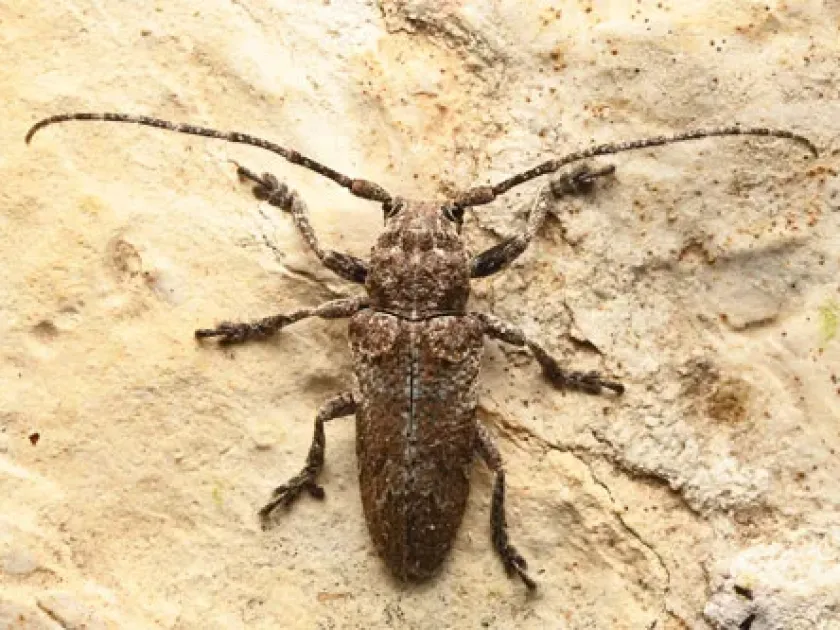
Adult beetles typically measure between 10 and 18 mm in length, characterized by a greyish-brown body and a mottled pattern on their elytra that aids in camouflage.
A distinctive feature of the species is its long antennae, which are adorned with dark bands, giving them a segmented, patterned appearance often described as "variegated" or "spotted."
The larvae are typical longhorn larvae: cylindrical, legless, and white to creamy-yellow, with a hardened, chitinous head specifically adapted for boring into wood.
As xylophagous insects, both their morphology and behavior are strictly tied to the exploitation of living and dying wood tissues for development.
What it damages
This beetle primarily infests weakened or stressed trees, including common orchard varieties like apple, pear, fig, and citrus, among other broadleaf species.
The damage is caused by the larvae, which tunnel into the bark and the underlying sapwood, disrupting the tree’s nutrient and water transport systems.
Extensive tunneling can weaken the structural integrity of branches, making them prone to snapping under wind pressure or the weight of fruit.
By creating pathways in the woody tissue, the larvae facilitate the entry of secondary pathogens, such as wood-decay fungi and bacterial infections.
Heavy infestations can lead to the decline of productive trees, significant yield loss, and, in severe cases, the death of young saplings.
When it appears
The adult flight period typically occurs during the warmer months of spring and summer, facilitating mating and the search for suitable oviposition sites.
Females deposit their eggs directly into crevices, natural cracks in the bark, or mechanical wounds found on the trunk and thick branches.
The lifecycle of Niphona picticornis often spans one to two years, depending largely on environmental temperature and the nutritional state of the host tree.
After hatching, the larvae immediately begin boring into the wood, where they spend the majority of their lifecycle feeding and growing in relative safety.
Pupation occurs within the woody tissue at the end of the larval gallery, with the resulting adult emerging through a precisely chewed exit hole.
Signs of infestation
The most visible sign of an infestation is the presence of small, round, or oval exit holes on the bark where the mature beetles have emerged.
Accumulations of frass—a sawdust-like mixture of wood shavings and larval waste—near the base of the tree or in branch crotches are indicative of active larval feeding.
Trees affected by long-term infestation often show symptoms of decline, such as yellowing foliage, leaf drop, and dieback of the crown.
Bark in infested areas may show longitudinal cracks, localized swelling, or patches of peeling where the larvae have extensively damaged the cambium layer.
Overall tree vigor is typically compromised, leading to stunted growth, poor harvest quality, and increased susceptibility to drought and cold stress.
Control measures
Managing Niphona picticornis focuses on preventing infestation through robust cultural practices and horticultural maintenance.
- Pruning and removing dead, dying, or infested branches to reduce the beetle's habitat and population density.
- Painting tree trunks with white lime wash can help deter females from laying eggs on the bark surface.
- Ensuring trees are healthy through proper fertilization and regular irrigation to improve their natural resistance to pests.
- Sanitizing tools after pruning to prevent the spread of spores and pests between healthy and infested plants.
- Targeted chemical applications may be considered during the peak emergence of adults if the infestation levels exceed economic thresholds.
Taxonomy
- Latin name
- Niphona picticornis
- Order
- Coleoptera (beetles)
- Family
- Cerambycidae
- EPPO code
- NIPNPI
Discussion
No discussions yet — be the first.