
Phantom hemlock looper
Nepytia phantasmaria
Description
How to identify
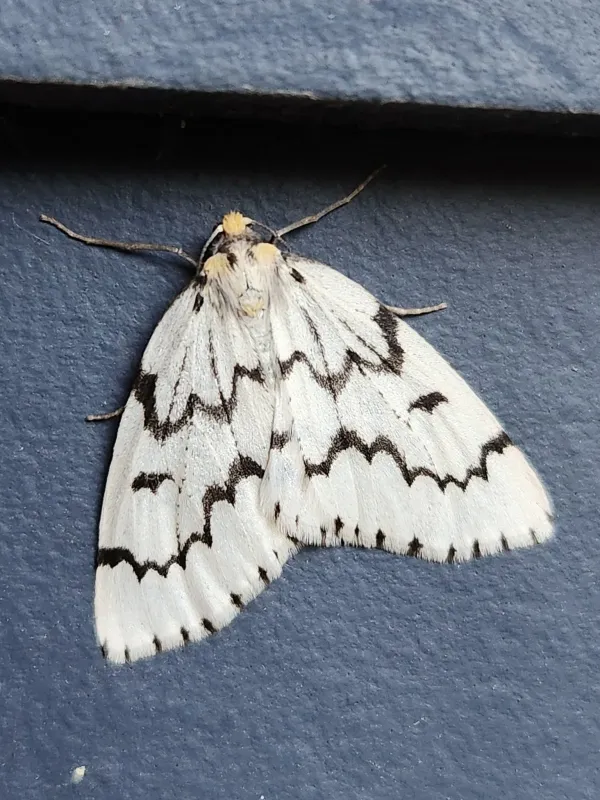
The phantom hemlock looper Nepytia phantasmaria is a moth species belonging to the Geometridae family. Adult moths possess a wingspan typically ranging from 30 to 35 mm, with pale-colored wings marked by subtle wavy dark lines, providing camouflage against tree bark.
The larvae, or caterpillars, are slender and exhibit a green coloration with longitudinal stripes. This coloration, combined with their behavior of resting in a stick-like posture, makes them exceptionally difficult to spot among the needles of their host trees.
The life cycle encompasses four distinct stages: egg, larva, pupa, and adult. The insect typically overwinters in the egg stage, with eggs being deposited by the females on the needles or within the crevices of the host tree's bark.
Developmental rates for Nepytia phantasmaria are significantly influenced by environmental factors such as temperature and humidity, which determine the timing of larval emergence in the spring.
Population surges of this moth are observed periodically. During such outbreaks, the density of larvae can reach levels that cause severe and widespread damage to forest stands and ornamental plantings.
What it damages
The primary hosts for the phantom hemlock looper include various species of hemlock (Tsuga) and fir (Abies). These trees are highly susceptible to defoliation when larval populations become dense.
The larvae are exclusively defoliators, feeding on the needles of host trees. Young larvae begin by eating softer, new growth needles, while older larvae consume mature needles, often leaving only the needle bases behind.
Severe defoliation weakens the overall health of the tree, making it susceptible to secondary stressors such as droughts or infestations by wood-boring insects, which can lead to tree mortality.
In ornamental settings and tree nurseries, damage manifests as unsightly gaps in the foliage, stunted growth, and potential dieback of branches, which diminishes the economic and aesthetic value of the stock.
Continued or multi-year defoliation events significantly increase the risk of tree death, particularly in young or stressed trees that lack the energy reserves required for rapid recovery.
Signs of infestation
A primary indicator of a phantom hemlock looper infestation is the presence of fine webbing woven between the needles by the larvae. This webbing is used to protect the caterpillars while they feed and rest.
The presence of larval excrement, appearing as small, granular dark pellets on the forest floor or on lower branches, is a clear sign that active feeding is occurring in the upper canopy.
Visual inspection of the canopy may reveal thinning foliage and browning of branches. As the larvae consume the needles, the canopy becomes increasingly sparse, eventually revealing bare twigs.
Shaking a branch over a white cloth or paper is a reliable diagnostic method, as larvae will drop from the foliage when disturbed, allowing for accurate identification and population assessment.
- Presence of larval silk webbing on branch tips.
- Accumulation of dark larval frass on foliage or ground.
- Progressive thinning and yellowing of the canopy.
- Visibility of bare twigs within the foliage.
Control measures
Biological control agents, such as formulations containing Bacillus thuringiensis, are effective against young larvae and are often the preferred choice due to their minimal impact on non-target insect species.
In managed landscapes, chemical control using targeted insecticides can be employed during the early larval development stages if monitoring indicates that the population threshold has been exceeded.
Monitoring using pheromone-baited traps provides essential data on adult moth activity, allowing foresters and arborists to predict larval emergence and implement timely suppression measures.
Maintaining high tree vigor through proper site selection, adequate irrigation, and soil nutrient management helps trees better tolerate and recover from partial defoliation by the looper.
Preservation of natural predator and parasitoid populations is vital for long-term management, as these biological allies often play a key role in ending outbreaks of the phantom hemlock looper.
Taxonomy
- Latin name
- Nepytia phantasmaria
- Order
- Lepidoptera (butterflies)
- Family
- Geometridae
- EPPO code
- NEPYPH
Discussion
No discussions yet — be the first.