
Aspen pigmy moth
Nepticula turbidella
Description
How to identify
The aspen pigmy moth (scientifically known as Nepticula turbidella) belongs to the family Nepticulidae, a group of very small moths. These insects are among the smallest butterflies, often remaining unnoticed due to their microscopic size and secretive behavior.
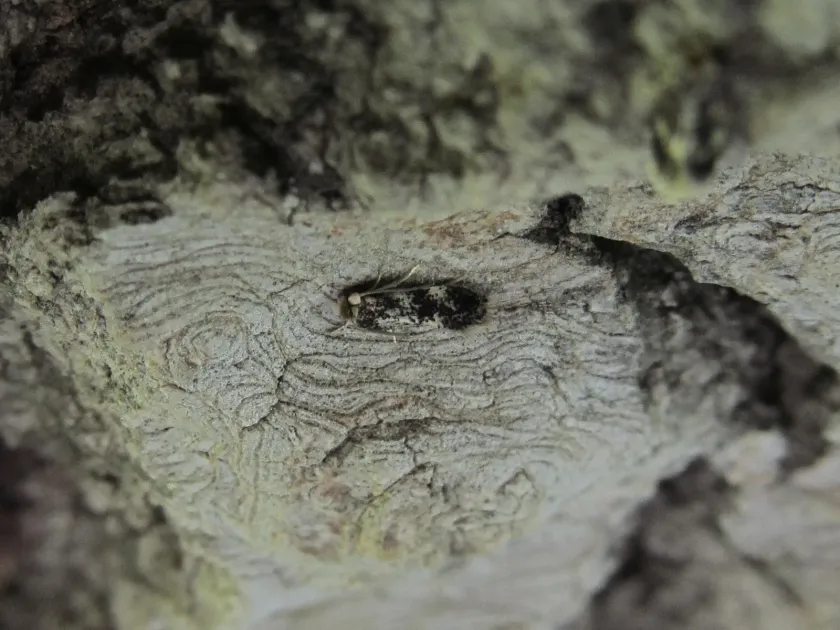
The adult moth has a wingspan of only 5 to 6 millimeters. Its body is covered in dark scales that often exhibit a metallic sheen, allowing the insect to blend perfectly with the bark of aspen trees.
The larvae are specialized leaf miners. They possess chewing mouthparts designed to feed internally within the leaf tissue, ensuring they are protected from predators and environmental hazards for the duration of their development.
The life cycle is closely synchronized with the phenology of the host plant. Depending on the climate, the species completes one or two generations per year, with adult activity usually occurring in the late spring or early summer.
Overwintering occurs primarily at the pupal stage. They form dense, resilient cocoons located within fallen leaf litter or deep in the crevices of bark, which provides effective insulation against low winter temperatures.
What it damages
The primary host for this pest is the aspen (Populus tremula), though it can occasionally affect other poplar species. It is a strictly specialized feeder that relies entirely on aspen leaves for survival.
Larvae create winding galleries (mines) beneath the leaf epidermis. By consuming the chlorophyll-rich cells, they significantly inhibit the plant's ability to conduct photosynthesis, leading to localized leaf chlorosis and necrosis.
In cases of high infestation, the foliage appears discolored and wilted. The premature senescence of leaves caused by larval feeding impacts the tree's vigor and its ability to store nutrients for the upcoming winter.
For young aspen plantations and nursery stock, the damage can be severe. It leads to reduced annual growth, stunted development, and increased susceptibility to secondary fungal diseases or environmental stress.
While mature trees in forest ecosystems usually recover, the aesthetic value of urban trees is significantly diminished, making this moth a nuisance for landscape management in parks and residential areas.
Signs of infestation
The most distinctive sign of infestation is the presence of meandering leaf mines. These tunnels are initially very narrow but increase in width as the larva matures, often displaying darker central lines due to frass accumulation.
Examining leaves against sunlight reveals the intricate geometry of the larval galleries. As the larva grows, it consumes the tissue in a pattern that may cause the leaf to curl or become deformed in the affected area.
Once the larva completes its development, it exits the leaf through a small, neat hole, leaving behind a scarred, translucent section of the leaf that eventually dries out and turns brown.
Premature leaf drop is a hallmark indicator of heavy infestation. By late summer, affected trees may lose a significant portion of their canopy, exposing the underlying skeleton of the tree.
During the dormant season, careful inspection of the bark and soil near the base of the tree may reveal the small, oval-shaped cocoons of the pupae attached to woody substrates.
Control measures
The most effective management strategy in garden and park settings is the thorough removal and destruction of fallen leaves in autumn, which physically removes the overwintering population from the area.
For high-value trees or nursery stock, systemic insecticides applied during the larval hatching period can be effective. Timing is critical to ensure the larvae are controlled before they successfully penetrate the leaf epidermis.
Natural biological control plays a significant role in forest health. Numerous species of parasitic wasps (hymenopteran parasitoids) naturally regulate moth populations, maintaining ecological balance without human intervention.
Maintaining optimal tree health through proper watering and soil management is essential. Robust trees are better able to withstand defoliation and recover from minor infestations without long-term damage.
- Regular monitoring of foliage during the spring and early summer.
- Sanitation programs to clear leaf litter from recreational areas.
- Application of biological pesticides (like Bt) when necessary.
- Strategic planting of diverse species to minimize the spread of specialized pests.
Taxonomy
- Latin name
- Nepticula turbidella
- Order
- Lepidoptera (butterflies)
- Family
- Nepticulidae
- EPPO code
- NEPTTR
Discussion
No discussions yet — be the first.