
Lime leaf miner
Nepticula tiliae
Description
How to identify
The lime leaf miner Nepticula tiliae is a member of the Nepticulidae family within the order Lepidoptera. These are among the smallest moths in the world, with a wingspan that rarely exceeds 6 millimeters.
The adults are inconspicuous, dark-colored moths, often displaying a subtle metallic luster. Their life cycle is strictly dependent on the growth stages of their host tree, the lime (linden).
The larvae are specialized leaf miners, spending their entire feeding stage embedded within the leaf tissue. This unique adaptation provides them with protection from environmental hazards and many predators.
Understanding their taxonomy is crucial for arborists to distinguish them from other species that also cause leaf damage. Correct identification often relies on the pattern of the mines left by the larvae.
Their high reproductive rate and short generation time mean that they can colonize large sections of a tree canopy within a single season if conditions are optimal.
What it damages
This pest is highly host-specific, primarily targeting species within the Tilia genus. Young lime trees in urban environments are particularly susceptible to severe infestations.
Larval feeding destroys the leaf parenchyma, leaving the upper and lower epidermis intact. This activity disrupts the tree's photosynthesis process and aesthetic quality.
Heavy infestations result in a high density of mines on a single leaf, leading to wilting, browning, and premature leaf drop, which significantly stresses the tree.
Trees weakened by constant miner activity are more prone to secondary pests and environmental stressors, including drought and urban pollution.
For park and street tree management, the lime leaf miner is considered a notable aesthetic pest that necessitates intervention to maintain the health of linden alleys.
When it appears
The first adult moths appear in spring, aligning with the bud-break and initial leaf growth of the lime trees. Females lay their eggs on the undersides of young leaves.
In temperate climates, the insect typically completes two to three generations per year. This creates a prolonged risk period for trees, spanning from late spring through August.
The winter is spent as a pupa, either in the soil beneath the host tree or hidden in bark crevices. This overwintering strategy allows them to survive cold periods successfully.
The timing of adult emergence is closely tied to local temperature accumulation, often referred to as degree-days in agricultural monitoring.
Strategic timing of protective measures is essential, as the window of vulnerability is narrowest when the larvae are just beginning to mine the leaf surface.
Signs of infestation
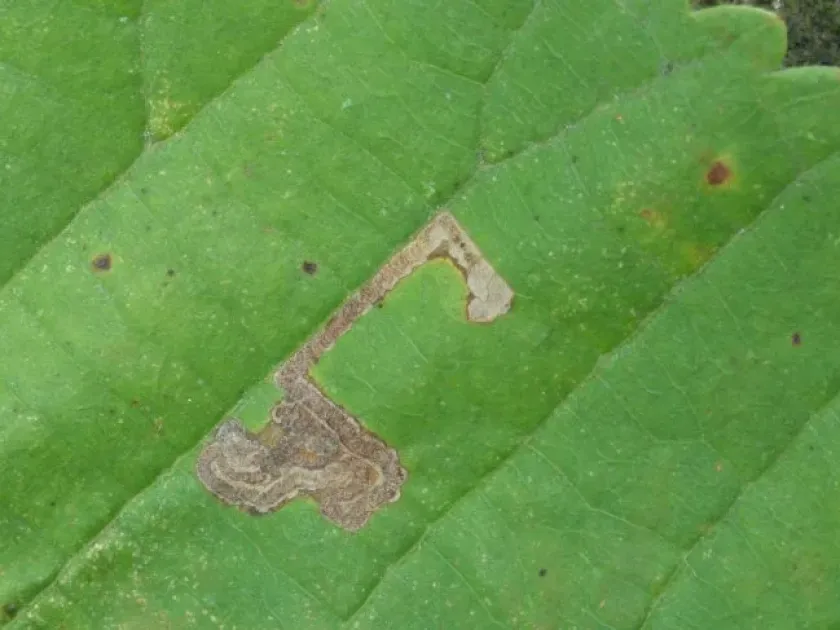
The most distinctive sign is the formation of slender, winding, and increasingly wider mines visible on the leaf surface as the larva grows.
The larval excrement forms a thin, dark line through the center of the mine, which is a classic diagnostic feature for identifying Nepticula tiliae.
- Transparent, snake-like lines appearing on leaves.
- Patchy yellowing or chlorosis of the foliage.
- Early leaf fall before the onset of autumn.
Examining leaves against the sunlight reveals the interior structure of the mines, allowing for a quick assessment of the infestation intensity.
Unlike many other leaf eaters, there are no visible external holes or chewed margins, which differentiates leaf miners from beetles or caterpillars.
Control measures
Good horticultural practice includes the thorough removal and destruction of fallen leaves in autumn, which helps reduce the number of overwintering pupae.
Systemic insecticides are the most effective chemical control method, as they are absorbed by the plant and kill the larvae residing inside the leaf mines.
Monitoring using pheromone traps can provide early warning of adult activity, allowing for precise and timely applications of control agents.
Biological controls, such as parasitic wasps or bacteria-based sprays, can be employed to manage populations in environmentally sensitive areas.
Providing optimal growing conditions, including adequate watering and soil nutrient management, helps trees tolerate and recover from leaf miner damage.
Taxonomy
- Latin name
- Nepticula tiliae
- Order
- Lepidoptera (butterflies)
- Family
- Nepticulidae
- EPPO code
- NEPTTI
Discussion
No discussions yet — be the first.