
Apple leaf miner
Nepticula slingerlandella
Description
How to identify
The Apple leaf miner (Nepticula slingerlandella) is a member of the Nepticulidae family, a group of moths known for their extremely small size. Adults have a wingspan of only 5 to 6 mm.
These moths are dark in color with metallic bronze or greenish reflections on their wings. Due to their tiny size and nocturnal activity, they are rarely seen by fruit growers during routine inspections.
Larvae are small, yellow-green caterpillars that spend their entire feeding stage hidden within the leaf tissue, making them well-protected from environmental factors.
Pupation occurs inside small, flattened, reddish-brown cocoons found in bark crevices or among debris, allowing the species to survive harsh winter temperatures.
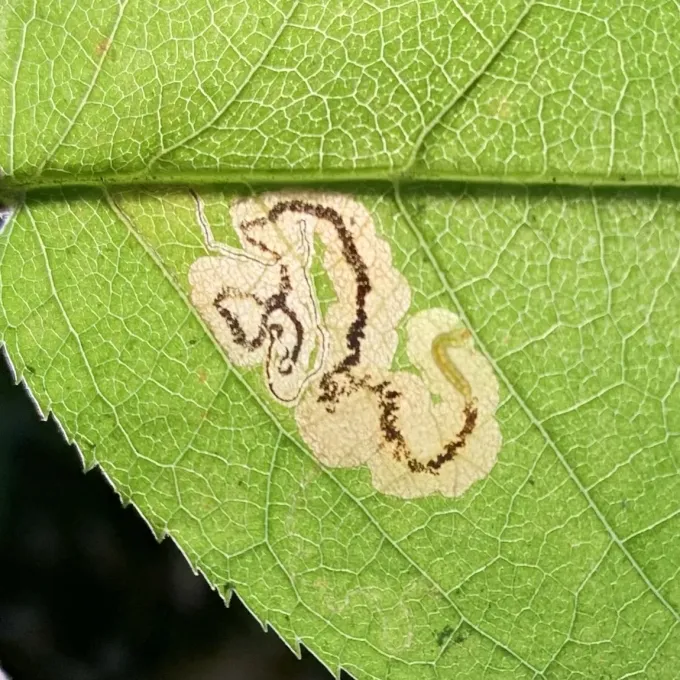
Identifying this pest usually relies on recognizing the specific serpentine mines left behind in the leaves rather than observing the adults themselves.
What it damages
The primary host for Nepticula slingerlandella is the apple tree (Malus domestica). While less common, they may occasionally infest other Rosaceae family plants.
Damage is caused exclusively by the larvae. As they feed, they tunnel into the leaf mesophyll, creating narrow, meandering mines that gradually widen as the larva grows.
Severe infestations result in a significant reduction of photosynthetic leaf area. This stress reduces the tree's overall vigor and can negatively affect fruit size and quality.
Young trees in nurseries are particularly vulnerable. A heavy infestation can lead to premature leaf drop, which stunts growth and weakens the tree's health for the following season.
Furthermore, the physical damage to leaf tissue provides entry points for various pathogens, potentially increasing the prevalence of secondary fungal infections in the orchard.
When it appears
The insect typically overwinters as an egg or a prepupa in a cocoon located on the bark or in leaf litter. Adults emerge in early spring, coinciding with the bud burst phase.
The flight period is often protracted. Mating and oviposition occur on the underside of young leaves, ensuring the larvae have an immediate food source upon hatching.
Depending on the climatic zone, the pest can complete one to three generations per year, with activity peaking in mid-summer during warmer weather conditions.
The larval stage lasts for several weeks. Once full-grown, larvae exit the mines to find suitable sites for pupation on the tree branches or ground.
Monitoring for the start of the egg-laying period is crucial for successful pest management, as chemical control is most effective during the larval emergence phase.
Signs of infestation
The most visible symptom is the appearance of winding, thin, pale tracks on the leaves. These tracks are caused by the larvae consuming the internal leaf tissue.
- Visible serpentine mines on the leaf surface.
- Narrow dark lines of larval excrement (frass) running down the center of the mines.
- Yellowing and necrosis of the leaf area around the mines.
- Premature yellowing and falling of infected leaves.
- Small exit holes on the leaf surface where the larva emerged to pupate.
Control measures
Cultural control is a cornerstone of management; removing and destroying fallen leaves during late autumn reduces the overwintering population of the pest significantly.
Chemical applications should be timed carefully. Systemic insecticides applied shortly after larval hatch are effective because they penetrate the leaf tissue and target the feeding larvae.
Biological control options, such as encouraging natural parasitoids (small wasps), can provide a balanced approach to managing leaf miner populations in sustainable orchards.
Maintaining a well-pruned and open canopy improves spray penetration, ensuring that insecticides reach all parts of the tree and increasing the overall success rate of control efforts.
Using pheromone traps helps growers monitor adult moth activity, allowing for the precise application of control measures exactly when they are most needed.
Taxonomy
- Latin name
- Nepticula slingerlandella
- Order
- Lepidoptera (butterflies)
- Family
- Nepticulidae
- EPPO code
- NEPTSL
Discussion
No discussions yet — be the first.