
Willow pigmy moth
Nepticula salicis
Description
How to identify
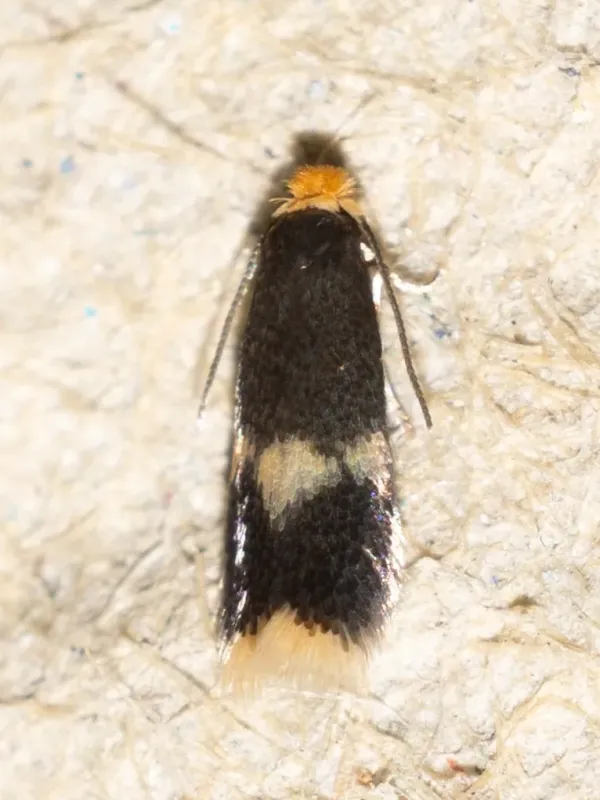
The Willow pigmy moth (scientific name Stigmella salicis, synonym Nepticula salicis) belongs to the Nepticulidae family. It is one of the smallest moths in the world, with a wingspan of only 5 to 6 mm.
Adult moths are dark-colored, often exhibiting a metallic sheen on their forewings, which helps them blend into the bark of trees during the day.
The larvae are small, legless caterpillars with a yellowish body. They are exclusively internal feeders, spending their entire larval stage mining the leaves.
These moths are highly specialized, having evolved a close relationship with the Salix genus, which makes them very effective at exploiting this specific food source.
Due to their minute size and nocturnal or crepuscular behavior, adults are rarely seen, making detection primarily focused on the visible signs of larval activity.
What it damages
The primary hosts for this species are various species of willow (Salix), including goat willow and crack willow, which are common in many landscapes.
The damage is caused by larvae eating the green parenchyma tissue within the leaf, leaving the epidermal layers intact to form a protective gallery.
Extensive mining disrupts the photosynthesis process, causing the leaves to lose their health and vigor, which can lead to early senescence.
In cases of high infestation, large parts of the canopy may appear browned or wilted, significantly detracting from the visual appeal of the trees.
While an occasional infestation is rarely fatal to a mature willow tree, repeated annual damage can severely stress younger trees and reduce their growth rate.
When it appears
Adult moths emerge in late spring as temperatures rise, coinciding with the development of new leaves on the host plants.
The life cycle typically spans multiple generations within a single growing season, leading to continuous damage throughout the summer months.
The moth overwinters in the pupal stage, encased in a tough, oval-shaped cocoon, usually buried in the soil or in the leaf litter at the base of the tree.
The larvae remain active during the warmer parts of the summer, finishing their development before the foliage begins to drop in the autumn.
Monitoring for the start of the season is crucial for timing any potential intervention, usually beginning right after the first leaves have fully unfurled.
Signs of infestation
The most distinctive sign of this pest is the leaf mine, which appears as a narrow, serpentine trail on the surface of the willow leaf.
Within this trail, a thin, dark line of larval frass (excrement) is usually visible, which is a characteristic feature of Stigmella salicis.
As the larva grows, the mine gradually widens, creating a distinct "track" that can span a significant portion of the leaf blade.
Yellowing or necrosis of the tissue surrounding the mine indicates that the plant is struggling to maintain the damaged leaf area.
Upon completing their development, the larvae cut a small exit hole in the epidermis to drop to the ground and pupate, leaving a noticeable perforation.
Control measures
The most effective cultural practice is the removal and disposal of fallen leaves during autumn to eliminate the larvae and pupae wintering in the litter.
Cultivating the soil beneath the willow canopy in early spring can disrupt the development of pupae that have overwintered in the top layer of the ground.
Chemical control using systemic insecticides is generally recommended only if the infestation is severe and threatening the overall health of the tree.
Encouraging biological control by maintaining a healthy garden ecosystem helps native parasitoid wasps and predators keep the moth population in check.
Ensure the trees are well-watered and provided with appropriate nutrients to help them withstand and recover from the stress caused by the leaf mining activity.
Taxonomy
- Latin name
- Nepticula salicis
- Order
- Lepidoptera (butterflies)
- Family
- Nepticulidae
- EPPO code
- NEPTSA
Discussion
No discussions yet — be the first.