
Apple leaf miner
Nepticula pomivorella
Description
How to identify
The apple leaf miner, taxonomically identified as Stigmella malella (formerly Nepticula pomivorella), is a micro-moth species belonging to the Nepticulidae family. The adult moth is extremely small, typically measuring no more than 5–6 mm in wingspan, often making it difficult to detect in an orchard setting.
The larvae, or caterpillars, are small and legless, reaching a maximum length of about 3–4 mm. Their bodies are light green with a distinct brown head. Their entire larval stage is spent mining inside the leaf tissue, which serves as both their food source and protection from external predators.
The moth belongs to the order Lepidoptera. Its biology is highly specialized, having evolved to exploit the nutritional resources of specific deciduous trees. This specialization makes the species a persistent but manageable pest in apple-growing regions.
The life cycle involves multiple generations per year depending on the climate. The species typically overwinter as pupae, sheltered in tough, silken cocoons located either in the leaf litter or within the crevices of tree bark near the base.
Female moths lay eggs individually on the underside of leaves. Due to the high reproductive capacity of the species, large populations can develop rapidly if environmental conditions, such as warm spring and summer temperatures, are optimal for their development.
What it damages
The primary host for this pest is the apple tree (Malus domestica). In untreated orchards, the damage can become significant, with a large percentage of the leaf area being infested, which directly impacts the tree's overall vigor and yield.
In addition to apple trees, the leaf miner has been recorded on other Rosaceae species, including pears, quinces, and hawthorns. This host range allows the pest to sustain itself in diverse orchard environments and mixed plantings.
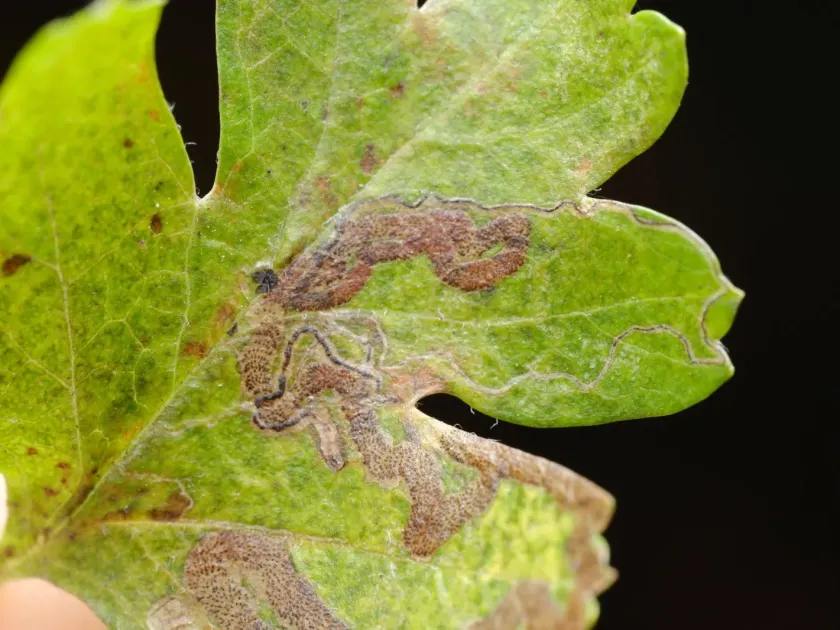
The larvae damage the tree by creating winding, serpentine mines inside the leaf blades. As they consume the mesophyll tissue, they destroy the chlorophyll-containing cells, which severely impairs the tree's ability to perform photosynthesis efficiently.
Heavy infestation levels often lead to premature leaf drop, especially during the mid-to-late summer months. This early defoliation stresses the tree, reduces its energy reserves, and negatively affects the development of fruit buds for the following year.
For young trees and nursery saplings, the damage is particularly detrimental as it slows shoot maturation and stunts growth. The cumulative effect of these larval mines is a reduction in both fruit size and the tree's long-term resistance to winter stress.
Signs of infestation
The most diagnostic sign of an infestation is the presence of winding, light-colored tracks on the leaves. These "mines" appear as thin, serpentine paths where the larva has eaten the internal tissue, often leaving a central dark line of frass (excrement).
Initially, the mines are very small and difficult to notice. However, as the larva grows, the mine widens and becomes more conspicuous. In cases of high density, several mines may be found on a single leaf, sometimes coalescing into larger necrotic patches.
If you examine an infested leaf against light, the structure of the internal tunnel is clearly visible. The surrounding leaf tissue eventually turns brown and necrotic as the damage disrupts the water and nutrient transport within the leaf blade.
Premature yellowing of leaves followed by leaf fall is a common symptom in late summer. This symptom is often confused with drought stress or nutritional deficiencies, so close inspection of the leaf surface is required to confirm the presence of mines.
Lower canopy foliage is typically infested first, as the moths prefer the more humid, sheltered environment closer to the ground. Early monitoring of the lower leaf surfaces in late spring is the best way to catch the initial population build-up.
Control measures
An effective integrated pest management (IPM) strategy for apple leaf miner begins with good sanitation. Collecting and properly disposing of fallen leaves in the autumn is crucial, as many pupae overwinter within this organic material.
Tilling the soil under the trees in late autumn or early spring can help expose and destroy the overwintering pupae cocooned in the ground. This physical disruption of their habitat significantly lowers the potential spring population.
Chemical control should be targeted at the period when larvae are hatching from eggs but have not yet fully embedded themselves in the leaf tissue. Products with systemic or translaminar properties are preferred for reaching the larvae inside the leaf.
Pheromone traps are highly effective for monitoring flight patterns. By tracking the exact time of peak moth activity, growers can apply treatments at the most vulnerable stage of the pest's lifecycle, improving the efficacy of the application.
Biological control agents, such as parasitoid wasps that feed on the larvae, play a vital role in natural regulation. Reducing the use of broad-spectrum insecticides allows these beneficial insects to thrive, helping to keep leaf miner numbers below economic threshold levels.
Taxonomy
- Latin name
- Nepticula pomivorella
- Order
- Lepidoptera (butterflies)
- Family
- Nepticulidae
- EPPO code
- NEPTPM
Discussion
No discussions yet — be the first.