
Walnut leaf miner
Nepticula juglandifoliella
Description
How to identify
The walnut leaf miner, scientifically known as Nepticula juglandifoliella, belongs to the order Lepidoptera and the family Nepticulidae. It is an extremely small moth with a wingspan of only 4-5 mm.
Adults are generally inconspicuous with dark, metallic-colored scales on their wings, allowing them to blend into the bark of the walnut tree during the daytime.
The life cycle consists of egg, larva (caterpillar), pupa, and adult stages. Depending on the climatic region, this pest can complete several generations throughout the growing season.
Overwintering occurs primarily in the pupal stage, protected within silk cocoons tucked into bark crevices or hidden within the leaf litter beneath the trees.
The first adult emergence typically occurs at the beginning of the budding season, perfectly timed to deposit eggs onto the newly developing walnut leaves.
What it damages
This pest specifically targets the walnut tree (Juglans regia). Larvae feed internally on the leaf tissue, creating channels that are visible from the outside.
The primary damage is caused by the larvae consuming the parenchyma layer of the leaf, which disrupts the tree's photosynthesis and overall carbon fixation.
Heavy infestations lead to widespread leaf necrosis and premature defoliation, which severely stresses the tree and hinders the development of fruit buds for the following year.
Reduced photosynthetic activity negatively impacts nut size, oil content, and overall crop quality, leading to significant economic losses in commercial plantations.
Furthermore, trees weakened by persistent leaf miner attacks become more susceptible to secondary infestations and common walnut diseases.
Signs of infestation
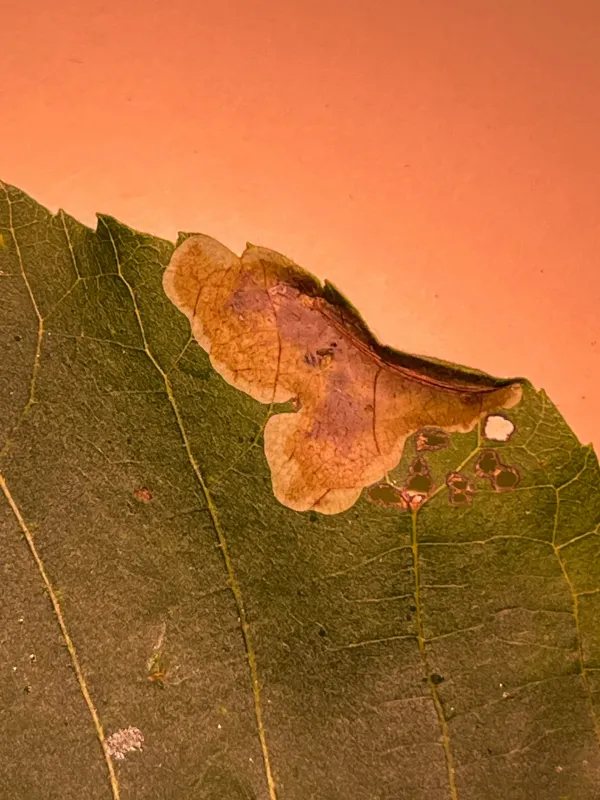
The most diagnostic sign is the appearance of serpentine or winding mines on the leaf surface. Initially very narrow, these mines grow wider as the larva feeds and matures.
A dark, continuous line of frass (larval excrement) is often visible in the center of the mine, which is a key characteristic for identifying this specific species of leaf miner.
As the infestation progresses, leaves become distorted, turn yellow or brown, and dry out, giving the canopy a scorched appearance during the summer months.
Once the larva has completed its feeding cycle, it cuts a small exit hole in the leaf to transition to the pupal stage, often leaving behind a distinctive scar.
- Winding, pale tunnels visible on leaves.
- Dark central line of excrement within the tunnels.
- Premature leaf drop and canopy thinning.
Control measures
Sanitation is a critical first step in management; raking and destroying fallen leaves during autumn and winter eliminates the primary overwintering sites for the pupae.
Maintaining tree vigor through proper pruning and irrigation makes the trees more resilient to pest pressure and creates a less favorable microclimate for moth development.
Chemical control should be implemented when monitoring indicates peak adult emergence or early egg-hatching, using targeted insecticides to minimize impact on non-target species.
Biological controls, including the use of entomopathogenic fungi or selective biopesticides, offer effective alternatives for reducing population levels in an environmentally friendly manner.
Regular monitoring with pheromone traps is highly recommended to pinpoint the precise timing for interventions, ensuring the most efficient use of control products.
Taxonomy
- Latin name
- Nepticula juglandifoliella
- Order
- Lepidoptera (butterflies)
- Family
- Nepticulidae
- EPPO code
- NEPTJU
Discussion
No discussions yet — be the first.