
Hazel pygmy moth
Nepticula floslactella
Description
How to identify
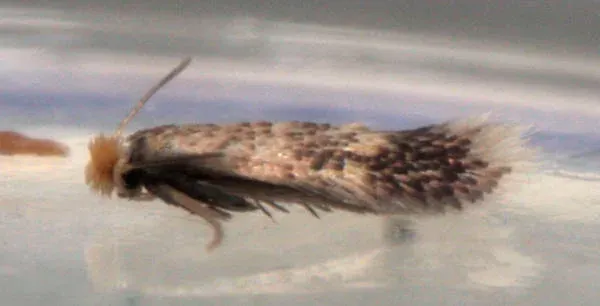
The hazel pygmy moth (Nepticula floslactella) is a member of the Nepticulidae family. These are extremely small moths with a wingspan of only 5–7 mm, often making them nearly impossible to detect in a garden setting.
Adult moths have a rather dull appearance, sometimes with a metallic sheen, and are typically nocturnal or crepuscular. The larvae are specialized leaf miners, meaning they live entirely within the tissues of the host plant's leaves.
The lifecycle is highly synchronized with the host plant's phenology. The larvae develop through several stages, each creating distinct tracks as they consume the leaf parenchyma while leaving the epidermis intact.
Development involves complete metamorphosis: egg, larva, pupa, and adult. The pupal stage is the primary method of overwintering, occurring in cocoons located in the leaf litter or soil beneath the host plant.
The scientific classification places this species within the order Lepidoptera, family Nepticulidae, which includes many of the smallest moths known to science, often referred to as "pigmy moths."
What it damages
The primary host for this pest is the hazel tree (Corylus avellana) and cultivated hazelnut varieties. It is rarely found on other tree species, as it has evolved a strict host specificity toward the Betulaceae family.
Larval feeding activity creates winding, thread-like mines inside the leaf. While a single mine may not be lethal to the plant, heavy infestations can result in dozens of mines per leaf, severely reducing photosynthetic efficiency.
Severe infestations weaken the tree significantly, leading to stunted growth and, in some cases, premature defoliation. This is especially detrimental to young hazelnut orchards where vigor is essential for establishment.
The damaged leaf tissue loses its integrity, which can lead to increased water loss and secondary infections from opportunistic fungi or bacteria entering through the compromised leaf surface.
In mature trees, the damage is often aesthetic, but in commercial plantations, consistent defoliation can reduce the tree's overall yield potential over several growing seasons.
When it appears
Adult moths emerge in late spring, generally coinciding with the leaf-bud break of hazel trees. This timing is critical as it allows the newly hatched larvae to immediately access fresh foliage.
Larval activity spans from late spring through late summer. Depending on local climate conditions, the species can undergo one or two generations per year, with the latter often being more noticeable in late summer.
The pupation phase occurs as autumn approaches. The larvae leave the leaf tissue to seek a safe location in the soil or leaf debris, where they spin their cocoons and enter diapause until the following spring.
Temperature fluctuations in the spring can slightly shift the emergence dates, making regular monitoring of the host plants essential for precise timing of any necessary control interventions.
By late summer, the presence of these moths is usually marked by an accumulation of brown, desiccated mines on the leaves, which serve as an indicator of the population levels for the following year.
Signs of infestation
The most distinctive sign of infestation is the presence of winding, pale, thread-like mines on the leaves. These mines are filled with a central line of dark frass (larval excrement), which is a key identifying characteristic.
Mines often follow the primary or secondary veins of the leaf, though they can wander across the entire leaf blade. Unlike other leaf miners, the specific shape and density of these tracks are unique to this species.
As the larva grows, the mine gradually widens, reflecting the increasing size of the insect. In heavily infested areas, leaves may appear yellowed or scorched even while still on the branch.
Holding a suspected leaf up to the light reveals the internal structure of the mine and potentially the small larva moving within the gallery, confirming the diagnosis.
Premature leaf drop in late summer, accompanied by visible mining patterns on the fallen leaves, confirms that the tree has been acting as a host for the larvae throughout the season.
Control measures
Effective management begins with sanitation. Since the pest overwinters in the leaf litter, removing and destroying all fallen leaves beneath the hazel trees is the most crucial step in breaking the life cycle.
Cultivating the soil in the spring within the tree's canopy radius can disrupt the pupae, leading to reduced emergence rates of the adult moths in the spring.
Chemical control is rarely required for individual ornamental trees but may be necessary in commercial plantations. Treatments must be timed carefully to target the larval emergence window.
- Systemic insecticides effective against leaf miners.
- Biological control agents, such as parasitoid wasps that target Nepticulidae.
- Pheromone monitoring to determine exact flight periods.
Maintaining tree vigor through proper fertilization and watering helps the plants withstand the stress caused by mining activity, ensuring they remain productive despite minor infestations.
Taxonomy
- Latin name
- Nepticula floslactella
- Order
- Lepidoptera (butterflies)
- Family
- Nepticulidae
- EPPO code
- NEPTFL
Discussion
No discussions yet — be the first.