
Raspberry leaf miner
Nepticula braunella
Description
How to identify
The raspberry leaf miner (Nepticula braunella) belongs to the order Lepidoptera and the family Nepticulidae. These are tiny moths, often overlooked due to their small size and cryptic habits.
The adult moth is nocturnal and rarely seen by growers. The primary damage is caused by the larvae, which live and feed between the upper and lower surfaces of the raspberry leaves.
The larvae are small, legless, and have a pale color, perfectly adapted to their mining lifestyle. They possess mouthparts specifically designed to consume the parenchyma layer inside the leaf.
The life cycle involves several stages, with the pupal stage typically occurring in the soil or leaf litter. The timing of each generation is highly dependent on local climatic conditions.
Raspberry is the primary host plant for this species. Its population density is influenced by the health of the raspberry patch and the presence of suitable overwintering sites.
What it damages
The damage is strictly limited to the foliage. Larvae tunnel into the leaf, creating distinct trails known as mines, which effectively destroy the photosynthetic tissue of the plant.
By feeding on the internal layers of the leaf, the larvae disrupt the plant's ability to produce energy, which is essential for fruit development and vegetative growth.
Heavy infestations lead to leaf yellowing, browning, and premature leaf drop. This reduces the vigor of the raspberry plants and makes them more susceptible to environmental stress.
Yield loss occurs because the plant cannot maintain optimal carbohydrate production, leading to smaller berries and potentially reduced bud formation for the following year.
In addition to yield reduction, severe damage can weaken the canes, making them less capable of surviving harsh winters or resisting secondary pathogen infections.
Signs of infestation
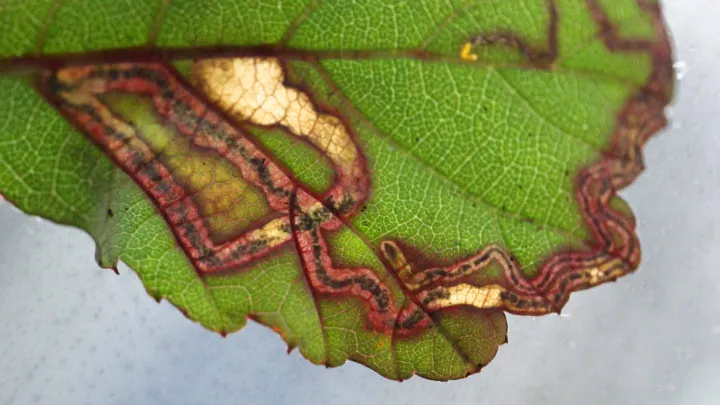
The most visible symptom is the presence of winding, light-colored tunnels (mines) on the surface of the leaves. These tracks start narrow and widen as the larva grows.
A telltale sign inside the mine is the presence of frass (larval excrement), which often appears as a continuous or dashed dark line running through the center of the mine.
Leaves may show signs of wilting or become mottled as the mines enlarge. In cases of high pest pressure, the foliage may look dry and necrotic, significantly damaging the plant's appearance.
When inspecting the underside of the leaf, one might notice slight bumps or ridges where the larva is feeding. This helps distinguish leaf miner damage from common fungal spots.
Premature leaf drop during the summer months is a strong indicator of a significant infestation, especially if the ground under the bushes is covered in damaged foliage.
Control measures
Effective control starts with sanitation. Raking and destroying fallen leaves in autumn is crucial, as this is where many pupae overwinter and wait for the spring cycle.
Cultivating the soil around the base of the plants in late autumn or early spring helps disturb the pupae in the soil, significantly reducing the success rate of the next generation.
Chemical control should focus on systemic insecticides that can penetrate the leaf tissue to reach the larvae protected within the mines, timed with the peak hatching period.
- Monitor adult flight using pheromone traps to time insecticide applications accurately.
- Encourage natural predators such as parasitic wasps that can help keep populations in check.
- Ensure adequate plant nutrition to help the raspberry bushes recover from foliage loss.
By maintaining strong, healthy plants through proper watering and fertilization, growers can improve the plant's tolerance to minor mining damage throughout the season.
Taxonomy
- Latin name
- Nepticula braunella
- Order
- Lepidoptera (butterflies)
- Family
- Nepticulidae
- EPPO code
- NEPTBR
Discussion
No discussions yet — be the first.