
Oak pigmy moth
Nepticula basiguttella
Description
How to identify
The oak pigmy moth (Stigmella basiguttella) belongs to the Nepticulidae family within the order Lepidoptera. These are among the smallest moths in the world, with a wingspan rarely exceeding 5 mm.
Adult moths are generally inconspicuous, often colored in dark or bronze hues. The species is highly host-specific, primarily infesting various species of oak (Quercus).
Their life cycle involves complete metamorphosis, including egg, larva, pupa, and adult stages. Because of their tiny size, they are rarely observed in the adult stage by laypeople.
Taxonomically, this species is well-adapted to the specific chemical environment of oak leaves. Its biology is finely tuned to the phenology of its host tree.
The cryptic nature of the larvae, which live entirely inside the leaf tissue, allows them to remain shielded from many surface-dwelling predators.
What it damages
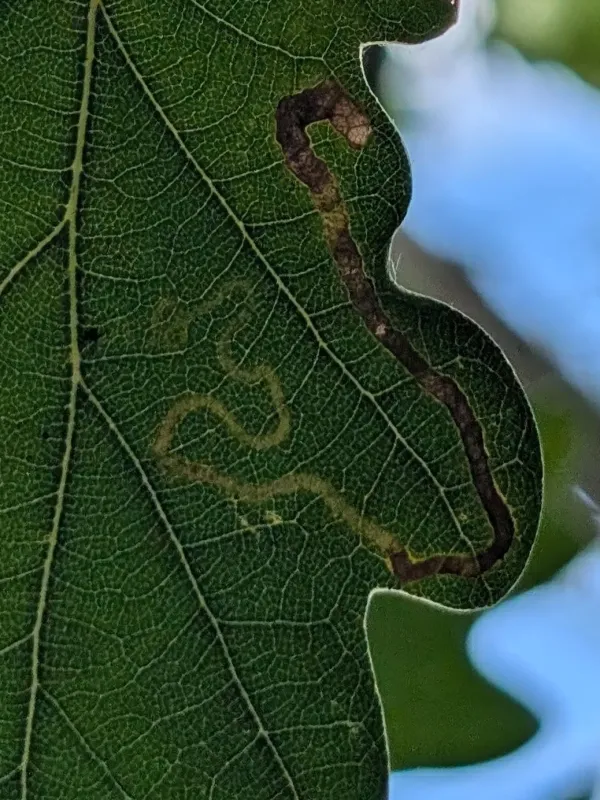
The primary damage is caused by the larvae, which consume the internal tissues (parenchyma) of oak leaves. This feeding creates thin, winding, light-colored tunnels known as mines.
This feeding behavior disrupts the photosynthetic efficiency of the tree. If the infestation is extensive, the leaf tissue can be significantly reduced, impacting tree health.
Severe mining causes premature chlorosis and leaf drop during the peak summer months. This reduces the energy reserves the tree needs to prepare for winter dormancy.
While an individual mine does little damage, a high density of larvae on a single tree can lead to canopy thinning and increased susceptibility to secondary stresses.
In nurseries, this pest can cause stunted development of young saplings, reducing their vigor and aesthetic quality for landscaping and forestry purposes.
When it appears
The adult moth emergence is closely synchronized with the bud burst and leaf development of oak trees in the spring. This ensures that larvae have fresh food upon hatching.
The species may complete one or two generations per year, depending on the climatic zone and temperature conditions. Warmer springs generally lead to earlier and larger pest outbreaks.
Larval development typically occurs during the early to mid-summer period. As larvae grow, they expand their mines, making them more visible as the season progresses.
Pupation takes place in the soil or within the layer of leaf litter beneath the host tree. The pupal stage is the overwintering phase, protected by a robust silk cocoon.
The timing of leaf fall is a critical factor for the lifecycle, as the insects move from the canopy to the ground to enter their overwintering state.
Signs of infestation
The most diagnostic sign is the presence of winding, thread-like mines on the leaves. These mines follow the specific patterns associated with Stigmella species.
Inside the mine, you can often see a thin, dark line of larval frass (excrement), which helps distinguish these mines from those of other leaf-mining insects.
Leaves may turn yellow or brown prematurely in areas where mining is concentrated. In cases of extreme infestation, the entire leaf may shrivel and die.
Looking at the leaf against the sun, the mines appear as translucent pathways. This is the most reliable way to assess the current level of infestation.
Canopy thinning during mid-summer is a sign that the tree is under heavy pressure from leaf-mining pests, leading to an overall unhealthy appearance of the foliage.
Control measures
Sanitation is a vital control measure. Collecting and destroying fallen leaves in the autumn removes the larvae and pupae that overwinter in the litter, breaking the cycle.
Systemic insecticides are effective when applied during the larval stage. These substances are absorbed by the leaf, killing the larvae as they feed on the internal tissues.
Encouraging natural predators, such as parasitic wasps (hymenopteran parasitoids), can significantly help in managing moth populations in forest and park environments.
Ensuring trees receive adequate water and nutrients helps them maintain physiological vigor, which allows them to better tolerate minor leaf loss caused by mining insects.
In forest nurseries, regular monitoring of adult activity can help time treatments effectively, preventing the buildup of large populations on young, vulnerable saplings.
Taxonomy
- Latin name
- Nepticula basiguttella
- Order
- Lepidoptera (butterflies)
- Family
- Nepticulidae
- EPPO code
- NEPTBI
Discussion
No discussions yet — be the first.