
Balsam fir leaf miner
Nepticula balsalella
Description
How to identify
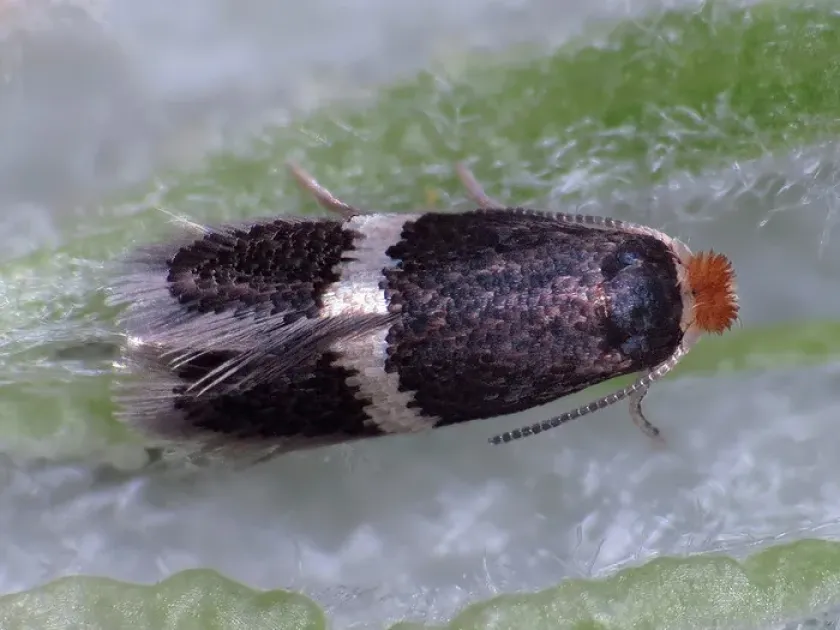
The Balsam fir leaf miner, scientifically known as Nepticula balsalella, belongs to the Nepticulidae family within the order Lepidoptera. These are among the smallest moths in the world, with wingspans often measuring only a few millimeters.
Adult moths are generally inconspicuous, possessing wings covered with fine, sometimes metallic scales. Their life cycle is deeply synchronized with their host plants, where they complete their larval development.
The larvae are specialized leaf miners. Upon hatching, the larva bores directly into the needle tissue, where it spends its entire feeding stage. This hidden lifestyle makes the species difficult to detect in its early developmental phases.
Because of their minute size, the adult moths are rarely observed in the field without the aid of specialized pheromone traps or sweep netting. Entomological identification is usually conducted based on the leaf mining patterns.
The species is highly host-specific, primarily affecting certain species of firs. This narrow host range defines the distribution patterns of the moth within its geographical habitat.
What it damages
The primary hosts for Nepticula balsalella larvae are species of the genus Abies (firs). The feeding activity of the larvae results in the gradual destruction of the internal needle tissues.
As the larva consumes the needle's parenchyma, the outer epidermis remains intact initially, creating a tunnel known as a mine. This disruption hinders the photosynthetic capacity of the foliage.
Heavy infestations can lead to premature yellowing and dropping of the needles. This significantly compromises the ornamental value and the general health of the fir trees in managed landscapes and plantations.
Damaged needles serve as entry points for secondary infections, including fungal pathogens. Stressed trees may subsequently become susceptible to colonization by bark beetles or other wood-boring pests.
In forest nurseries, this leaf miner is considered a notable pest that requires careful management to ensure the quality and vigor of the young trees being produced.
Signs of infestation
The most diagnostic sign of an infestation is the presence of winding, serpentine mines inside the needles. These tracks grow broader as the larva develops and increases in size.
Over time, infested needles change color, often turning yellow or brown. When observing the canopy from a distance, heavy infestations appear as patches of discolored, thinning foliage.
Upon closer inspection, one may find small exit holes where the mature larva has emerged from the needle to pupate. Fallen, mined needles under the canopy are a strong indicator of the pest's presence.
Monitoring for adult flight periods using pheromone traps is an essential tool for identifying the timing of larval emergence, allowing for more precise intervention.
Routine inspections of the foliage in the spring and early summer allow for early detection, which is crucial for preventing widespread damage within a stand or plantation.
Control measures
Controlling leaf miners requires the use of systemic insecticides, as the larvae are protected by the host plant's tissues and are largely inaccessible to contact-based pesticide applications.
Treatments should be timed to coincide with the period of peak larval hatch. Applying systemic products ensures the active ingredients are absorbed into the needles to reach the feeding larvae.
In nursery or small-scale settings, pruning and destroying infested branches can help reduce the local population of the pest, provided the material is properly disposed of to prevent re-emergence.
Integrated Pest Management (IPM) programs often incorporate the use of natural enemies, such as parasitoid wasps, which can significantly regulate the populations of leaf miners in stable ecosystems.
- Use of pheromone traps for flight monitoring.
- Application of systemic insecticides during larval emergence.
- Sanitation by pruning and disposing of infested foliage.
- Improving tree vigor through proper fertilization and watering.
Taxonomy
- Latin name
- Nepticula balsalella
- Order
- Lepidoptera (butterflies)
- Family
- Nepticulidae
- EPPO code
- NEPTBA
Discussion
No discussions yet — be the first.