
Oak leaf miner
Nepticula atricapitella
Description
How to identify
The Oak leaf miner, scientifically known as Stigmella atricapitella (often referred to by the synonym Nepticula atricapitella), belongs to the Nepticulidae family. These are extremely small moths with a wingspan often measuring less than 6 millimeters.
Adult moths are generally dark-colored and difficult to observe in nature due to their tiny size and camouflaging flight patterns. They are primarily active during the early stages of the growing season.
The larvae are specialized leaf-miners that spend their entire developmental phase feeding between the epidermal layers of oak leaves. This hidden existence provides them with protection from most environmental predators.
The life cycle is closely synchronized with the phenology of the host plant. They primarily target various species of oak, making them a specific pest in deciduous forests and nursery settings.
Their morphological adaptation, such as flattened bodies, allows them to navigate the narrow spaces within leaf tissues where they consume parenchyma cells.
What it damages
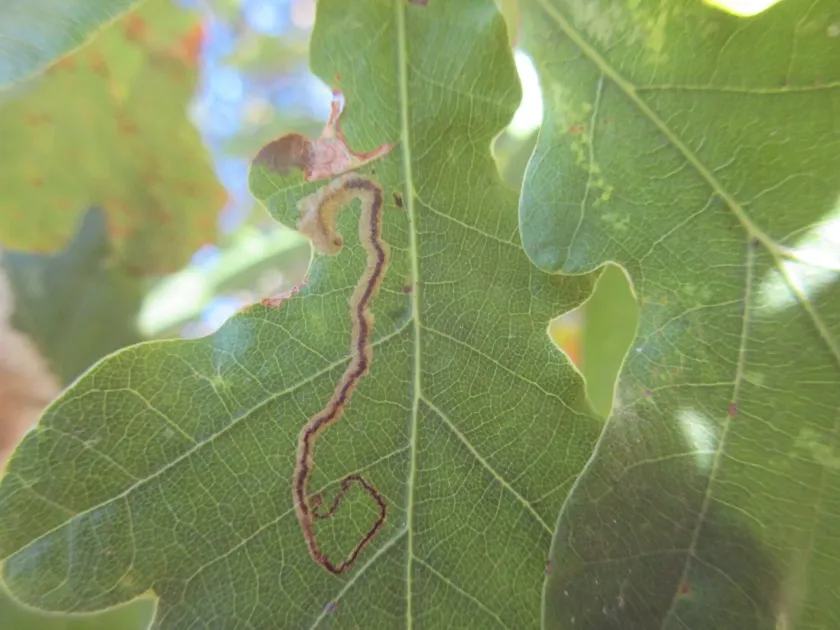
The damage is caused exclusively by the larval stage of the moth. As they consume the leaf tissue, they create distinct winding tunnels, commonly referred to as mines, which are characteristic of this species.
By feeding on the photosynthetic tissue, the larvae reduce the tree's ability to produce energy. High infestation levels can lead to chlorosis and premature senescence of the foliage.
Young oak saplings in nurseries are particularly vulnerable to these infestations. Repeated damage over several years can result in stunted growth and weakened structural integrity of the trees.
While mature trees can usually tolerate a moderate level of infestation, the cosmetic damage and long-term physiological stress can make them more susceptible to drought and pathogens.
In urban forestry, the presence of these miners is often considered a nuisance because it detracts from the visual health and vitality of prominent oak trees.
When it appears
Adult moths emerge in late spring, typically coinciding with the bud-burst of oak trees. This timing ensures that young leaves are available for the next generation.
Depending on regional climate conditions, the insect can complete one or two generations per year. Warmer seasons often facilitate a faster development cycle for the larvae.
Larval activity is most evident during early to mid-summer. This is when the mines on the leaves expand significantly, becoming more visible to human observers.
Pupation generally occurs by the end of the summer. The pupae overwinter within the soil or the leaf litter accumulated at the base of the tree, emerging as adults in the following spring.
Climate factors such as humidity and temperature play a significant role in determining the population density for each year's cycle.
Signs of infestation
The most reliable sign of an infestation is the appearance of serpentine or winding mines on the surface of the oak leaves.
- Winding, slender tracks that increase in width as the larva grows.
- Dark, granular frass (excrement) deposited along the center of the tunnel.
- Yellowing of leaf areas surrounding the mines during the late summer months.
- Small, clean-cut exit holes on the leaf surface where the larva emerged to pupate.
- Sparse crown appearance when the infestation level is critically high.
Control measures
Effective management begins with cultural practices. Removing and composting leaf litter in autumn can significantly reduce the overwintering population of pupae.
Biological control agents, such as specific parasitic wasps that target leaf miners, can be highly effective in maintaining a natural ecological balance in woodland areas.
In cases of severe infestation in nurseries, systemic insecticides may be applied. These treatments are absorbed into the leaf tissue, ensuring that larvae are controlled upon ingestion.
Maintaining high tree vigor through proper irrigation and soil fertilization helps oaks recover more quickly from the physiological stress caused by leaf miners.
Monitoring the flight period of adults using pheromone traps or sticky boards can help nursery managers time their protective measures for maximum efficiency.
Taxonomy
- Latin name
- Nepticula atricapitella
- Order
- Lepidoptera (butterflies)
- Family
- Nepticulidae
- EPPO code
- NEPTAT
Discussion
No discussions yet — be the first.