
Aspen leaf miner
Nepticula argyropeza
Description
How to identify
The aspen leaf miner, scientifically known as Ectoedemia argyropeza (formerly Nepticula argyropeza), is a small moth belonging to the family Nepticulidae. These moths are extremely small, with a wingspan of only 5 to 7 millimeters.
Due to their minute size and cryptic coloration, which typically includes dark brown or greyish tones with metallic reflections, they are rarely seen by the naked eye in the field.
The life cycle undergoes complete metamorphosis, including egg, larval, pupal, and adult stages. The larval stage is the one responsible for the damage observed on trees.
These moths are highly specialized, often completing their development in close synchrony with the growth phases of their host plant, the aspen tree.
Identification in the field is primarily based on the unique patterns of the mines left by the larvae inside the leaves, rather than the adult insect itself.
What it damages
The primary host plant for this species is the aspen (Populus tremula), although it can occasionally be found on related poplar species.
Larvae feed within the leaf tissue, specifically targeting the parenchyma, which results in the formation of tunnels or "mines" that disrupt the photosynthetic efficiency of the leaf.
Severe infestations can lead to premature yellowing and leaf fall, which significantly reduces the tree's vigor and its ability to store energy for the following season.
Weakened trees are often more susceptible to secondary environmental stresses, including drought, fungal pathogens, and attacks by other boring or defoliating insects.
In nursery settings, the presence of these miners can negatively impact the growth rates and commercial value of young aspen trees.
Signs of infestation
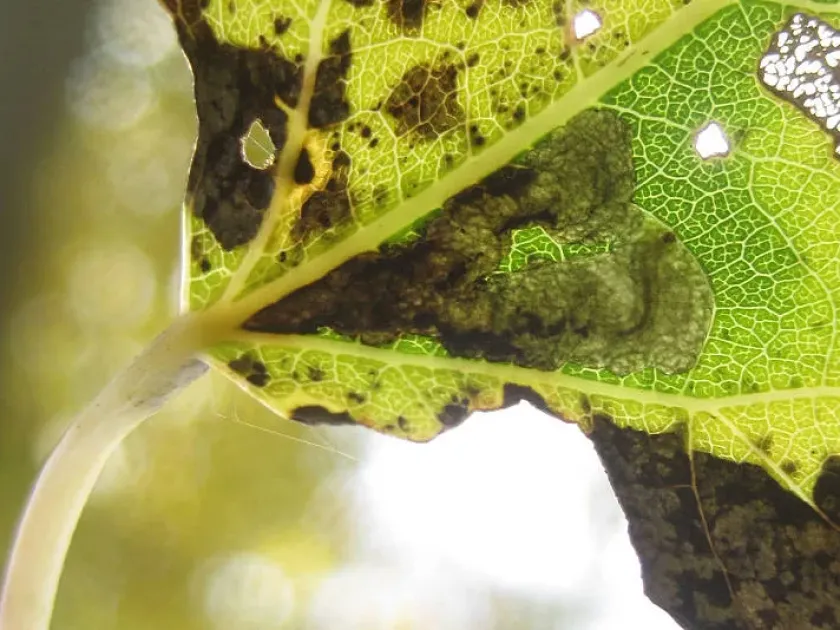
The hallmark of an infestation is the presence of distinctive mines located near the base of the leaf, often adjacent to the leaf petiole or midrib.
The mines usually start as narrow, winding paths that gradually expand into a larger, blotch-like area filled with the larva's frass.
As the larvae feed, the leaf tissue becomes thin, translucent, and eventually discolored, ranging from pale green to necrotic brown patches.
A high density of larvae can cause the tree to shed its leaves prematurely, leading to early leaf fall in late summer or early autumn.
Careful inspection of the lower surface of the leaf will reveal the translucent tunnels, confirming the active presence of the leaf-mining larvae.
Control measures
The most practical control method for small-scale landscapes or home gardens is the thorough raking and removal of fallen leaves in autumn to disrupt the pupation cycle.
For high-value trees, systemic insecticides applied during the peak flight of adult moths can help prevent the infestation from becoming severe.
Biological control, including the encouragement of parasitic wasps and other natural predators, is generally the preferred approach in forest management.
- Regular monitoring of tree foliage for signs of early mining activity.
- Sanitation by disposing of leaf litter to reduce over-wintering populations.
- Use of targeted, environmentally friendly insecticides if necessary.
Integrated pest management strategies focusing on cultural practices and seasonal monitoring are the most effective ways to manage the aspen leaf miner.
Taxonomy
- Latin name
- Nepticula argyropeza
- Order
- Lepidoptera (butterflies)
- Family
- Nepticulidae
- EPPO code
- NEPTAY
Discussion
No discussions yet — be the first.