
Alder leaf miner
Nepticula alnetella
Description
How to identify
The alder leaf miner (Stigmella alnetella, syn. Nepticula alnetella) is a member of the Nepticulidae family, within the order Lepidoptera. These are among the smallest moths in the world, with a wingspan often measuring less than 6 millimeters.
Adult moths are generally inconspicuous, possessing dull-colored scales that provide excellent camouflage against the bark of alder trees where they rest during the day.
The larvae are specialized leaf miners characterized by a flattened body morphology, which allows them to thrive between the upper and lower epidermis of the leaf tissue.
The life cycle is strictly tied to the alder's seasonal growth. Pupation usually occurs in protective cocoons hidden in tree bark crevices or among leaf litter during the winter months.
The emergence of adults typically coincides with the bud break and early leaf development of the host tree, ensuring an immediate food supply for the next generation.
What it damages
The primary host for this pest is the alder tree (Alnus). The larvae are highly host-specific, making the insect a specialist that targets specific alder species within its habitat.
Damage is caused by the larvae consuming the leaf mesophyll, which creates winding, thread-like mines. This process destroys the photosynthetic cells vital for the tree's energy production.
Extensive mining leads to premature browning and leaf fall, which significantly reduces the tree's vigor and aesthetic value, particularly in ornamental or urban settings.
Young saplings are especially vulnerable to heavy infestations, as the loss of leaf area can severely stunt their growth and increase susceptibility to environmental stress.
The disruption of the leaf structure often invites secondary infections, as damaged tissues become entry points for various bacterial and fungal pathogens.
Signs of infestation
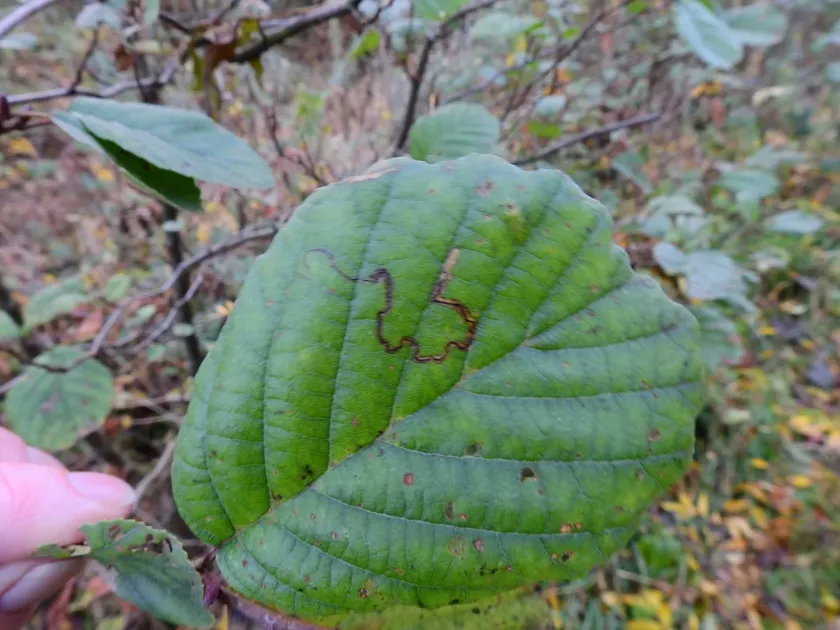
The most distinctive sign is the presence of pale, serpentine mines meandering across the leaf surface. These tracks clearly trace the feeding path of the larva inside the leaf.
Inside the mine, a dark line of frass (larval excrement) is visible. This feature is crucial for distinguishing the damage caused by Stigmella alnetella from other leaf-mining insects.
As the infestation progresses, the affected parts of the leaf may dry out and become brittle, often leading to the leaf curling or showing signs of necrosis around the mined areas.
Exit holes can be seen on the leaves once the mature larva leaves the mine to pupate. These are small, circular openings left after the larva finishes its development.
High levels of infestation cause the canopy to appear scorched or discolored. In late summer, trees heavily populated by the pest look prematurely senescent compared to healthy specimens.
Control measures
Sanitation is a primary control method; collecting and destroying fallen leaves during autumn can remove pupae and larvae, effectively reducing the population for the following year.
Biological control relies on naturally occurring parasitoids, such as small wasps, which significantly help regulate the population density of the miners in natural forest stands.
Chemical control involving systemic insecticides is recommended for nurseries or valuable ornamental trees. Applications should be timed precisely to catch the adult flight period.
Monitoring the flight of adult moths using pheromone traps can help arborists determine the exact time for insecticide treatment, ensuring maximum efficacy while minimizing harm to beneficial insects.
Promoting general tree vigor through proper irrigation and soil management is essential, as healthy trees can better tolerate and recover from the damage inflicted by leaf miners.
Taxonomy
- Latin name
- Nepticula alnetella
- Order
- Lepidoptera (butterflies)
- Family
- Nepticulidae
- EPPO code
- NEPTAL
Discussion
No discussions yet — be the first.