
Grayling
Neohipparchia statilinus
Description
How to identify
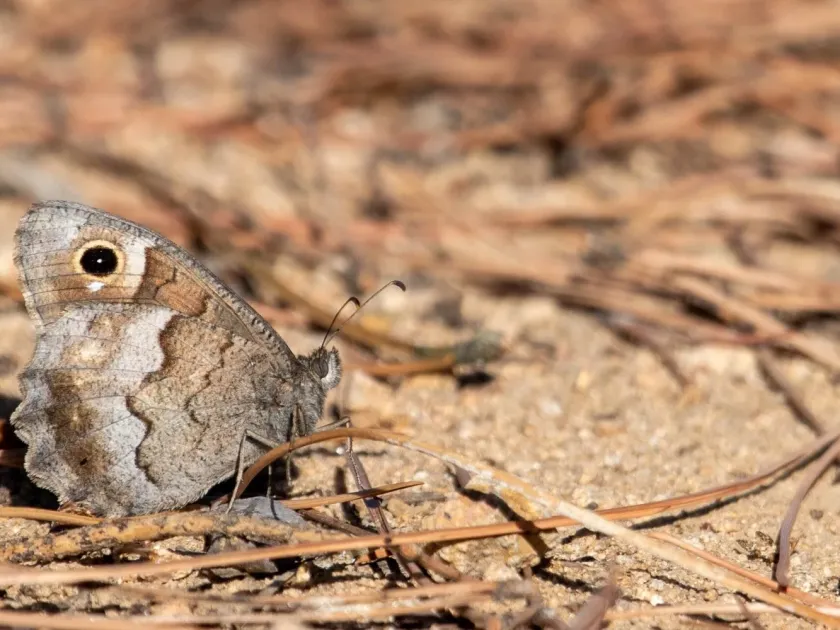
The Grayling butterfly, scientifically known as Neohipparchia statilinus, is a member of the Nymphalidae family, distinguished by its excellent camouflage abilities.
Adults have a wingspan ranging from 50 to 60 mm, with wings featuring shades of brown, gray, and ochre that mimic dry vegetation perfectly.
The larvae are spindle-shaped, usually light brown or grayish, marked with darker longitudinal stripes that help them blend into the stems of host grasses.
The head of the caterpillar is rounded and features small, characteristic outgrowths, serving as a diagnostic feature to distinguish this species from other grass feeders.
Pupation occurs in the soil or among leaf litter, where the pupa remains well-protected from environmental changes and predators during the transformation phase.
What it damages
The larvae primarily feed on various grass species, making them potential pests in meadows, pastures, and fields sown with cereal crops.
Feeding occurs by chewing on the edges of leaves, which leads to reduced photosynthesis and overall loss of plant vigor during the growing season.
Spring damage is particularly severe as larvae emerge from hibernation and consume the young, tender foliage of winter cereal crops during early growth stages.
Heavy infestations can result in significant thinning of stands, impacting crop yield and the quality of forage available for agricultural use.
Damaged plants often show signs of stunted growth and yellowing, making them more susceptible to subsequent attacks by secondary pests and diseases.
When it appears
This species is univoltine, completing only one generation per year, with its lifecycle strictly synchronized with the growth of wild and cultivated grasses.
Adult butterflies are typically on the wing from mid-summer, starting in July and persisting through August or early September, depending on local climate conditions.
The species overwinters as a young larva, seeking shelter in the root zone of grasses or beneath debris on the soil surface to survive the colder months.
As spring temperatures rise, the larvae resume feeding, growing rapidly to reach their full size before preparing for the pupation process in early summer.
The entire lifecycle is carefully adapted to ensure that the larval stage aligns with the period of peak nutrient availability in host plants.
Signs of infestation
Irregular leaf edges on grasses and cereals serve as the most common visual sign of caterpillar feeding, though these are often difficult to spot in dense stands.
The presence of larvae is usually confirmed by careful inspection of the lower leaf surfaces and the base of the plant during the early morning or evening hours.
Patches of sparse or yellowing vegetation in a field, especially in areas bordering wild grasslands, may indicate an active infestation by this pest.
Adult butterflies seen in large numbers in late summer suggest a high egg-laying potential, warning farmers to expect higher caterpillar numbers in the following season.
The presence of fine frass on the soil surface under the plants can also indicate active feeding, although it is often camouflaged by field debris.
Control measures
Deep plowing of the soil is a highly effective cultural control method that disrupts the pupation environment and eliminates overwintering larvae before the next season.
Maintaining clean field borders by removing weeds and wild grasses helps minimize the primary food source and breeding grounds for the Grayling.
Chemical control with approved insecticides should be reserved for cases where larval populations exceed economic thresholds, particularly in high-value grain fields.
Promoting the population of natural predators and parasitoids is essential for long-term control, as they can naturally suppress larvae numbers in many habitats.
Strategic crop rotation and the integration of non-host plants can significantly reduce the risk of localized population explosions within an agricultural zone.
Taxonomy
- Latin name
- Neohipparchia statilinus
- Order
- Lepidoptera (butterflies)
- Family
- Nymphalidae
- EPPO code
- NHIPST
Discussion
No discussions yet — be the first.