
Neoclytus unicolor
Neoclytus unicolor
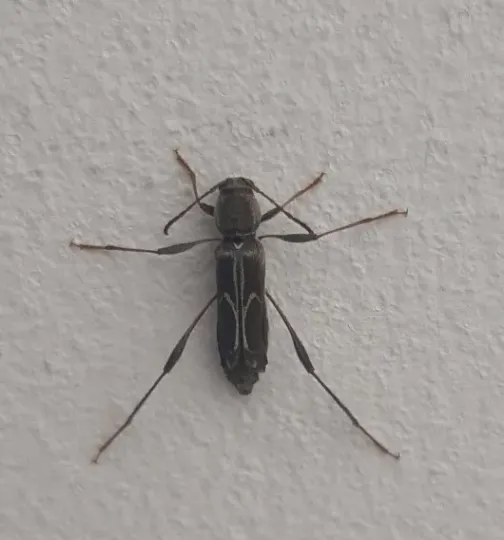
Description
How to identify
Neoclytus unicolor is a species of longhorn beetle (family Cerambycidae). These beetles are characterized by their elongated, cylindrical bodies, which are perfectly adapted for life beneath bark or within wood tissues.
The adult beetles are relatively uniform in color, which makes them less conspicuous than other brightly colored longhorn species, complicating detection during the initial stages of infestation.
The larvae are typically white or yellowish, legless, and possess a well-developed head capsule with strong mandibles. They are highly specialized for boring into the dense wood of deciduous host trees.
Their biological development is closely tied to the state of the host tree. They prefer weakened trees, felled timber, or areas damaged by wind, where the bark moisture levels are sufficient for larval survival.
The life cycle is generally completed in one year, but environmental factors, such as temperature and regional climate, can occasionally extend the development period to two years.
What it damages
Neoclytus unicolor primarily attacks various hardwood species. They prefer trees with soft or moderately hard wood and frequently target stands that are already physiologically stressed.
In orchards and park landscapes, the beetle may attack ornamental trees suffering from drought, previous mechanical injuries, or existing disease, which reduces the tree's natural defense mechanisms.
Damage is caused almost exclusively by the larval stage. Upon hatching, larvae burrow under the bark and begin constructing winding galleries that eventually penetrate deep into the sapwood.
This feeding activity disrupts the tree's vascular system, hindering the transport of water and nutrients, which often results in the dieback of individual branches or the entire canopy.
Chronic infestation by Neoclytus unicolor significantly lowers the timber quality, creating numerous boreholes that render the wood useless for commercial or construction purposes.
When it appears
Adult beetles typically emerge during the spring and summer months. The timing of their flight is highly dependent on ambient temperature and the warming of the wood, as these factors trigger reproductive activity.
Peak emergence usually occurs in late spring or early summer. During this phase, adults can be seen on the bark or surrounding foliage, as they engage in feeding and mating rituals.
Following mating, females oviposit in bark crevices or wounds. Larvae hatch within a short period and immediately begin the process of boring into the host material.
The species typically overwinters in the larval or pupal stage inside the wood, where the bark and wood thickness provide thermal protection against harsh winter conditions.
The initiation of spring activity is strongly correlated with heat accumulation: once average daily temperatures remain consistently above 15 degrees Celsius, development speeds up significantly.
Signs of infestation
A primary indicator of infestation is the presence of "frass" — fine wood dust or shavings found at the base of the trunk, on branches, or within bark fissures.
Characteristic emergence holes appear on the surface of the trunk. These holes are typically round or slightly oval, reflecting the shape and size of the emerging adult beetle.
Removing a section of the bark in infested areas reveals complex galleries filled with compacted sawdust. These galleries often intersect, marking the path of larval feeding.
Visual assessment of the canopy often shows chlorosis, wilting, or branch dieback, particularly in localized areas where the beetle population density is highest.
When the trunk is tapped, a hollow sound may indicate extensive internal structural damage caused by the accumulation of larval galleries within the wood.
Control measures
Sanitation is the cornerstone of control. Timely removal and destruction of infested wood or dying trees are essential to prevent the spread of the beetle to healthy neighboring trees.
Maintaining high horticultural standards, including adequate irrigation and proper fertilization, helps trees remain resilient against wood-boring pests by strengthening their defense systems.
If an infestation is detected early, localized insecticide injections into larval galleries can be effective, alongside the application of contact-based systemic pesticides to the bark.
The use of "trap trees" — fresh logs placed strategically to attract egg-laying females — allows managers to capture and destroy the population before the next generation emerges.
- Regular monitoring of tree health and bark integrity.
- Timely removal of dead or stressed wood.
- Proper disposal or burning of infested wood debris.
Taxonomy
- Latin name
- Neoclytus unicolor
- Order
- Coleoptera (beetles)
- Family
- Cerambycidae
- EPPO code
- NEOYUN
Discussion
No discussions yet — be the first.