
Neochetina eichhorniae
Neochetina eichhorniae
Description
How to identify
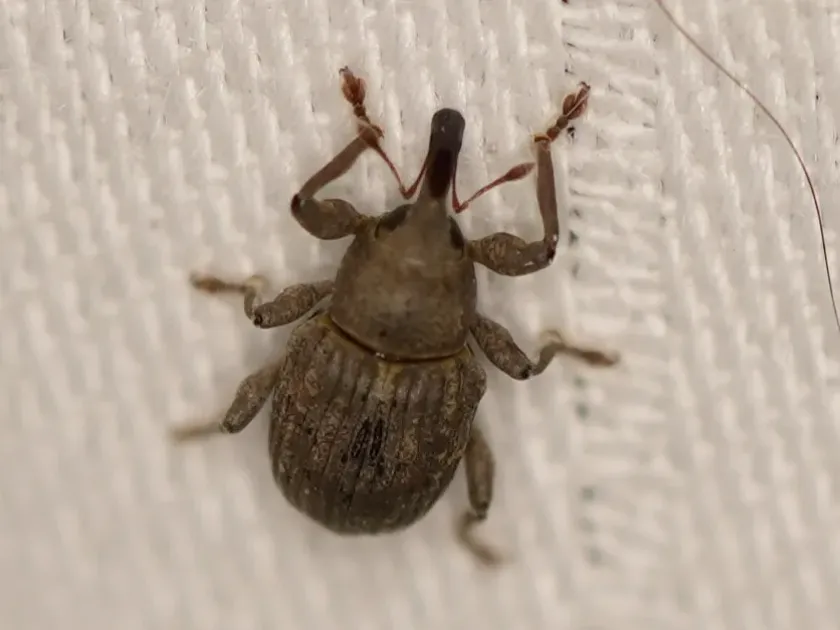
Neochetina eichhorniae is a species of weevil belonging to the family Curculionidae. These insects are small, typically measuring 3–4 mm in length, with a dark brownish-grey coloration that provides excellent camouflage on host plants.
The body is covered in dense scales that repel water, preventing the insect from drowning while navigating the surface of floating plants. They possess a long rostrum, a diagnostic feature of weevils, used for feeding and preparing sites for egg deposition.
The larvae are legless, creamy-white, and have a distinct, dark-colored head capsule. They spend their entire developmental cycle inside the petioles and stems of the host plant, remaining hidden from predators.
Pupation occurs in a specialized cocoon created by the larva, which it attaches to the submerged roots or stems, utilizing the plant’s aerenchyma tissue for air exchange.
Adults are capable of flight but are generally sedentary, preferring to move along the plant mats or crawl on the water surface using surface tension rather than flying long distances.
What it damages
The primary host plant for this insect is Eichhornia crassipes, commonly known as water hyacinth. This plant is a notorious invasive species, and Neochetina eichhorniae is utilized globally as a biological control agent to suppress its growth.
Adult weevils feed on the epidermis of the leaves, creating small, visible pits and scars. This damage reduces the photosynthetic area of the leaf and makes the plant more susceptible to environmental stress.
The most significant impact is caused by the larvae, which tunnel through the interior of the leaf petioles. This burrowing action destroys the aerenchyma tissue, which is essential for the plant's buoyancy.
Compromised structural integrity causes the water hyacinth rosettes to become waterlogged and eventually sink. This reduces the density of the floating mats, allowing light to penetrate the water column.
Widespread infestations by these insects lead to the gradual decline of water hyacinth colonies, enabling the recovery of native aquatic vegetation and improved water flow.
When it appears
The activity and lifecycle of Neochetina eichhorniae are strongly correlated with temperature. The insects thrive in warm conditions, with optimal reproduction occurring at temperatures between 20°C and 25°C.
In regions with cold winters, the insect population may enter a state of dormancy or slow development, resuming active reproduction and feeding once temperatures rise in the spring.
Females lay eggs primarily in the youngest and most succulent parts of the leaves, ensuring the larvae have an immediate food source upon hatching.
The complete life cycle from egg to adult takes approximately two to three months, facilitating rapid population growth during the peak growing season of the water hyacinth.
Seasonal population peaks typically follow the growth cycles of the water hyacinth, ensuring that the availability of resources supports the maximum density of the biocontrol agent.
Signs of infestation
The most noticeable sign of an infestation is the presence of characteristic small, circular feeding scars on the leaves of the water hyacinth. These scars often appear in clusters.
During the day, one can often find adult weevils hiding in the folds of the leaves or near the base of the plant, especially if the infestation density is high.
Internal tunnels can be confirmed by slicing open the leaf petioles; these channels are usually filled with larval frass and plant debris, indicating active development.
The presence of underwater cocoons attached to the roots or stems is the definitive sign that the insect has established a self-sustaining population in the water body.
- Pale, pitted leaf surfaces.
- Loss of buoyancy and waterlogging of the plant rosettes.
- Presence of adults in the leaf axils.
Control measures
Because Neochetina eichhorniae is a beneficial biological control agent, "control measures" are focused on its successful introduction, monitoring, and preservation rather than its eradication.
Biocontrol programs involve releasing laboratory-reared weevils into heavily infested water bodies to establish a permanent population that will manage the weed naturally.
To preserve the biocontrol agents, it is essential to avoid the use of broad-spectrum insecticides in aquatic habitats where the weevils have been released.
Management success is evaluated by monitoring the reduction in water hyacinth coverage and measuring the rate of insect-caused leaf damage over time.
Integrated aquatic management strategies often combine the release of these insects with mechanical removal of dying plant mats to restore water quality efficiently.
Taxonomy
- Latin name
- Neochetina eichhorniae
- Order
- Coleoptera (beetles)
- Family
- Brachyceridae
- EPPO code
- NEONEI
Discussion
No discussions yet — be the first.