
White-toothed short-nosed weevil
Brachycerus albidentatus
Description
How to identify
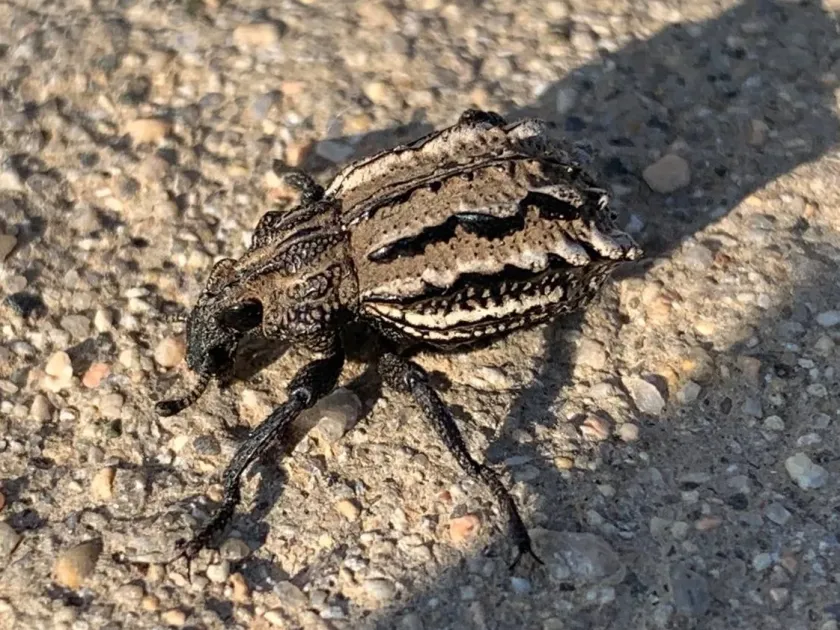
The white-toothed short-nosed weevil (Brachycerus albidentatus) belongs to the Curculionidae family, commonly known as true weevils. These beetles are characterized by their sturdy, often pitted or scaly exoskeletons and a snout-like rostrum, typical for the family.
Adults are typically dark in color, ranging from grey to black, which provides excellent camouflage against soil particles. They are relatively compact and move slowly, often playing dead when disturbed, a defense mechanism common among weevils.
The larvae are apodous (legless), fleshy grubs with a pale, cream-colored body and a sclerotized, darker head capsule. They live hidden within the host plant, feeding on internal tissues, which makes them difficult to spot without dissecting the bulb.
The life cycle involves complete metamorphosis: egg, larva, pupa, and adult. Adults typically overwinter in the soil or under debris, emerging in early spring to feed on tender plant growth and mate.
Pupation usually takes place in the soil near the host plant or occasionally inside the damaged bulb itself. After pupation, the new generation of adults emerges to continue the cycle or find overwintering sites.
What it damages
This weevil primarily targets members of the Amaryllidaceae and Liliaceae families, posing a significant threat to onion, garlic, and various ornamental bulbs. Both adults and larvae can cause damage, though the larval stage is far more destructive.
Larvae feed internally on the scales of bulbs, creating extensive tunnels. This feeding habit weakens the plant structure and provides an entry point for fungal and bacterial pathogens, leading to rapid rotting of the bulb.
Adult feeding results in notched or jagged leaves, which can reduce the photosynthetic capacity of the plant. While less damaging than the larval feeding, high populations of adults can severely stunt the growth of young plants.
Symptoms of infestation often include premature yellowing and wilting of the foliage, even in the presence of adequate soil moisture. If the infestation is severe, the bulb may be hollowed out entirely, leading to total plant collapse.
Crop losses are particularly noticeable in arid conditions where plants are already stressed. The damage not only affects current yields but can also lead to significant losses during storage if affected bulbs are harvested.
Control measures
Crop rotation is the most effective cultural practice for managing populations of this weevil. Avoiding the cultivation of host plants on the same site for multiple consecutive years forces the population to move or die out.
Deep autumn tillage is highly recommended to disrupt the life cycle. By turning the soil, overwintering adults are exposed to predators and environmental stresses like frost, which significantly reduces their survival rate.
Chemical control may be necessary in commercial settings. Targeted insecticide applications should be timed to coincide with the emergence of adults before they can lay eggs or cause significant defoliation to the crops.
Sanitation is critical; all heavily infested plants should be carefully removed and destroyed away from the garden beds to prevent the larvae from completing their development and re-infesting the soil.
Utilizing clean, certified planting material is a key preventative step. Inspecting bulbs before planting ensures that initial infestations are not introduced into the field, protecting the crop from early-season pressure.
Taxonomy
- Latin name
- Brachycerus albidentatus
- Order
- Coleoptera (beetles)
- Family
- Brachyceridae
- EPPO code
- BRCCAB
Discussion
No discussions yet — be the first.