
Obese weevil
Brachycerus obesus
Description
How to identify
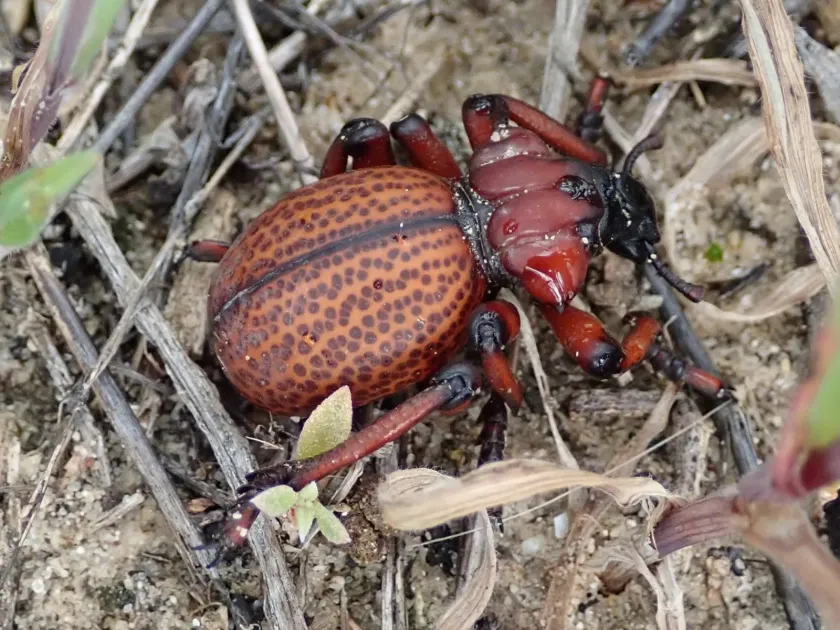
The Obese weevil (Brachycerus obesus) is a member of the Curculionidae family, characterized by its robust, thickset body and a short, stout snout. These beetles are typically dark-colored and have a rugged, textured appearance.
Adults are relatively sedentary insects that prefer staying close to the ground, often sheltering beneath debris or soil clumps during the day.
The larvae are legless, fleshy, and grub-like, with a distinct brownish head capsule, specifically adapted for boring into the bulbs of host plants.
Their taxonomy falls under the Brachycerinae subfamily, known for specialized feeding habits on plants with thick underground storage organs.
Understanding their morphological traits is crucial for early detection, as they are often overlooked due to their camouflaging color and slow movement.
What it damages
This pest primary targets plants within the Amaryllidaceae and Liliaceae families, including various ornamental bulbs and certain vegetable crops.
Adult beetles damage foliage by chewing on leaf margins, which causes irregular, notched appearance and negatively impacts the plant's aesthetic and vitality.
The most significant damage is caused by the larvae, which burrow into the bulbs, consuming the internal tissues and disrupting the plant's nutrient storage.
Bulb infestation often creates entry points for secondary bacterial and fungal pathogens, which frequently lead to the rotting of the entire plant structure.
High infestation levels can result in stunted growth, failure to flower, and eventual collapse of the crop, causing substantial economic losses in nurseries.
When it appears
Overwintered adults emerge from the soil in early spring, coinciding with the initial growth phase of the host plants.
Mating and egg-laying occur during the spring, with females carefully placing eggs near or directly on the bulbs of susceptible plants.
Larval development takes place throughout the growing season, during which they remain hidden within the plant tissues, making them difficult to spot.
Pupation typically occurs in the soil or within the damaged bulb cavity, leading to the emergence of the new generation towards the end of summer.
Adults overwinter in the soil at depths that protect them from harsh weather, ensuring the survival of the population for the next season.
Signs of infestation
Early warning signs include irregularly notched leaf edges caused by the feeding activity of adult beetles during the night or early morning.
- Yellowing and premature wilting of the leaves despite adequate soil moisture.
- Stunted development of flower stalks compared to healthy specimens.
- Softened or hollowed out bulbs found during routine plant inspection.
- Presence of frass or exit holes on the surface of the bulbs.
If a plant fails to thrive or shows sudden wilting symptoms, digging around the bulb base often reveals the presence of adult beetles or signs of larval feeding.
Regular monitoring of the soil surface around host plants is highly recommended during the spring to catch the pests before they begin laying eggs.
Control measures
Effective management relies on a combination of cultural practices, such as deep tilling of the soil after the growing season to destroy hibernating insects.
Implementing a strict crop rotation schedule helps reduce the local population density by removing the primary food source for several consecutive years.
Systemic insecticides applied during the peak emergence period of adults can effectively prevent the cycle of egg-laying and larval infestation.
It is essential to cull and properly dispose of any bulbs showing signs of infestation to prevent the spread of larvae to adjacent healthy plants.
Maintaining proper soil drainage and using certified, pest-free planting stock significantly lowers the risk of establishing a resident population of weevils.
Taxonomy
- Latin name
- Brachycerus obesus
- Order
- Coleoptera (beetles)
- Family
- Brachyceridae
- EPPO code
- BRCCOB
Discussion
No discussions yet — be the first.