
Brachycerus
Brachycerus
Description
How to identify
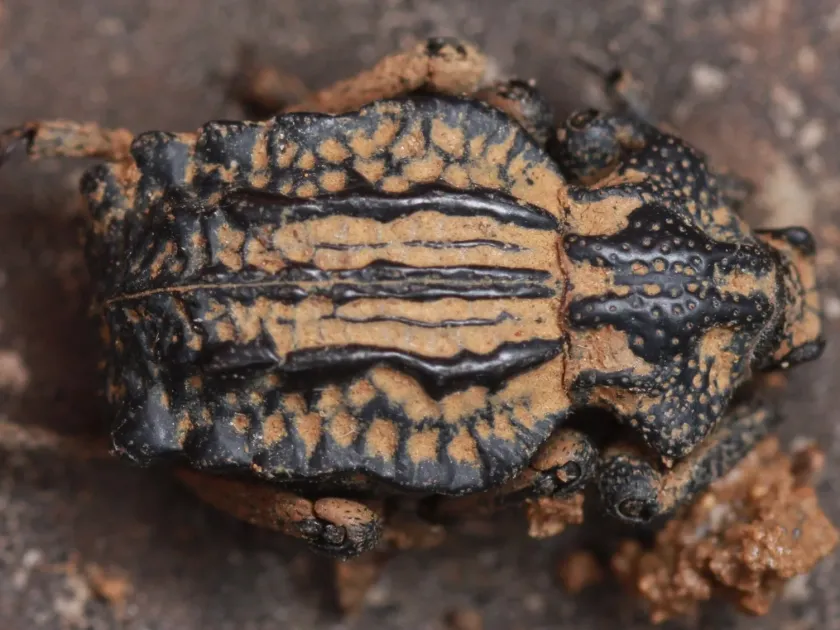
Brachycerus is a genus of snout beetles belonging to the Curculionidae family. These insects are characterized by a robust, thick-set body often covered with distinct tubercles or granules.
The rostrum or snout is significantly shortened compared to other weevils. Their color is generally dull, dark, or earthy, which provides effective camouflage in soil or garden debris.
The larvae are typically fleshy, legless, and white-to-yellowish in color, with a hardened dark head capsule. They spend their entire developmental phase feeding inside plant tissues.
Systematically, they are placed within the Brachycerinae subfamily. The genus contains numerous species, many of which are known to specialize in feeding on monocotyledonous bulbous plants.
Proper identification often requires microscopic examination of the male genitalia or specific morphological features of the pronotum, as many species appear very similar to the untrained eye.
What it damages
The primary hosts of Brachycerus are plants in the Amaryllidaceae and Liliaceae families, specifically garlic, onions, and various ornamental bulbs like tulips or lilies.
The larvae are the most damaging stage. Upon hatching, they burrow into the bulb, creating complex tunnel systems as they consume the inner fleshy scales.
This internal tunneling causes the bulb to lose its structural integrity. Furthermore, the damage provides an ideal entry point for secondary pathogens, such as soft rot bacteria and fungi.
Adult beetles feed on the foliage and base of the stem, but this feeding is usually minor compared to the extensive damage caused by larvae tunneling into the reproductive and storage organs.
Severe infestations frequently result in the total collapse of the plant, leading to significant economic losses in bulb production or commercial vegetable farming.
When it appears
The biological cycle of Brachycerus is tightly synced with the growth cycle of their host plants. Adults typically emerge from their overwintering sites in the soil during early spring.
Mating occurs soon after emergence, and females oviposit on or near the bulbs as they begin their seasonal growth. This timing ensures that young larvae have immediate access to food.
Larval development occurs throughout the spring and early summer, which coincides with the bulb's most active swelling period, thus maximizing the damage to potential harvest yield.
Pupation takes place either within the remnants of the destroyed bulb or in the surrounding soil, leading to the emergence of a new generation of adults by late summer.
Adults go into diapause during the winter months, burying themselves deep in the soil or hiding under dense vegetation to survive freezing temperatures.
Signs of infestation
Initial symptoms are often subtle, starting with stunted growth and chlorosis (yellowing) of the leaf tips, which is easily mistaken for nutrient deficiency or drought stress.
Upon closer inspection, one may find small entrance holes on the outer skins of the bulbs. Digging up affected plants reveals deep, excavated tunnels filled with brown excrement.
Adults are mostly nocturnal or crepuscular, but they may be found at the base of plants during early morning hours. They are known for their "death feigning" behavior when disturbed.
As the rot sets in due to secondary infections, the bulb emits a foul odor, and the plant becomes loose in the soil because its root system has been largely destroyed.
- Yellowing and wilting of foliage.
- Visible tunneling in the bulb tissue.
- Presence of legless larvae inside the bulb.
- Foul-smelling, decaying bulb tissue.
Control measures
Crop rotation is the most essential cultural control method. Moving bulb crops to different fields at least every four years helps break the localized life cycle of the beetle.
Deep autumn plowing of fields helps bring overwintering adults to the surface, exposing them to natural predators and freezing winter conditions that increase mortality.
Rigorous inspection of planting stock is crucial. Only healthy, unblemished bulbs should be planted; any bulbs showing signs of infestation must be destroyed away from the field.
Chemical control may involve the application of granular soil insecticides at the time of planting to protect the root zone and the developing bulb from larval infestation.
For high-value ornamental crops, systemic insecticides can be used to treat the soil around the base of the plant, though always in compliance with local regulatory guidelines.
Taxonomy
- Latin name
- Brachycerus
- Order
- Coleoptera (beetles)
- Family
- Brachyceridae
- EPPO code
- BRCCSP
Discussion
No discussions yet — be the first.