
Neochetina
Neochetina
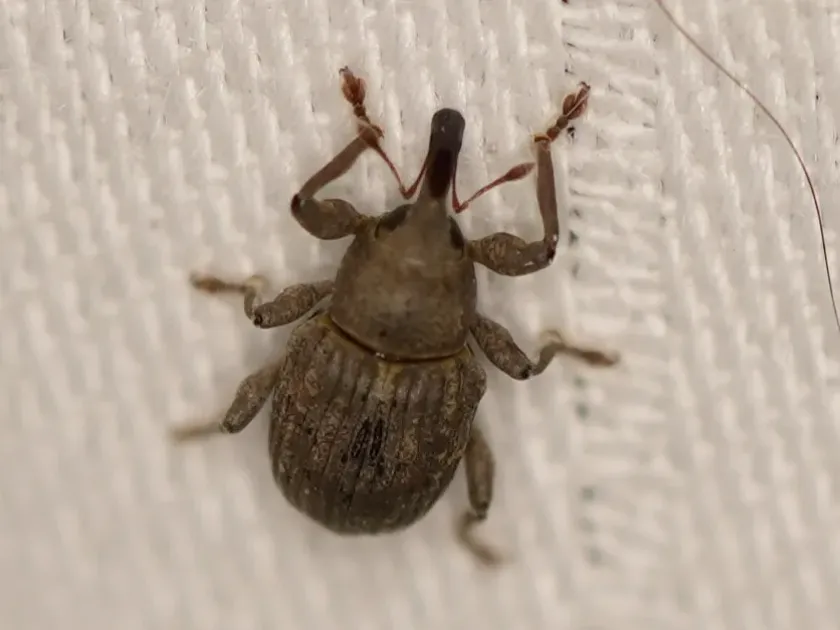
Description
How to identify
The Neochetina genus belongs to the family Curculionidae (weevils). These insects are recognized globally as highly specific biological control agents for invasive aquatic vegetation.
Adult weevils are characterized by their small size, mottled grey and brown coloration, and a prominent rostrum (snout) typical of the weevil family, which they use to feed on plant surfaces.
The larvae are legless and creamy-white in color, specifically adapted to burrowing within the tissues of aquatic host plants where they remain protected from external predators.
The life cycle of Neochetina is intimately linked to the aquatic environment; eggs are deposited into plant tissues, while larvae develop internally and pupate under water.
Adults are capable of flight, allowing them to disperse between fragmented patches of aquatic weeds to establish new colonies and continue their lifecycle.
What it damages
Neochetina species, particularly Neochetina eichhorniae, are primarily known for their devastating impact on water hyacinth (Eichhornia crassipes), a major invasive weed worldwide.
Adult feeding involves grazing on the epidermal layers of leaves, creating small, circular lesions that reduce the plant's photosynthetic capacity and water balance.
Larvae cause significant structural damage by excavating tunnels throughout the petioles and rhizomes of the plant, disrupting the transport of nutrients and gases.
This damage forces the plant to divert energy toward repair, significantly reducing its growth rate, reproductive output, and ability to remain buoyant.
Heavy infestations eventually lead to the collapse and decomposition of water hyacinth mats, effectively mitigating the ecological and economic problems caused by these dense weeds.
When it appears
The development and activity of Neochetina are strongly influenced by ambient and water temperatures, favoring tropical and subtropical climates where water hyacinth thrives.
In optimal conditions, the insects are active throughout the year, with multiple overlapping generations occurring in a continuous cycle depending on food availability.
Temperature fluctuations significantly dictate the rate of egg-to-adult development, with warmer conditions leading to faster population growth and increased pressure on host plants.
The presence of Neochetina is observed consistently as long as the host plants are actively growing, creating a stable ecological feedback loop.
Seasonal peaks in damage often coincide with periods of high plant biomass accumulation, when the insects have abundant resources for rapid population expansion.
Signs of infestation
A primary indicator of Neochetina presence is the occurrence of small, white or brown scars on the surface of water hyacinth leaves caused by adult feeding.
Stunted and chlorotic growth of the plant population often signals that the infestation has reached a level where larval tunneling is significantly impacting plant health.
If petiole tissue is dissected, one can observe larval tunnels and dark excrement, confirming the internal presence and developmental stages of the insect.
A visible loss of buoyancy in individual plants, resulting in them leaning or sinking into the water column, is a clear sign of internal structural degradation.
The gradual fragmentation and thinning of dense weed mats over time demonstrate the success of the biological control effort in that specific area.
Control measures
Since Neochetina is utilized as a beneficial biological control agent, management practices focus on enhancing its effectiveness rather than eliminating it.
Strategies involve monitoring population densities and occasionally redistributing adult weevils from high-density areas to newly invaded water bodies.
No chemical control is recommended for Neochetina, as insecticides would kill the beneficial insects and hinder the sustainable biological management of the weeds.
Integrated management plans may include manual or mechanical removal of excess biomass, which, when combined with Neochetina feeding, accelerates the clearing of the waterway.
Continuous ecological monitoring ensures that the weevil population remains stable and that its host specificity prevents any negative impact on non-target native plant species.
Taxonomy
- Latin name
- Neochetina
- Order
- Coleoptera (beetles)
- Family
- Brachyceridae
- EPPO code
- NEONSP
Discussion
No discussions yet — be the first.