
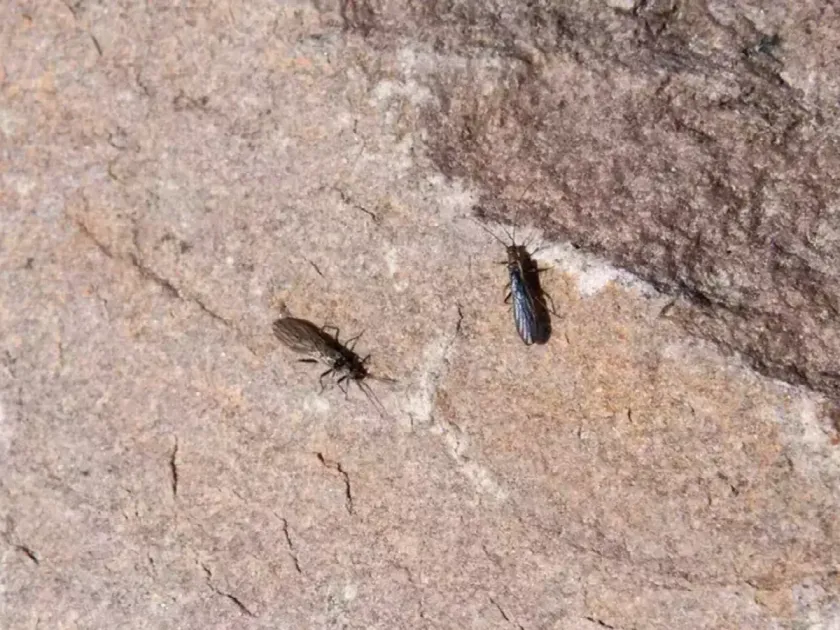
Stonefly of the genus Nemura
Nemura
Description
How to identify
Stoneflies of the Nemura genus belong to the order Plecoptera and the family Nemouridae. Adults are typically characterized by two pairs of membranous wings that fold flat over the abdomen and long, thread-like antennae.
The larvae are exclusively aquatic, dwelling in running water such as streams or rivers where oxygen levels remain high. They possess a flattened body shape, which allows them to hide effectively under stones and debris on the stream bed.
Adult coloration is generally dark, ranging from brown to black, providing excellent camouflage against tree bark or rocks near their aquatic habitats.
These insects undergo incomplete metamorphosis, and their classification to the genus level is based on the specific structure of the adult male genitalia, which is essential for accurate identification.
While they are an integral part of freshwater ecosystems, their presence in large numbers near cultivated areas can occasionally lead to interactions with terrestrial vegetation.
What it damages
The damage caused by Nemura stoneflies is largely confined to the riparian zones of agricultural sites, where both larvae and adults may interact with plant tissues.
In riparian nurseries or gardens situated directly along watercourses, stoneflies may graze on young leaves and soft shoots, causing mechanical injury to the epidermis.
Although they are not major agricultural pests, large aggregations of adults feeding on foliage can weaken young seedlings, leaving them susceptible to secondary fungal or bacterial pathogens.
The damage often presents as irregular grazing patterns, which can stunt the growth of young plants if the infestation is persistent throughout the early spring.
Overall economic damage is relatively low compared to specialized agricultural pests, but it remains a consideration for high-value crops located in wet, low-lying areas.
When it appears
The name stonefly itself indicates the peak emergence period for many species in this order, which typically occurs during the early spring months.
Larval development takes place throughout the year in the water, often occurring during colder seasons, which makes them uniquely adapted to thrive in low temperatures.
The emergence of adults coincides with the onset of the growing season, resulting in a temporary increase in their presence on land as they seek mates and suitable oviposition sites.
The duration of the adult phase on land is relatively short, often limited to a few weeks, depending heavily on ambient air and water temperatures.
As summer temperatures rise, adult stonefly activity typically declines as they require cooler, well-oxygenated aquatic environments to complete their life cycle.
Signs of infestation
Identifying a Nemura infestation involves observing the presence of adults on stems and leaves of plants immediately adjacent to streams or irrigation channels.
Damage signs include ragged leaf edges and small holes in the foliage, indicating the work of insects with chewing mouthparts feeding on the tissue.
The presence of cast-off larval skins (exuviae) on rocks, wood, or bank vegetation is a definitive indicator of the population density in the nearby water body.
In addition to physical feeding signs, the presence of the insects themselves in spring is the primary indicator of their activity in the field.
- Adult stoneflies resting on plants near water in spring.
- Ragged and notched leaf margins on young crops.
- Accumulation of larval exuviae near the water's edge.
Control measures
Effective management of Nemura stoneflies primarily focuses on cultural practices that modify the riparian environment to be less hospitable for them.
Removing excess organic debris and managing overly dense aquatic vegetation along the banks can significantly reduce the habitat available for larvae.
In cases of high density causing visible crop damage, the use of targeted biological control agents is preferred to protect the health of the aquatic ecosystem.
Maintaining adequate soil drainage in fields near water sources helps prevent the moist, cool conditions that often attract these insects to land.
Early season monitoring of riparian vegetation allows for the assessment of potential risks and helps determine if intervention is necessary to protect young crops.
Taxonomy
- Latin name
- Nemura
- Family
- Nemouridae
- EPPO code
- NEMOSP
Discussion
No discussions yet — be the first.