
Wood cricket
Nemobius sylvestris
Description
How to identify
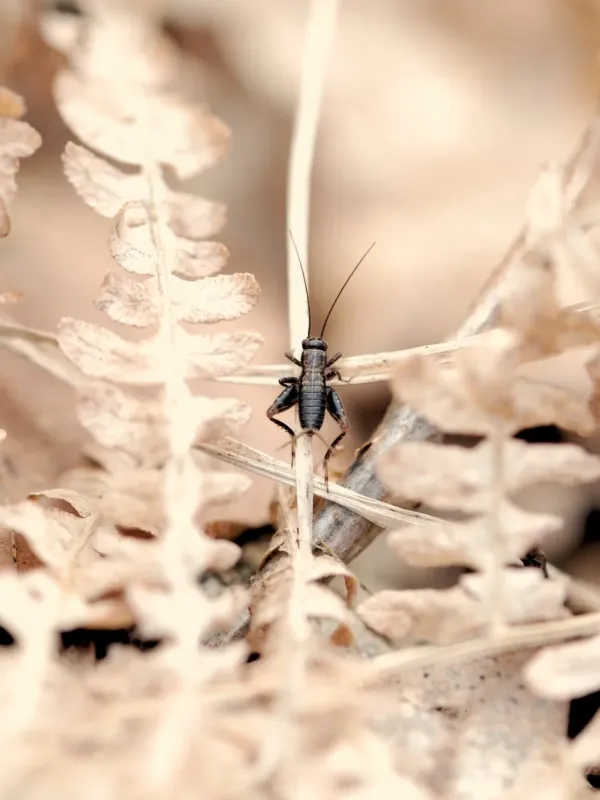
The wood cricket (Nemobius sylvestris) belongs to the Gryllidae family of the order Orthoptera. It is a small insect, typically measuring between 8 and 12 millimeters in length.
The body is dark brown or black in color, providing excellent camouflage against the leaf litter and soil surfaces where it spends most of its life cycle.
These insects have shortened wings and cannot fly, relying instead on quick jumping and running to escape potential threats or navigate their environment.
Females are easily identified by their long, sword-like ovipositor, which is used to lay eggs in moist, decaying organic matter or cracks in the soil.
The life cycle often spans one to two years, involving several nymphal stages that develop slowly in the cool, damp microclimates of forest floors and adjacent areas.
What it damages
Primarily, wood crickets are saprophages that feed on decomposing organic matter, playing a vital role in soil health and nutrient cycling in forest ecosystems.
However, when their populations are high or their natural habitat is disturbed, they may cause incidental damage to the soft tissues of seedlings and young plants.
They are known to feed on the epidermis and leaf margins of young crops, which can stunt growth and provide entry points for various bacterial and fungal pathogens.
Damage is typically most pronounced in nurseries or garden beds located near woodland edges, where the insects find ample cover during the heat of the day.
While rarely responsible for total crop destruction, their cumulative feeding can significantly weaken young plants and impact overall yield in susceptible areas.
When it appears
Adults are most active during the late summer and early autumn, which is the period when they reach maturity and engage in breeding activities.
Winter is typically survived by nymphs, which remain dormant in the soil or protected under thick layers of vegetation until the spring temperatures rise.
Spring marks the resumption of development, with nymphs feeding and undergoing several molts to reach the adult stage by the peak of the warm season.
Weather patterns significantly influence population levels; warm and humid summers are generally more conducive to rapid development and increased survival rates.
A prolonged drought can negatively affect their activity, forcing crickets to migrate towards more humid areas, which may lead to higher concentrations near cultivated plants.
Signs of infestation
The most distinctive sign of a wood cricket infestation is their characteristic high-pitched chirping, which becomes widespread in late summer evenings.
Visual identification of damage includes irregular, jagged holes on the leaves of low-growing plants, often near the base where the crickets find shelter.
A rustling sound heard while moving through leaf litter or garden mulch is a common indicator that a population is present in that specific area.
Discarded exoskeleton remains, left behind after molting, can be found near their nesting sites and indicate a thriving cricket population in the garden.
Nighttime observation with a flashlight often reveals the crickets' presence, as they are most active when hunting for food under the cover of darkness.
Control measures
Sanitation is the most effective preventive measure; removing debris, weeds, and heavy mulch layers deprives crickets of their primary shelter and breeding grounds.
Modifying the environment by improving soil drainage and avoiding excessive irrigation helps make the garden area less hospitable to wood crickets.
Bait traps, such as containers buried at soil level filled with vegetable scraps or beer, can be used to monitor and reduce local population numbers effectively.
When necessary, apply environmentally friendly, botanical-based insecticides that are targeted to soil-dwelling insects to minimize impact on beneficial species.
Promoting a healthy ecosystem by encouraging predators like hedgehogs, frogs, and ground beetles helps maintain a natural balance and prevents cricket outbreaks.
Taxonomy
- Latin name
- Nemobius sylvestris
- Order
- Orthoptera (locusts)
- Family
- Gryllidae
- EPPO code
- NEMBSY
Discussion
No discussions yet — be the first.