
Nemobius
Nemobius
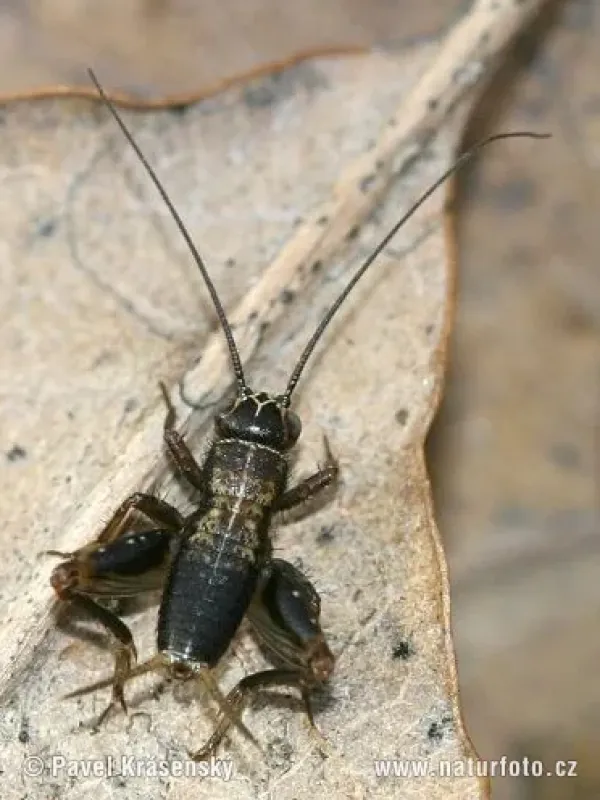
Description
How to identify
Nemobius is a genus of ground crickets belonging to the family Gryllidae (order Orthoptera). These insects are recognized by their relatively small size compared to other common crickets, typically measuring between 8 and 15 mm in length, with a brownish or dull color pattern.
They possess specialized chewing mouthparts adapted for consuming plant material and organic matter. Their legs are robust, with the hind pair specifically modified for jumping, which helps them evade predators in their habitat of leaf litter and dense ground cover.
The morphology includes long, slender antennae that serve as vital sensory organs for navigating in low-light environments. Most species have reduced or absent wings, limiting their dispersal capabilities and making them highly localized in moist, nutrient-rich environments.
Biological development occurs primarily within the soil or substrate, where females deposit eggs. The life cycle involves a nymphal stage where the insects look similar to adults but are sexually immature, gradually growing and molting as they feed on available vegetation.
They are primarily nocturnal creatures, remaining hidden during the day. Their environmental preferences for high moisture levels make them common inhabitants of irrigated fields, garden borders, and areas with dense, undisturbed vegetation.
What it damages
Nemobius species are known to cause damage to seedlings and young plants by feeding on stems and leaves near the soil surface. This feeding activity can stunt growth or lead to the mortality of young crops, particularly in susceptible vegetable and cereal varieties.
The economic impact of these pests is highest during the early vegetative stage of crop growth. By consuming crucial tissues, they weaken the plant’s structural integrity, leading to reduced overall yield and poor plant establishment in affected farm fields.
When it appears
Pest activity typically increases during the summer months when environmental conditions are warm and humid. Population surges are common during peak summer, when moisture levels remain high enough to support the rapid development of nymphs into adult stages.
Signs of infestation
Infestation is often identified by irregular holes in leaves near the base of the plant. Furthermore, severe cases show stem damage characterized by surface gnawing, which causes young plants to droop or collapse entirely in otherwise healthy-looking fields.
Control measures
Integrated pest management strategies are crucial. These include frequent cultivation to disrupt nesting sites, maintenance of field hygiene by removing debris, and the judicious use of pesticides when economic thresholds are exceeded to minimize crop losses.
Taxonomy
- Latin name
- Nemobius
- Order
- Orthoptera (locusts)
- Family
- Gryllidae
- EPPO code
- NEMBSP
Discussion
No discussions yet — be the first.