
Filamentous looper
Nematocampa limbata
Description
How to identify
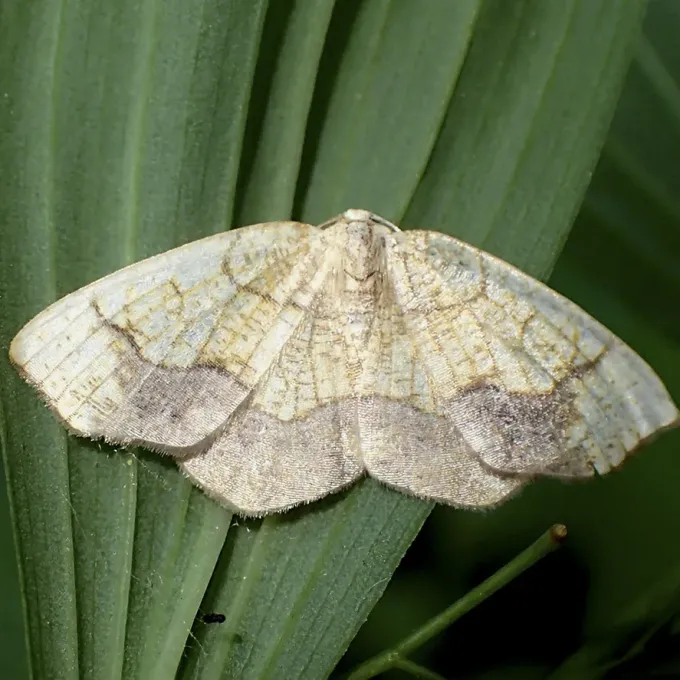
The Filamentous looper (Nematocampa limbata) belongs to the Geometridae family within the order Lepidoptera. The adult moth has a wingspan of approximately 20–25 mm.
The moths are characterized by their ochre to yellowish-brown wings, which feature dark transverse lines forming a delicate, lace-like pattern, giving the species its common name.
The larvae, or caterpillars, are highly distinctive; they possess long, filament-like appendages on their bodies, which allow them to mimic twigs or dried plant debris.
Their coloration ranges from dark brown to green, providing excellent camouflage against the bark or foliage of their host plants, making them difficult to spot.
Identification is often complicated by their cryptic behavior and their ability to remain motionless to resemble parts of the host tree.
What it damages
The Filamentous looper is a polyphagous pest, known to feed on a wide variety of deciduous trees, shrubs, and ornamental woody plants.
Host plants commonly include apple, cherry, maple, alder, and willow trees, frequently occurring in both managed garden landscapes and forest habitats.
In nurseries and young orchards, these larvae can cause significant harm by consuming leaf buds and young foliage, which stunts the growth of the trees.
While the damage is often localized, heavy infestations can lead to significant defoliation of the canopy, weakening the host plant's overall health.
Weakened trees become more susceptible to secondary infections, fungal diseases, and other insect pests, thereby increasing long-term damage.
When it appears
The lifecycle of Nematocampa limbata typically involves one or two generations per year, which is heavily influenced by the regional climate and seasonal temperatures.
Adult moths are generally active during the summer months, from June to August, during which time they mate and deposit eggs on suitable host plants.
The caterpillars are most active during the warmer periods, feeding intensely on foliage throughout the peak vegetative growing season.
Overwintering usually occurs either at the pupal stage, protected within a loose cocoon, or as eggs hidden in the crevices of the tree bark.
Early spring development is strongly correlated with temperature, meaning that warmer-than-average springs may lead to earlier caterpillar emergence and increased damage.
Signs of infestation
The primary sign of infestation is ragged or chewed leaf margins and irregular holes in the leaf blades of young shoots.
Careful inspection of branches may reveal fine silk threads, which the larvae use for maneuvering and anchoring themselves when they feel threatened.
Because the larvae look exactly like leaf petioles or twigs, they are rarely seen unless the foliage is shaken or examined at very close range.
The presence of significant amounts of frass (caterpillar droppings) on the leaves below feeding sites is a strong indicator of recent activity.
- Deformed apical shoots and buds.
- Small, intricate holes in young foliage.
- Larvae found motionless in an extended pose.
Control measures
Controlling the Filamentous looper requires an integrated strategy that combines mechanical practices with biological and chemical monitoring.
Hand-picking caterpillars and pruning heavily infested branches are highly effective practices for small-scale gardens and individual trees.
Promoting a healthy environment for natural predators, such as insectivorous birds and parasitic wasps, can significantly keep the population in check.
When necessary, biological insecticides, such as products containing Btk, are effective and safe for non-target species in the garden ecosystem.
Chemical control should be reserved for severe outbreaks, following the manufacturer's label instructions strictly to minimize the impact on beneficial insects.
Taxonomy
- Latin name
- Nematocampa limbata
- Order
- Lepidoptera (butterflies)
- Family
- Geometridae
- EPPO code
- NEMTLI
Discussion
No discussions yet — be the first.