
Filamentaria
Nematocampa filamentaria
Description
How to identify
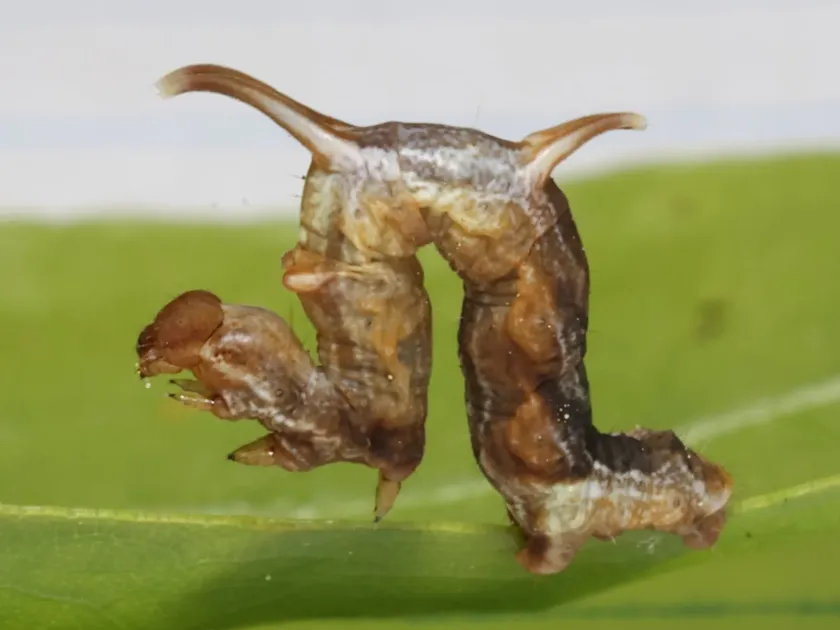
Filamentaria (Latin: Nematocampa filamentaria) belongs to the Geometridae family. In its caterpillar stage, this insect is easily identified by the characteristic thread-like appendages on its back, which give it a very unusual appearance.
Adults are small moths with a wingspan of about 2-3 cm. Their wing color ranges from pale yellow to ocher with brown transverse bands, providing excellent camouflage on tree bark.
The larvae of the filamentaria go through several developmental instars, maintaining their specific appendages throughout each stage. The shape and mobility of these filaments are key diagnostic features for entomological identification.
The biology of this species is closely linked to forest and garden ecosystems. The moths are primarily active at twilight, making them difficult to spot during routine daytime inspections of plantings.
Systematically, the species is included in the order Lepidoptera. Although this insect is more common in forest areas, it can cause damage to cultivated plants during outbreaks of mass reproduction.
What it damages
The filamentaria is considered a polyphagous pest, meaning it has a wide range of host plants. It primarily damages various types of coniferous and deciduous trees.
Among conifers, spruce, fir, and pine are most commonly affected. Caterpillars consume the tender tissues of needles, which leads to significant weakening of the tree when populations are high.
The diet includes deciduous species such as apple, blueberry, willow, and maple. The larvae consume leaf blades, leaving only coarse veins, which disrupts the photosynthesis process.
The main damage is caused by the larvae (caterpillars), which are characterized by intensive feeding during their active growth phase. They are capable of damaging both young shoots and already formed leaves.
Economic damage increases under favorable weather conditions when population outbreaks occur. This can lead to partial defoliation of trees in nursery plantations.
When it appears
The life cycle of the filamentaria depends on regional climate conditions. Typically, moths appear in the summer, most often in June or July, when the active flight period of the adults occurs.
Females lay eggs on the bark or needles of host plants, where they can overwinter until the following spring. This ensures high survival rates of the species during harsh winters.
The emergence of caterpillars from eggs is synchronized with bud burst or the beginning of the vegetation period. During this phase, the pests are most active and vulnerable to protective treatments.
Pupation usually occurs in a silken cocoon attached between leaves or in crevices of the bark. The pupal stage lasts several weeks at the end of the summer season.
The number of generations per season depends on latitude: one generation develops in northern regions, while two complete generations per year are possible in southern areas.
Signs of infestation
The main sign of infestation is the presence of eaten leaf edges and skeletonized areas. Filamentaria caterpillars often remain unnoticed due to their camouflaged appearance.
The presence of silk on shoots also indicates the pest's activity. Caterpillars use this silk to anchor themselves to the plant or to create protective cover during molting.
Slow growth of young saplings and a yellowish discoloration of needles are indirect signs of severe infestation. Weakened trees become attractive to secondary pests, such as wood-boring insects.
The presence of frass (excrement) on the leaf surface beneath the canopy is a clear indicator that larval feeding is active in the upper parts of the tree.
Visual inspection of the canopy in the evening using a flashlight helps detect caterpillars, as they are most active during this time.
Control measures
Protection measures include agrotechnical and chemical control methods. Maintaining plant health is crucial, as strong trees better tolerate minor damage.
Biological products based on bacteria, such as Bacillus thuringiensis, show high effectiveness against younger caterpillar instars without harming beneficial entomofauna.
In cases of mass infestation, systemic or contact insecticides are applied. Spraying should be carried out strictly before the start of the pest's mass pupation.
Mechanical removal of caterpillars or pruning severely affected branches is justified in small private gardens. This allows for the localization of the outbreak without chemical use.
Monitoring with pheromone traps helps to timely determine the start of the moth flight and forecast potential threats to the harvest for the next season.
Taxonomy
- Latin name
- Nematocampa filamentaria
- Order
- Lepidoptera (butterflies)
- Family
- Geometridae
- EPPO code
- NEMTFI
Discussion
No discussions yet — be the first.