
Nematocampa
Nematocampa
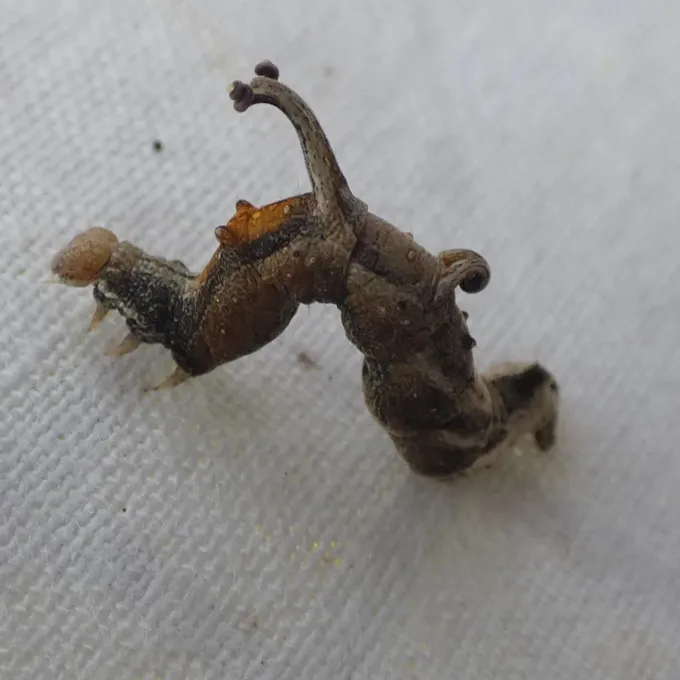
Description
How to identify
Nematocampa resistaria, commonly known as the filament bearer moth, belongs to the Geometridae family. Adult moths have a wingspan of roughly 25–30 mm with distinct wavy lines across their wings.
The larvae, known as caterpillars, are famous for their unique shape and camouflage. They possess dorsal filaments that help them blend in perfectly with plant twigs, making them difficult to detect.
The life cycle undergoes complete metamorphosis, including egg, larva, pupa, and adult stages. They typically overwinter as pupae or larvae in protected areas on the tree bark or leaf litter.
Adults are nocturnal insects, often attracted to artificial light sources. Their breeding season is closely tied to the flushing of leaves on host plants during the spring and summer months.
Due to their excellent mimicry skills, these caterpillars often go unnoticed until significant leaf damage has already occurred across the canopy.
What it damages
Nematocampa acts as a polyphagous pest, feeding on a wide variety of deciduous trees, including fruit species like apple, pear, and plum, as well as several forest species.
Caterpillars feed on the leaf tissue, leaving behind ragged margins or irregular holes in the foliage. This reduces the photosynthetic capacity of the host plant.
Heavy infestations can lead to premature leaf drop and stunted growth of new shoots, which compromises the tree’s overall health and vigor for the following season.
In orchards, the damage can be particularly detrimental to the yield and fruit quality if the infestation occurs during the critical fruit-setting period.
Young nursery trees are at the highest risk, as the loss of foliage can significantly set back their development and marketability.
Signs of infestation
The most reliable sign of a Nematocampa infestation is the presence of irregular bite marks and holes on the leaves that appear during the active growing season.
Close inspection of branches often reveals the larvae, which freeze in a rigid, twig-like posture when disturbed, camouflaging them against the wood.
Silk webbing found on the edges of leaves, used by the caterpillars to build protective shelters, is a strong indicator of their presence.
Accumulation of frass (caterpillar droppings) on the leaves or the ground beneath the tree canopy confirms that feeding is occurring.
Visible thinning of the foliage, especially in the upper parts of the crown, often signals that a population of larvae is actively feeding on the tree.
Control measures
Manual removal of caterpillars is a viable strategy for small garden plots, particularly if the insects are spotted early in the season.
The use of sticky bands around tree trunks serves as a physical barrier, preventing larvae from moving between the ground and the crown.
Biological insecticides, such as those containing Bacillus thuringiensis, are highly effective against young larvae and represent an environmentally friendly control option.
Chemical control with contact insecticides should be reserved for periods of high infestation, adhering to integrated pest management (IPM) guidelines.
- Maintain tree health through proper fertilization and pruning.
- Encourage natural predators like birds and parasitic wasps.
- Install light traps to monitor the onset of the moth flight.
Taxonomy
- Latin name
- Nematocampa
- Order
- Lepidoptera (butterflies)
- Family
- Geometridae
- EPPO code
- NEMTSP
Discussion
No discussions yet — be the first.