
Seed bug
Neacoryphus
Description
How to identify
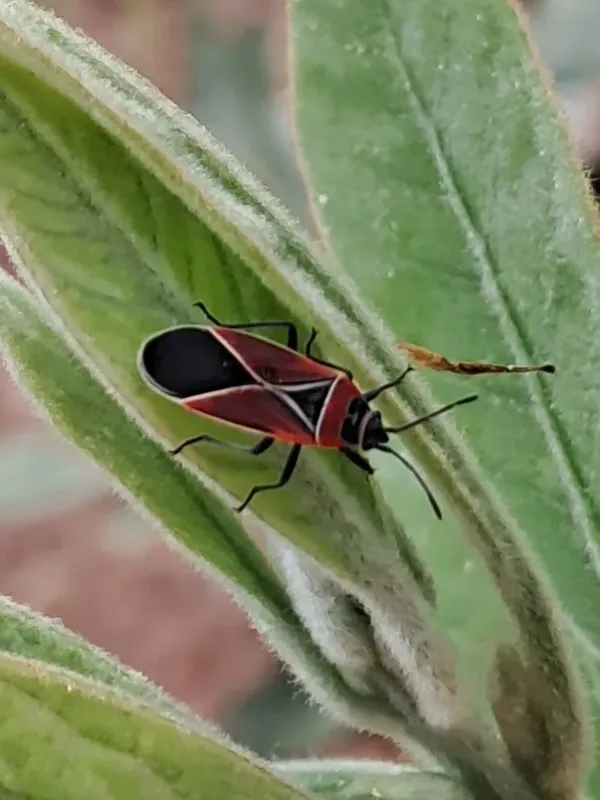
The Neacoryphus bicrucis, commonly known as the seed bug, belongs to the family Lygaeidae. These insects are easily identified by their striking red-and-black patterns on the hemelytra, which often resemble a cross shape.
Adults typically measure between 8 to 10 mm in length and possess a slender, elongated body structure. The head and pronotum are predominantly black, providing a sharp contrast to the red markings on the wings.
The antennae are four-segmented, a diagnostic feature common to this genus. Nymphs go through five distinct developmental stages, starting with a bright red coloration and gradually darkening as they mature.
Their life cycle involves incomplete metamorphosis. They are frequently found in open, sunny habitats such as meadows, road edges, and agricultural fields where host plants are abundant.
Being diurnal insects, they are most active during the warmest parts of the day, making them easier to spot when scouting fields during the mid-summer period.
What it damages
This pest primarily feeds on seeds, using its piercing-sucking mouthparts to extract vital nutrients. This damage leads to shriveled seeds with reduced viability, posing a major risk for seed production crops.
While they show a preference for plants in the Malvaceae and Asteraceae families, they can occasionally attack other crops if the primary host plants are present nearby.
Heavy infestations can cause visible distortion to flower buds and young shoots. The physical trauma from feeding also weakens the plant structure, making it susceptible to environmental stress.
The feeding process leaves micro-punctures on the surface of seeds and fruit pods. These punctures often serve as entry points for secondary bacterial or fungal pathogens, leading to premature rot.
In high-density populations, the economic damage can be significant, especially in crops where seed quality is the primary commercial metric.
When it appears
Neacoryphus bicrucis overwinters as an adult, seeking shelter under leaf litter, debris, or within soil crevices to survive the cold season. They emerge from diapause when spring temperatures stabilize.
Reproductive activity peaks during the summer months when eggs are laid on host plants. The timing of their life cycle is highly dependent on ambient temperature and available food sources.
The highest pest pressure is usually recorded in late summer. During this time, multiple generations may overlap, leading to a sudden surge in the number of individuals found in the field.
Weather patterns heavily influence population dynamics: sustained hot and dry weather can accelerate their development, while heavy rain can inhibit their foraging behavior.
As autumn approaches, the bugs begin to aggregate, preparing to move into overwintering sites away from the open crop fields.
Signs of infestation
Visual confirmation of the bug is the most reliable sign. Look for the distinct red-and-black patterned adults and their younger, bright red nymph stages on host plant stems.
Damage to the seed coat, visible as tiny dark spots or punctures, indicates where the bugs have been feeding. This often leads to the premature shedding of seeds or fruit pods.
Wilting of floral organs and uneven maturity across the crop stand are common indirect signs of a significant bug population infestation.
The presence of necrotic spots around feeding sites is a result of digestive enzymes injected into the plant tissues, which can be observed during a close inspection of the leaves.
Quick escape behavior is another hallmark: when disturbed, these bugs tend to scatter or fly away rapidly, revealing their presence in the canopy.
Control measures
Cultural control is the most effective long-term strategy. This includes the rigorous removal of weeds, particularly Malvaceae species, which serve as reservoirs for the pest population.
Deep fall tillage is recommended to disrupt overwintering sites, effectively reducing the number of adults that survive until the following spring.
In cases of severe economic threat, targeted application of contact-kill insecticides during the most active feeding period may be necessary, provided they are authorized for the crop.
Encouraging natural predators such as birds and predatory insects helps maintain balance within the ecosystem, reducing the need for chemical intervention.
- Regular monitoring of field margins.
- Weed control programs.
- Crop rotation to break cycles.
- Use of pheromone traps for early detection.
Taxonomy
- Latin name
- Neacoryphus
- Order
- Hemiptera (bugs, aphids, leafhoppers)
- Family
- Lygaeidae
- EPPO code
- NEACSP
Discussion
No discussions yet — be the first.