
Nabis rufusculus
Nabis rufusculus
Description
How to identify
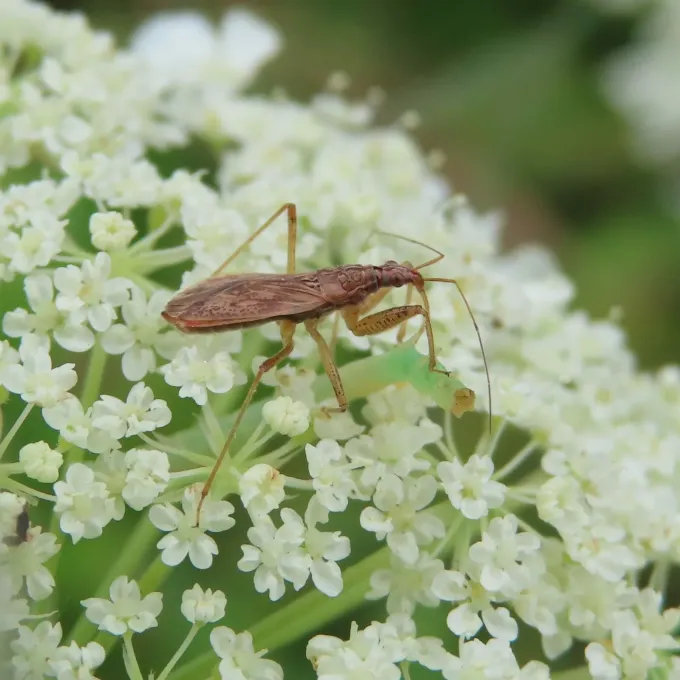
Nabis rufusculus, commonly known as a type of damsel bug, belongs to the family Nabidae in the order Hemiptera. These insects typically measure between 7 and 9 millimeters in length and possess an elongated, slender body structure with a reddish-brown coloration.
The head is equipped with a distinct, sharp proboscis used for feeding. The pronotum is trapezoidal and well-developed. Their wings are fully functional, providing them with the necessary mobility to navigate agricultural landscapes efficiently.
Nymphs undergo five developmental stages, appearing similar to adults but lacking fully developed wings. As they mature, they become increasingly mobile and exhibit the predatory behaviors characteristic of their species.
While often considered beneficial predators of aphids and mites, they can become pests when their primary prey is scarce. Understanding their morphologic characteristics is essential for distinguishing them from other beneficial predatory bugs in the same family.
Because they are secretive and often hide in the lower canopy or dense foliage, they can be difficult to spot without careful inspection or the use of specific field monitoring techniques like sweep netting.
##damage##The damage caused by Nabis rufusculus occurs primarily when the bug feeds on plant tissues instead of its usual prey. By inserting its proboscis into stems or leaves, the insect injects digestive enzymes that damage plant cells.
The primary hosts affected include cereal crops like wheat and barley, as well as various legumes and vegetable plants. The feeding punctures often lead to localized necrotic spots, causing stress to the plant's vascular system.
In young plants, these injuries can stunt development and cause leaf distortion. When high populations are present, the cumulative damage can lead to reduced photosynthetic capacity and diminished crop yields.
The feeding sites also act as entry points for secondary pathogens, including fungi and bacteria, which can cause further degradation of the plant tissue beyond the initial physical harm caused by the bug.
Severe infestation during the early vegetative stages is particularly detrimental, as it interferes with the plant's ability to establish a robust framework for later growth and grain development.
##season##Adults overwinter in protected areas, such as leaf litter, tall grasses, or debris around the field margins. As temperatures rise in the spring, they emerge and begin searching for food sources to fuel their reproductive cycle.
The peak activity of the pest typically occurs during the summer months, with the most significant damage observed as the larval populations increase in June and July. Depending on climate, one or two generations may occur per season.
Temperature and humidity significantly influence the developmental speed of these insects. Warmer, dry seasons usually facilitate faster development, leading to larger population spikes in agricultural fields.
By late autumn, as day length decreases and temperatures drop, the bugs enter diapause and migrate to sheltered locations to survive the winter. This seasonal migration is a crucial factor in planning preventative measures.
Consistent monitoring throughout the growing season is essential for early detection. Farmers should be particularly vigilant after warm winters, which often result in higher survival rates of the overwintering population.
##signs##Early signs of an infestation include the appearance of tiny, needle-like punctures on leaves. These often turn into small, yellowish or brown necrotic spots due to the chemical action of the insect's saliva.
Distortion of the younger leaves or apical growth is a common indicator that the insects have been feeding on the most tender parts of the plant. In some cases, affected leaves may show signs of premature wilting.
The presence of exuviae (shed skins) on the stems or the undersides of leaves is a clear indicator that the population is developing actively within the crop canopy.
- Small, chlorotic spots visible on the leaf surface.
- Stunted growth or irregular development of new shoots.
- Presence of slender, brownish bugs when shaking the plants over a white tray.
Regular field scouting is the most effective way to identify signs of infestation early. If damage patterns appear across sections of the field, it is necessary to perform a more detailed count to determine the severity.
##control##Effective management begins with good agronomic practices, such as clearing weeds from field borders to eliminate overwintering sites. Deep tillage post-harvest can also help disrupt the life cycle of the pest.
Maintaining a balanced crop rotation reduces the stability of the environment for the pest, making it harder for populations to build up to damaging levels year after year.
When populations exceed the economic threshold, chemical intervention may be required. Using targeted insecticides can control outbreaks while minimizing the impact on non-target species and beneficial insects.
Biological control plays a significant role in managing Nabis rufusculus, as many natural enemies are already present in a healthy ecosystem. Preserving these habitats at the edge of the farm is a cost-effective strategy.
Always time chemical applications based on the life cycle of the pest, focusing on the larval stages when they are most vulnerable to treatment, and strictly follow the labels of the products being used.
Taxonomy
- Latin name
- Nabis rufusculus
- Order
- Hemiptera (bugs, aphids, leafhoppers)
- Family
- Nabidae
- EPPO code
- NABIRU
Discussion
No discussions yet — be the first.