
Nabis punctipennis
Nabis punctipennis
Description
How to identify
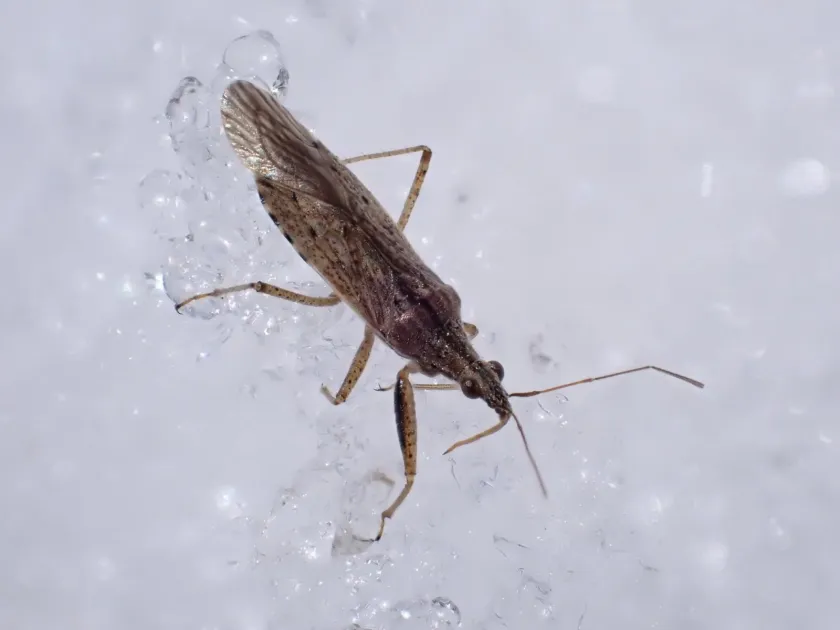
Nabis punctipennis, commonly known as a type of damsel bug, belongs to the family Nabidae within the order Hemiptera. These insects are recognized by their elongated bodies, usually colored in shades of brown, gray, or tan with dark punctations on the pronotum and scutellum.
The head is equipped with large, prominent eyes and a sharp, three- or four-segmented rostrum designed for piercing and sucking. This structure is essential for their hunting behavior, allowing them to capture prey efficiently.
Their wings are well-developed, with clear membranous sections showing distinct venation, which grants them excellent flight capabilities. Their forelegs are raptorial, adapted for grasping and holding small insects during feeding.
Nymphs are smaller versions of the adults, lacking fully developed wings. They undergo several molting stages, gradually increasing in size while retaining the general body shape of the mature bugs.
While often categorized as beneficial predators, they are opportunistic feeders. When insect prey is scarce, they may feed on plant sap, classifying them as occasional agricultural pests in certain environments.
What it damages
Damage caused by Nabis punctipennis occurs primarily when they switch from a carnivorous diet to a herbivorous one due to environmental stress or food shortage. They pierce the epidermis of plant tissues to extract juices.
Affected crops often include cereals, legumes, and various vegetable plants. The bugs target leaves, tender shoots, and developing seeds, causing small, localized necrotic spots at the site of the puncture.
Prolonged feeding can lead to physiological stress in the plant, manifesting as stunted growth, wilting, or yellowing of the leaves. This is particularly problematic in young, sensitive plants during early developmental stages.
In grain crops, feeding on the developing heads can cause shriveled or empty grains, significantly impacting the yield quality and quantity. The punctures also facilitate the entry of secondary pathogens.
While usually considered minor pests compared to true sap-sucking specialists like aphids, their presence in high densities during critical crop stages can justify management interventions.
When it appears
The life cycle of Nabis punctipennis begins in early spring, as overwintering adults emerge from dormancy to find food and mating partners. They are typically found in grassy areas, field margins, and weeds.
The population reaches its peak during the summer months, facilitated by multiple generations produced throughout the season. Warm, dry weather usually accelerates their development and increases their mobility across agricultural fields.
As temperatures drop in the autumn, adults move toward protected areas such as crop residues, leaf litter, or hedges to hibernate. These sites are essential for their survival during the winter months.
Local weather patterns, such as early spring warmth, can lead to earlier crop infestation. Monitoring for adults and nymphs is crucial during the flowering and seed-filling phases of the crops.
Effective management strategies should account for their seasonal migration patterns, particularly when moving from surrounding wild vegetation into cultivated commercial fields.
Signs of infestation
The most reliable sign of a Nabis punctipennis presence is the visual detection of the insects themselves, often hidden within the foliage or near the stems of the plants.
Leaves showing tiny, chlorotic spots or microscopic necrotic lesions are clear indicators of feeding damage. These spots may be surrounded by a pale, discolored halo, indicating a reaction to the bug's saliva.
Curling or distorted leaves, especially on younger growth, often suggest that the plant has been heavily fed upon. General weakening of the plant structure can also point to a significant population of these bugs.
In cereal crops, the observation of empty or shriveled grains during harvest preparation can signify that the infestation occurred during the crucial grain-filling period.
The presence of exuviae (cast-off skins) on leaves or stems serves as proof that the population is actively breeding and completing its developmental stages within the crop field.
Control measures
Controlling Nabis punctipennis involves integrated pest management (IPM) strategies that aim to minimize plant damage while maintaining ecological balance. Focus on cultural and biological practices.
Weed control is the primary method of management. Removing weeds from field borders and inner field patches eliminates the bugs' alternative food sources and overwintering habitats.
Biological control using natural enemies, such as parasitic wasps or generalist predators, can help keep bug populations in check. Preserving the habitat for these beneficial species is vital.
If chemical intervention becomes necessary due to high population pressure, choose selective insecticides that have a lower impact on non-target beneficial insects to prevent secondary pest outbreaks.
- Implementation of crop rotation to break life cycles.
- Strategic mowing of field margins to reduce bug reservoirs.
- Monitoring using yellow sticky traps to assess population density.
- Avoiding unnecessary broad-spectrum insecticide applications.
Taxonomy
- Latin name
- Nabis punctipennis
- Order
- Hemiptera (bugs, aphids, leafhoppers)
- Family
- Nabidae
- EPPO code
- NABIPU
Discussion
No discussions yet — be the first.