
Nabis pseudoferus
Nabis pseudoferus
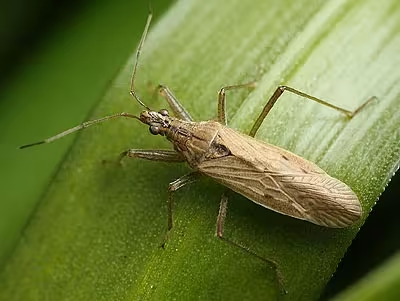
Description
How to identify
Nabis pseudoferus, commonly referred to as a species of damsel bug, belongs to the family Nabidae and the order Hemiptera. These insects are characterized by a slender, elongated body measuring approximately 7 to 9 mm in length.
Their coloration typically ranges from greyish-yellow to brownish, providing excellent camouflage against the stems and leaves of host plants found in agricultural fields.
The head features a prominent, robust rostrum, which is a specialized mouthpart used for piercing and feeding on both plant tissues and prey insects.
Nymphs of this species resemble the adults but lack functional wings and are generally smaller, undergoing gradual development through several instars before reaching maturity.
Active specimens are most commonly observed during the spring and summer months, as they emerge from overwintering sites in soil debris or field margins when temperatures rise.
What it damages
While Nabis pseudoferus is primarily considered a beneficial predator that hunts aphids and other pests, it can display phytophagous behavior when prey becomes scarce.
The bug primarily affects cereal crops such as wheat, barley, and rye, especially during the vegetative growth stages when the plants are most susceptible to sap loss.
Feeding damage occurs when the bug pierces the plant tissue and injects saliva containing enzymes, which breaks down the cell structure to facilitate the intake of nutrients.
This feeding mechanism causes necrotic spots, localized wilting, and overall physiological stress, which directly impacts the plant's capacity for photosynthesis and grain development.
Under heavy infestations, especially in arid conditions, the cumulative damage can lead to significant reductions in total crop yield and deterioration of the quality of the harvest.
Signs of infestation
A primary indicator of Nabis pseudoferus activity is the visible presence of small, discolored piercing marks on leaves, which gradually develop into necrotic or chlorotic lesions.
Field scouting using sweep nets is the standard method for detection; a high count of adult bugs per net sample indicates a potential risk to the developing crop canopy.
Stunted growth or curling leaves in affected patches of the field are often indicative of feeding activity, particularly if the crop is already under drought stress.
Small, dark fecal spots left by the insects on the leaf surfaces can serve as a diagnostic sign that the plant has been colonized by a population of these bugs.
Farmers should monitor field margins and weed-infested areas where these bugs tend to congregate and reproduce before dispersing further into the main production acreage.
Control measures
Cultural control strategies involve effective weed management, which reduces the alternative habitats and prey reservoirs that support large populations of damsel bugs near crops.
Strategic tillage, particularly deep autumn plowing, disrupts the soil surface and destroys the overwintering sites of adult bugs, significantly reducing the initial spring population.
Promoting a balanced ecosystem by preserving natural predator habitats like field boundaries and hedgerows helps maintain a check on Nabis populations through natural predation.
In cases where threshold levels are exceeded, the use of selective insecticides that minimize harm to non-target pollinators and beneficial insects is recommended for field management.
Crop rotation and selecting varieties with robust vigor can assist in mitigating the secondary effects of bug feeding, helping plants recover more efficiently from localized damage.
Taxonomy
- Latin name
- Nabis pseudoferus
- Order
- Hemiptera (bugs, aphids, leafhoppers)
- Family
- Nabidae
- EPPO code
- NABIPS
Discussion
No discussions yet — be the first.