
Nabis flavomarginatus
Nabis flavomarginatus
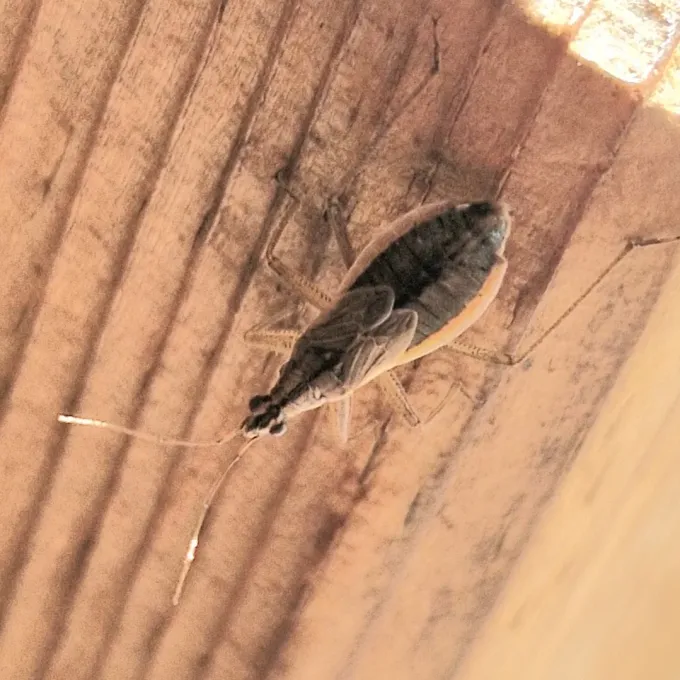
Description
How to identify
Nabis flavomarginatus is a species of damsel bug belonging to the Nabidae family within the order Hemiptera. Adult specimens have an elongated body, typically 8-10 mm in length, characterized by yellowish-brown coloration and a distinctive pale margin along the abdomen and wing covers.
The insect's head features a robust rostrum adapted for piercing prey. They possess well-developed legs, with the front pair adapted for grasping, which allows them to effectively hold onto their target during hunting.
Nymphs are physically similar to adults but lack fully developed wings and appear lighter in color. They progress through several developmental stages, gradually increasing in size and acquiring the dark pigmentation characteristic of the mature species.
These bugs are primarily predatory in nature. It is important to note that in entomology, this species is often classified as a beneficial insect; however, during massive outbreaks or in the absence of primary prey, they may exhibit pest behavior by feeding on tender plant tissues.
Identifying this species requires careful inspection of the underside of leaves and inflorescences, where these bugs prefer to hide from direct sunlight. They are quite mobile and move rapidly to the opposite side of the stem when disturbed.
What it damages
The primary damage caused by Nabis flavomarginatus occurs when natural prey, such as aphids, mites, or small caterpillars, is scarce. Under these conditions, the bugs may switch to plant sap, damaging young tissues of vegetables and field crops.
They pose the greatest risk to young seedlings of sugar beets, cereals, and some legumes. Tissue damage results in the deformation of young leaves, the appearance of necrotic spots, and overall stunted plant development.
The specific feeding mechanism involves injecting enzymes into plant tissues, which leads to localized cell necrosis. If the insect population is high, this can lead to yield losses during the early stages of plant growth.
While this species is more often beneficial by controlling pests like the Colorado potato beetle or leafhoppers, agronomists classify it as a potentially harmful object during periods of prey deficiency. Population monitoring remains a critical management step.
In orchards and berry plantations, these bugs may damage the fruit buds, reducing the market value of the harvest. However, such instances are sporadic and usually associated with a severe imbalance in the local agroecosystem.
When it appears
The activity of Nabis flavomarginatus begins in early spring, as soon as stable positive temperatures are reached. Overwintering adults emerge from hibernation sites, such as leaf litter or plant debris, to begin searching for food.
The population peak usually occurs in mid-summer, coinciding with the development of the second generation. During this period, the population is at its most active and may migrate from wild grasses to cultivated fields.
Reproduction occurs throughout the entire growing season. Females lay eggs directly into plant tissues, typically in stems or leaf petioles, making them difficult to detect during standard field scouting.
In autumn, as temperatures drop and day length decreases, the bugs prepare for diapause. They migrate to sheltered areas where they spend the winter in a state of dormancy, surviving low temperatures until the next season begins.
Understanding these developmental phases helps agronomists plan protection measures effectively, ensuring that interventions are carried out only when the danger to crops is significant, thus avoiding unnecessary harm to beneficial fauna.
Signs of infestation
The first sign of the bug's presence is pinpoint punctures on leaves, surrounded by discolored areas. Unlike fungal diseases, these spots lack a distinct halo and are distributed irregularly across the plant foliage.
Damage to the growth point often results in leaf curling and stem distortion. In young plants, this leads to growth retardation and can trigger excessive tillering, which reduces the crop's yield potential.
The presence of the bugs themselves confirms their impact. Adults and nymphs are usually found during inspection of the leaf undersides or in leaf axils during early morning or late evening hours.
An indirect sign may be a sudden decrease in aphid or other soft-bodied insect populations in a focal area, which may be the result of predation. If prey insects are absent but damage symptoms persist, it indicates the bugs have switched to feeding on the crop.
In advanced cases, secondary infections may occur on damaged sites, as spores of pathogenic fungi and bacteria can enter the plant through the punctures, further exacerbating the condition of the crops.
Control measures
The primary control measure is the strict adherence to crop rotation and the timely removal of weeds, which serve as reservoirs for bug reproduction during the spring. Maintaining clean fields significantly reduces pest numbers.
Chemical control is justified only when the economic threshold is exceeded. The use of selective insecticides is recommended, as these are less harmful to beneficial predatory insects, including Nabis species themselves.
- Spatial isolation of crops from weed-heavy areas.
- Biological control through the encouragement of native predators (e.g., Trichogramma, lacewings).
- Population monitoring using yellow sticky traps.
- Implementation of agronomic practices that enhance plant immunity.
When insecticide application is necessary, preference is given to contact-stomach poisons that are effective against Hemiptera. It is crucial to follow dosage instructions and pre-harvest intervals strictly.
Preserving natural predators is a key element of integrated pest management; therefore, the blanket application of broad-spectrum insecticides is discouraged, as it disrupts ecological balance and can lead to outbreaks of secondary pests.
Taxonomy
- Latin name
- Nabis flavomarginatus
- Order
- Hemiptera (bugs, aphids, leafhoppers)
- Family
- Nabidae
- EPPO code
- NABIFL
Discussion
No discussions yet — be the first.