
Roach's mouse-tailed dormouse
Myomimus roachi
Description
How to identify
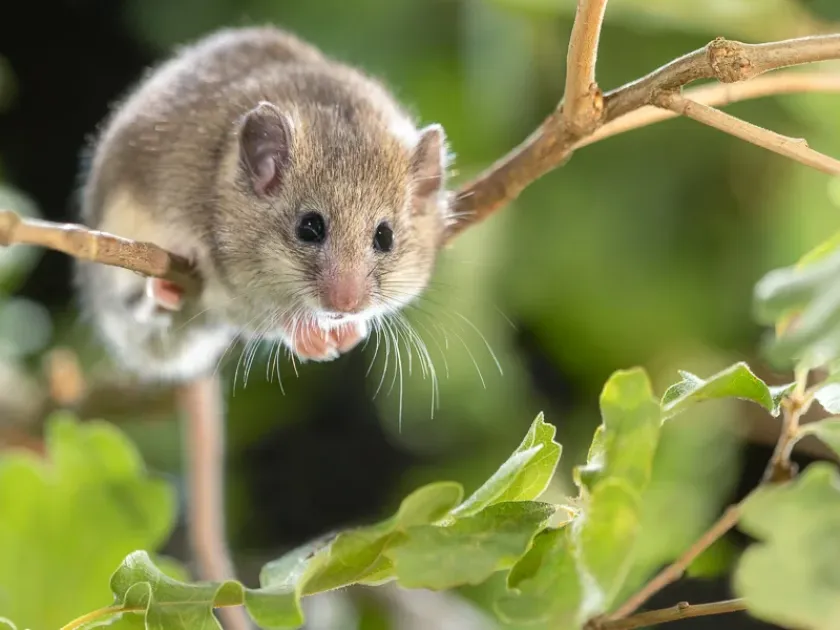
Roach's mouse-tailed dormouse (Myomimus roachi) is a small rodent belonging to the Gliridae family. Visually, it is very similar to a house mouse, but it can be distinguished by its bushy tail and unique dental structure, which is typical for dormice species.
The body length of an adult individual ranges from 8 to 10 centimeters, with a tail that is almost equal to its body length. The coat color ranges from grey to brownish-ochre, allowing the creature to blend in with bark and dry leaves, making it difficult to spot.
This rodent is primarily nocturnal, which explains why it often goes unnoticed by orchard owners. Unlike larger dormice, Roach's mouse-tailed dormouse is extremely agile and proficient at climbing thin fruit tree branches.
While often classified as a rare or protected species in many regions, its high density in certain areas can cause significant agricultural damage. Proper identification is crucial to distinguish it from other voles or mice.
The species prefers habitats such as old orchards, hedgerows, and abandoned structures near agricultural fields. They are sensitive to habitat changes and usually inhabit areas with high biodiversity.
What it damages
The primary damage caused by this species is the consumption of the plant's reproductive organs. During spring, the dormice feed on buds and blossoms, which leads to a substantial reduction in the overall fruit yield for the season.
During the summer months, they shift their diet to ripe fruit of pome and stone crops. They gnaw at the flesh of the fruits, leaving distinct bite marks that render the product unsuitable for storage or fresh market sale.
In addition to the fruit, these dormice can damage the tree itself. By stripping bark from young branches, they weaken the tree and create entry points for fungal infections and bacterial diseases, which can affect long-term tree health.
In vineyards, these rodents cause damage to grape clusters. By feeding on individual grapes, they not only reduce the quantity of the harvest but also encourage the growth of rot and attract other pests like wasps and fruit flies.
- Destruction of flower buds and blossoms in spring.
- Feeding damage on apples, pears, and plums.
- Bark stripping on one-year-old shoots.
- Feeding on grape clusters in vineyards.
When it appears
The active phase of Roach's mouse-tailed dormouse begins in early spring, once temperatures consistently rise above 10-12 degrees Celsius. This is when they emerge from hibernation and begin searching for energy-rich food sources.
The peak activity period aligns with the flowering phase of fruit trees. During this time, they actively consume buds and flowers, which causes the most significant economic loss for commercial orchards.
The summer season is characterized by a focus on ripe fruit consumption. Their activity levels correlate strongly with the ripening stages of various fruit cultivars, making orchard protection necessary throughout the summer.
In autumn, activity typically decreases as the rodents prepare for winter hibernation. During this period, they feed intensively to build up fat reserves, which can lead to increased fruit damage just before the cold weather sets in.
During winter, the species remains in deep hibernation. They select sheltered locations such as hollow trees, rock crevices, or debris in abandoned structures, where they remain dormant until the following spring.
Signs of infestation
The main sign of their presence is the specific damage pattern on fruits. The teeth marks are distinct in size and shape, clearly indicating a rodent and distinguishing them from avian or insect-induced damage.
During inspection, one might find damaged buds that appear cleanly hollowed out. Often, rodent droppings—dark, small, and oblong—can be found near the damaged areas, confirming the presence of the pest.
The discovery of nests is another strong indicator. These are typically compact and built from dry grass, leaves, and small twigs, often located in the crotches of tree branches or hidden within the foliage.
Auditory cues are also helpful. During the evening and night, their movement through the canopy creates a distinct rustling sound, which is noticeably different from the movement of birds.
Using live-capture traps is the most accurate method to confirm the presence of the species. Regularly finding individuals in these traps indicates a high population density that warrants the implementation of protective measures.
Control measures
Control strategies for Roach's mouse-tailed dormouse must prioritize non-lethal methods and ecological balance, given the potential conservation status of the species in certain jurisdictions.
The installation of sticky or physical barrier bands on tree trunks is the most effective mechanical control method. These barriers prevent the rodents from climbing into the canopy to access fruit and buds.
Good agricultural practices are essential for long-term management. This includes regular pruning, cleaning up fallen fruit, and removing old, hollow wood that serves as prime nesting sites for the dormice.
Ultrasonic deterrents may be used to discourage rodents from entering orchards. However, efficacy is often limited as rodents may habituate to the sounds; therefore, devices should be moved periodically to maintain their effectiveness.
Encouraging natural predators such as owls and other raptors is a sustainable way to regulate the population. Installing nest boxes and maintaining high-stem trees can provide habitats for these predators, effectively suppressing the dormouse population.
Taxonomy
- Latin name
- Myomimus roachi
- Order
- Rodents
- Family
- Gliridae
- EPPO code
- MYOMRO
Discussion
No discussions yet — be the first.