
Garden dormouse
Eliomys
Description
How to identify
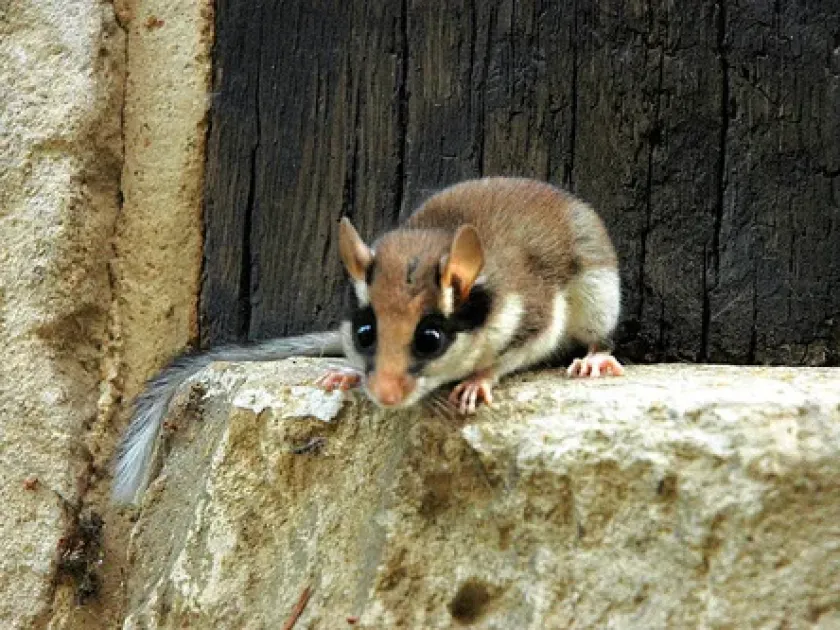
The garden dormouse (Eliomys quercinus) is a small rodent belonging to the Gliridae family. It is easily recognizable by its distinct appearance, which includes a bushy tail ending in a black-and-white tuft.
A key identifying feature is the black mask-like stripe that extends from the nose, across the eye, to the base of the ear, giving the animal a unique appearance.
Adult garden dormice are typically 10 to 15 centimeters long, with a weight ranging from 60 to 120 grams. They possess sharp claws adapted for climbing and agility in tree canopies.
As nocturnal animals, they are rarely seen during the day. They spend daylight hours resting in tree hollows, abandoned bird nests, or crevices in human-made structures.
Although they contribute to the ecosystem as insectivores, they become significant pests in orchards and gardens due to their omnivorous diet and preference for cultivated fruits.
What it damages
The garden dormouse causes economic damage by feeding on ripening fruits and berries. They often target the highest quality, ripest produce, rendering it unfit for harvest.
Their preferred food sources include apples, pears, peaches, plums, and various stone fruits. They are also known to cause extensive damage to vineyards, strawberries, and raspberries.
Beyond feeding on fruits, these rodents can gnaw on the bark of young trees. Such injuries can lead to stunted growth or allow pathogens to enter the plant tissue.
They can also consume flower buds during the spring, which directly impacts the yield potential of the trees for that specific season.
In cases of high population density, a small group of dormice can destroy a significant percentage of a crop within just a few nights, making them a nuisance for orchard owners.
When it appears
The garden dormouse typically emerges from its winter hibernation in April or May, depending on the local climate and temperature trends.
Their activity levels rise in mid-summer and reach a peak in late summer and autumn. During this time, they need to consume large amounts of sugar-rich fruit to build up fat reserves for the winter.
Since they are nocturnal, their peak hours of damage occur between dusk and dawn. This makes monitoring and detection challenging for homeowners who do not check their gardens at night.
As autumn progresses, their focus shifts from feeding to finding secure, dry places for hibernation. This often leads them into sheds, attics, or garages to nest.
The extent of their impact is highly correlated with fruit availability; a productive garden acts as a magnet, ensuring dormice visit the location throughout the entire ripening period.
Signs of infestation
The most common sign of a garden dormouse infestation is the presence of partially eaten fruit still attached to the branches or scattered on the ground.
These bite marks are typically small and precise, corresponding to the size of the rodent's incisors, often leaving distinct grooves in the flesh of the fruit.
You may find "feeding stations" where the animals regularly dine, characterized by piles of shells, pits, and half-eaten berries located in crotches of tree branches.
Nocturnal noises, including rustling in the canopy, faint squeaks, or scratching sounds on the roofs of outbuildings, often indicate their presence and movement patterns.
Droppings found in stored produce, attics, or wooden sheds are strong evidence of a nearby nesting population that is actively utilizing your property for food and shelter.
Control measures
Physical barriers are the most reliable way to protect crops. Wrapping individual fruit clusters or tree branches in protective netting prevents the dormouse from reaching the harvest.
Installing smooth, slippery metal or plastic collars around the trunks of fruit trees can prevent the animals from climbing up to access the canopy.
Regular garden maintenance is essential. Remove dead wood, seal gaps in shed walls, and clean up fallen fruit to reduce attractants and nesting opportunities.
While ultrasonic devices are sometimes used, they have variable success rates, as pests can become accustomed to the sound over time; consistent frequency changes are necessary.
Live trapping and relocation are the most humane methods. Since they are protected species in some European countries, it is crucial to check local regulations before implementing any control measures.
Taxonomy
- Latin name
- Eliomys
- Order
- Rodents
- Family
- Gliridae
- EPPO code
- ELIOSP
Discussion
No discussions yet — be the first.