
Hazel dormouse
Muscardinus avellanarius
Description
How to identify
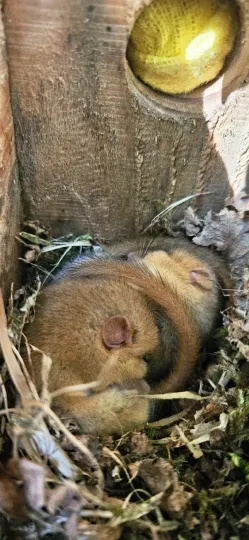
The hazel dormouse (Muscardinus avellanarius) is a small rodent belonging to the Gliridae family, distinguished by its golden-brown fur and a long, furry tail.
Adult dormice typically reach 6–9 centimeters in length and possess large, dark eyes adapted for nocturnal activity, which is a key trait of this species.
They are highly agile creatures, possessing specialized paws that allow them to navigate thin branches with ease, making them expert climbers in gardens and woodlands.
Taxonomically, they occupy a unique niche as arboreal rodents that rely heavily on dense vegetation and canopy cover for their daily survival and nesting.
Due to their elusive nature and habit of moving through the canopy, they often go unnoticed by gardeners until significant damage to the crops becomes visible.
What it damages
The primary agricultural threat involves damage to hazelnut and walnut plantations, as well as various fruit trees like apples and pears.
In early spring, dormice feed on delicate flower buds and young shoots, which can severely impact the tree's development and potential fruit production.
As fruit ripens, these rodents pose a serious risk to the harvest by gnawing into the kernels and flesh, often rendering the produce unfit for market or storage.
Additionally, they may gnaw on the bark of young fruit trees, causing mechanical injury that opens pathways for fungal infections and other plant diseases.
Repeated foraging in commercial orchards can lead to substantial financial losses, as the rodents selectively destroy the most developed and healthy fruits.
When it appears
The activity cycle of the hazel dormouse is strictly seasonal, beginning when they emerge from hibernation in the spring to feed on fresh vegetation.
The period of peak nuisance coincides with the ripening of nuts and fruits from late summer to early autumn, when the animals intensify their feeding to prepare for winter.
Breeding occurs during the summer months, leading to a population surge that puts increased pressure on crops just as they reach their point of maturity.
As temperatures drop in October, the dormice enter a state of deep hibernation, typically within sheltered nests, roots, or holes, remaining dormant until the following year.
Understanding this timeline is essential for farmers, as targeted protection efforts are most effective during the pre-harvest phase in late summer.
Signs of infestation
The most reliable indicator of a dormouse presence is the characteristic hole found in nut shells, which is perfectly round with smooth, polished edges.
Dormice build distinctive spherical nests made of woven dry leaves, grass, and twigs, usually anchored firmly to branches within the dense canopy or thickets.
Gnawed buds and damaged young bark are visible signs of their early-season activity, even when the animals themselves remain hidden from view.
Accumulated shell fragments beneath specific fruit-bearing branches often reveal the rodents' favored feeding stations during the harvest season.
While their small droppings can be found, they are rarely noticed by casual observers, making nest location and shell examination the primary diagnostic tools.
Control measures
Effective management requires a combination of mechanical exclusion methods and cultural practices to minimize access to the fruit and nut supply.
Installing smooth metal bands or collars around the trunks of fruit trees can prevent the rodents from climbing into the canopy to access the ripening fruits.
Prioritizing an early and efficient harvest is one of the best strategies to limit the duration of time that the crop is exposed to foraging dormice.
Encouraging natural predators such as owls through the installation of nest boxes can help maintain ecological balance and keep dormouse numbers in check.
- Clearing surrounding vegetation and thick undergrowth to limit nesting sites near orchards.
- Deploying ultrasonic pest repellers during the vulnerable fruit-ripening phase.
- Removing fallen fruit and debris promptly to avoid attracting rodents to the base of the trees.
Taxonomy
- Latin name
- Muscardinus avellanarius
- Order
- Rodents
- Family
- Gliridae
- EPPO code
- MSCDAV
Discussion
No discussions yet — be the first.