
Edible dormouse
Glis
Description
How to identify
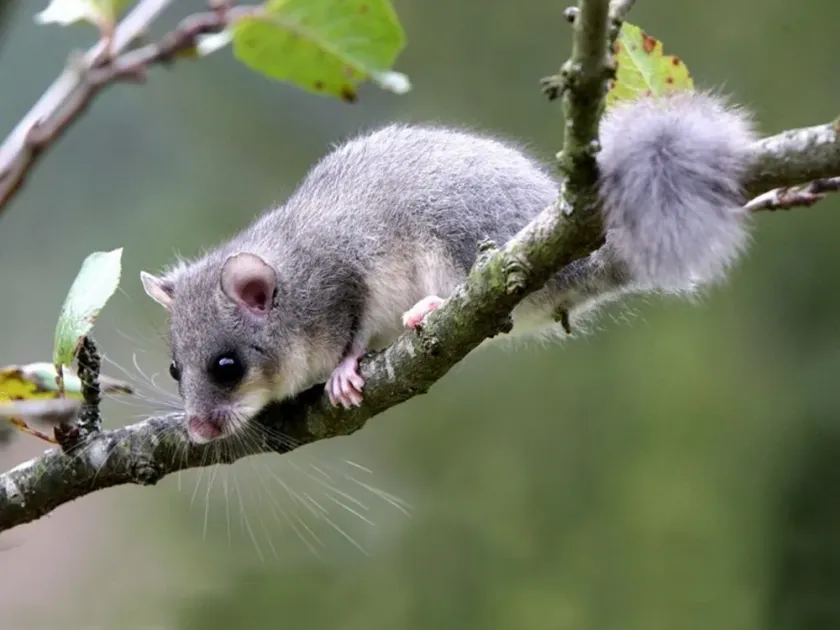
The edible dormouse (Glis glis) is a medium-sized rodent belonging to the Gliridae family, physically resembling a grey-furred squirrel with a bushy tail.
This species is strictly nocturnal, possessing agile limbs and sharp claws adapted for climbing and moving through dense tree canopies with exceptional speed.
Its biological cycle is defined by a long hibernation period, which usually lasts from late autumn to spring, depending on local climatic conditions.
Reproduction occurs once a year, with females typically nesting in tree hollows, bird boxes, or attic spaces, raising a single litter per breeding season.
Though it is an omnivore, its preference for fruit and nuts makes it a notable agricultural pest in managed orchards and domestic fruit gardens.
What it damages
The primary damage is inflicted upon fruit crops, with a specific preference for apples, pears, plums, and various types of hazelnuts and walnuts.
Dormice consume large quantities of ripening fruit, often gouging out the insides and leaving the remaining skin on the branches, causing significant yield losses.
The rodent is also known to strip the bark from young branches, which inhibits nutrient flow and can lead to the necrosis and eventual death of the affected limbs.
Beyond direct feeding, the contamination of fruit with feces and urine renders the remaining produce unmarketable and susceptible to fungal decay.
High population densities can cause severe damage within a single season, particularly in years with low overall crop yield for the orchard trees.
Signs of infestation
The most reliable sign of an infestation is the presence of fruit with deep, tooth-marked cavities or hollowed-out cores still hanging on the tree or lying below.
Finding shells of nuts under trees with distinct, small, circular entry holes is a clear indicator that dormice are feeding in the immediate vicinity.
The discovery of spherical nests constructed from leaves, twigs, and moss in tree hollows or roof voids confirms the presence of an active nest site.
Visible grooves or girdling on the bark of younger trees, caused by the animal's constant need to maintain its teeth, are common in infested orchards.
Characteristic scratching and rustling noises heard in the tree canopy or roof spaces at night are typical indicators of edible dormouse activity.
Control measures
Mechanical protection is highly effective; fitting smooth metal bands around tree trunks prevents dormice from climbing into the canopy to access fruit.
Proper orchard management, including the removal of dead trees with hollows and sealing gaps in buildings, significantly reduces the available nesting sites.
The use of ultrasonic deterrent devices can provide temporary relief, though these must be relocated periodically to prevent the rodents from adapting.
Encouraging natural predators by installing nesting boxes for owls and birds of prey helps to maintain a natural balance and suppress population spikes.
Live trapping is a humane method to remove individuals from a specific area, provided they are released at a sufficient distance from agricultural settings.
Taxonomy
- Latin name
- Glis
- Order
- Rodents
- Family
- Gliridae
- EPPO code
- GLISSP
Discussion
No discussions yet — be the first.