
Edible dormouse
Glis glis
Description
How to identify
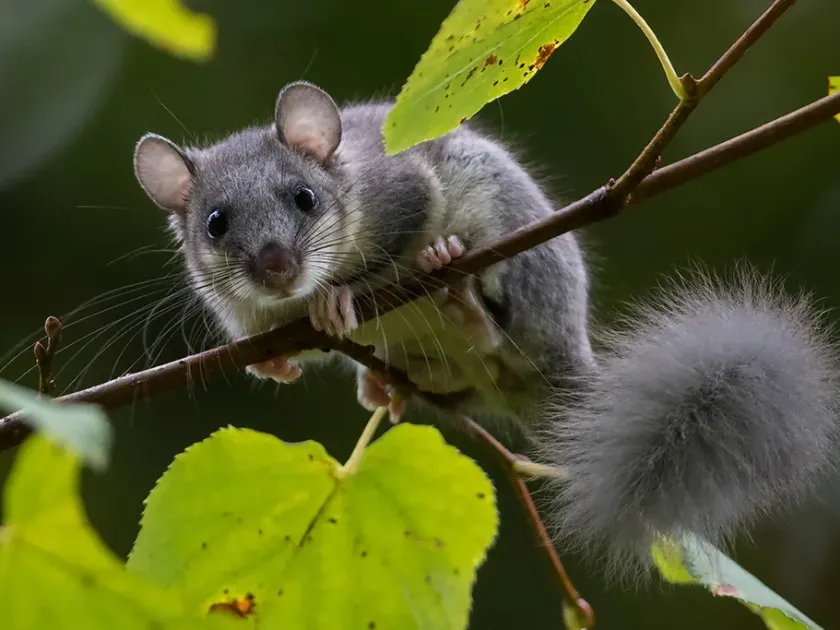
The edible dormouse (Glis glis) is a medium-sized rodent belonging to the Gliridae family, often mistaken for a squirrel due to its size and bushy tail.
Adult specimens measure between 15 to 20 cm in length, with a tail covered in thick fur that is nearly as long as their body, used for balance.
They possess large, dark eyes designed for nocturnal vision and long, sensitive whiskers, which are essential for navigating through dense tree branches at night.
Their fur is generally silver-grey or ash-grey on the back, while the underparts are white, providing effective camouflage against the bark of trees.
These rodents are exceptionally agile climbers, spending most of their active lives in tree canopies, utilizing hollows and dense foliage for shelter.
What it damages
In orchards, the edible dormouse feeds primarily on stone and pome fruits, including apples, pears, plums, and peaches, as well as nuts and berries.
They consume the flesh or seeds of the fruit, often leaving half-eaten pieces behind, which renders the remaining crop unsalable and prone to decay.
In addition to fruit, they can strip the bark from young branches or feed on developing buds, potentially stunting the growth of the trees.
Damage intensity increases during the ripening season when dormice need to accumulate large fat reserves for their long winter hibernation period.
The presence of these rodents often attracts secondary pests and facilitates fungal infections through the open wounds left on damaged fruits.
When it appears
The active season for the edible dormouse typically runs from spring through early autumn, ending when they retreat for hibernation, usually in October.
Peak activity and damage to crops occur in late summer (August), a period of high nutritional demand as the animals prepare for winter sleep.
They are strictly nocturnal animals, spending their days in hidden nesting sites and becoming active only after dusk to forage in orchard canopies.
Breeding usually occurs once per year during the mid-summer season, coinciding with the peak abundance of fruit in the orchard ecosystem.
As temperatures drop, the dormice enter a state of torpor in protected nesting sites, such as tree hollows, burrows, or even attic spaces in buildings.
Signs of infestation
Visible signs of infestation include numerous half-eaten fruits hanging on the branches or scattered on the ground beneath the trees.
Nests constructed from intertwined twigs, leaves, and moss can be found in tree hollows, dense canopy areas, or even man-made structures like bird boxes.
Nocturnal noises, such as scurrying, squeaking, or rustling sounds in the trees or roofs, are common indications of their presence in a garden.
Specific bite marks on the hard shells of nuts, characterized by deep grooves made by their sharp incisors, provide definitive proof of a dormouse presence.
The discovery of discarded fruit remains that have been partially hollowed out is a major indicator of dormouse activity during the harvesting season.
Control measures
Management strategies for the edible dormouse focus on physical exclusion and habitat modification to discourage them from settling in the orchard.
- Installing metal bands or baffles on tree trunks to block climbing access.
- Removing old, hollow trees that provide nesting sites for the rodents.
- Using ultrasonic repellent devices in small orchard areas during ripening.
- Maintaining strict orchard sanitation by clearing up all fallen fruit regularly.
- Sealing all entry points in sheds, barns, or nearby buildings to prevent nesting.
Chemical control is rarely recommended due to risks to non-target species, making non-lethal deterrents the preferred choice for most orchard owners.
Long-term success depends on a combination of regular canopy pruning and landscape maintenance to minimize attractive food sources and nesting environments.
Taxonomy
- Latin name
- Glis glis
- Order
- Rodents
- Family
- Gliridae
- EPPO code
- GLISGL
Discussion
No discussions yet — be the first.