
Forest dormouse
Dryomys nitedula
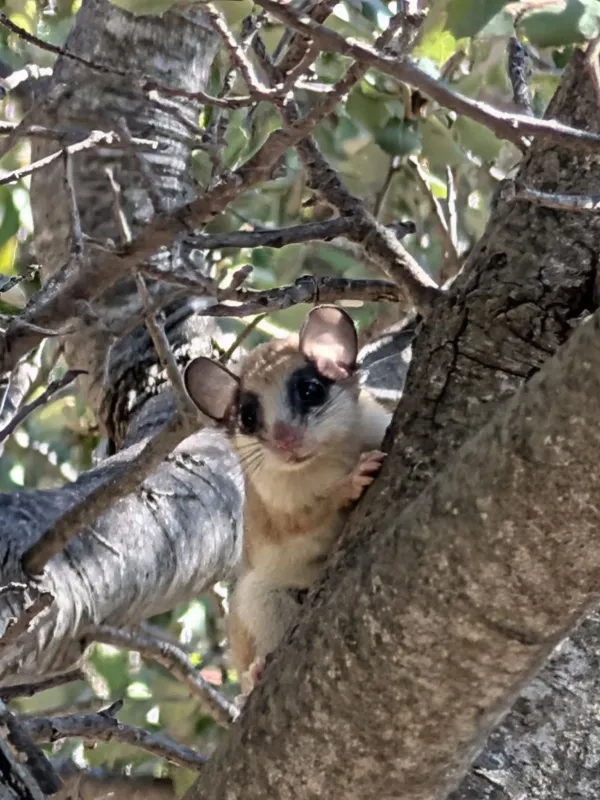
Description
How to identify
The forest dormouse (Dryomys nitedula) is a small rodent belonging to the Gliridae family, known for its agile nature and arboreal habits.
It is easily recognizable by the distinct black stripe running from its nose across the eye to the ear, which resembles a mask.
The body is typically covered in soft, brownish-grey or ochre-toned fur, while the tail is quite bushy and long, assisting with balance while climbing.
As a nocturnal creature, it is highly active at night, utilizing sharp claws and a sensitive sense of touch to navigate branches in the dark.
Although they prefer forests, these dormice frequently migrate into orchards and gardens where high-quality food sources are abundant.
What it damages
Forest dormice become significant pests during the summer and autumn months as they target ripening fruits and berries in residential orchards.
They cause damage to a wide variety of fruit trees, including apples, pears, cherries, plums, and peaches, by consuming the ripening flesh.
A single dormouse can destroy numerous fruits in one night, leaving behind hollowed-out remnants that quickly rot and attract secondary pests.
In addition to fruits, they often gnaw on the bark of young trees and tender shoots, which can stunt tree growth and invite fungal infections.
Vineyards are also at risk, as dormice are known to feed heavily on ripening grape clusters, often leading to substantial yield losses for gardeners.
When it appears
The active season for the forest dormouse begins in spring, usually around April, following their long hibernation period during the colder months.
As summer approaches, they increase their activity, particularly in orchards where they build up fat reserves for the coming winter dormancy.
The peak of their destructive potential occurs from mid-summer through early autumn, coinciding with the harvest cycle of most fruit crops.
Reproductive periods also drive their activity, as adult dormice forage more intensely to provide for their young during the warm months.
By late autumn, as temperatures drop, these rodents retreat to safe nesting spots in trees or buildings to hibernate, ending the period of garden damage.
Signs of infestation
The most common sign of a dormouse infestation is the presence of partially eaten fruits left hanging on branches or scattered on the ground.
Gardeners may find spherical nests made of woven twigs, leaves, and moss tucked away in the forks of dense tree branches or within old tree hollows.
Teeth marks on the surface of damaged fruits are distinctively small and precise, differentiating them from common bird damage or insect feeding.
Fecal droppings found near the base of fruit trees or on wooden garden structures often indicate that a dormouse has been feeding in the vicinity.
Increased movement in the treetops at night, often accompanied by faint scratching or squeaking noises, confirms the presence of these rodents.
Control measures
Installing smooth metal bands or collars around the trunks of fruit trees is one of the most effective ways to prevent dormice from climbing.
Sanitation is key; promptly harvesting ripe fruit and clearing away fallen debris prevents the area from becoming a food hub for rodents.
Sealing off gaps in garden sheds and outbuildings prevents dormice from taking up residence near the food source during the day.
The use of light or ultrasonic repellents can be attempted, though efficacy can vary depending on the specific location and population density.
- Use protective netting over high-value fruit trees.
- Remove excess dense vegetation that provides pathways for climbing.
- Encourage natural predators like owls to reside in the garden.
Taxonomy
- Latin name
- Dryomys nitedula
- Order
- Rodents
- Family
- Gliridae
- EPPO code
- DRYYNI
Discussion
No discussions yet — be the first.