
Forest dormouse
Dryomys
Description
How to identify
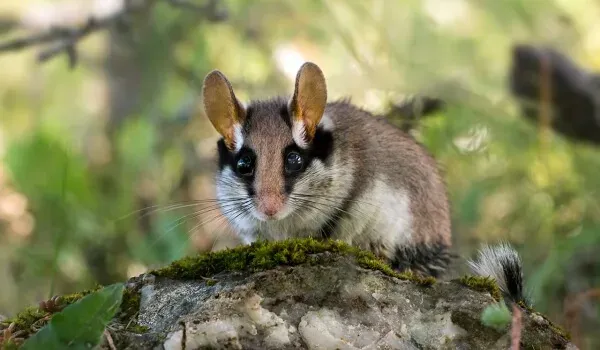
The forest dormouse (Dryomys nitedula) is a small rodent belonging to the Gliridae family, often resembling a cross between a squirrel and a mouse. Adults typically reach a body length of up to 12 cm, featuring a thick, gray-brown or reddish-brown coat and a white underbelly.
Its most distinguishing feature is the dark mask-like stripe that runs from the nose, through the eyes, to the ears. This facial marking makes it easy to identify compared to other small rodents found in European and Asian orchards.
Dormice are primarily arboreal and nocturnal, possessing sharp claws and a bushy tail that aids in balancing while navigating thin branches. They spend most of their active lives in the canopy, making them elusive garden visitors.
Taxonomically, the forest dormouse is part of the Rodentia order and Gliridae family. While they are a natural part of forest ecosystems, they can become significant agricultural pests when their natural habitat is close to cultivated areas.
Population density fluctuates significantly based on the availability of wild nuts and fruits. During years of poor wild harvest, these rodents frequently invade human-cultivated orchards to find sufficient food resources for survival.
What it damages
The primary damage caused by the forest dormouse involves the destruction of fruit and berry crops. They feed on apples, pears, plums, apricots, and grapes, often nibbling on the surface or completely hollowing out the fruits.
Vineyards are particularly susceptible to dormouse activity. By feeding on grapes, they compromise the entire bunch, making the fruit susceptible to rot and secondary fungal infections, rendering the crop unmarketable.
In early spring, dormice may consume buds and flowers, significantly reducing potential yields before the fruit even begins to develop. They may also strip the bark off young shoots, leading to branch dieback.
Beyond crop damage, forest dormice often invade bird nests to eat eggs and chicks. This behavior removes natural pest controllers from the garden, leading to an increase in insect populations that also damage the orchard.
The damage is often underestimated because the animals are nocturnal and shy. Gardeners may only notice the extent of the loss during harvest, finding ruined fruits left on the trees or scattered on the ground.
When it appears
The activity season of the forest dormouse begins after hibernation, typically in April or May, depending on the local climate. As temperatures rise, their metabolic rate increases, prompting the search for food.
The peak period of damage occurs in late summer and early autumn as fruits reach maturity. During August and September, the rodents feed aggressively to build up fat reserves necessary for their long winter hibernation.
Winter hibernation usually begins in October or November. During this time, they retreat to secure nesting sites in tree hollows, cracks, or man-made structures, where they remain in a dormant state until the following spring.
Reproduction typically occurs once a year, usually in June. The need to sustain a litter increases the dormouse's activity level in the orchard, as parents must forage more efficiently to feed their growing offspring.
Weather conditions play a crucial role in their activity patterns. Warm, dry nights are optimal for foraging, while cold, wet weather tends to keep them in their nests, providing temporary relief to the orchard crop.
Signs of infestation
The most reliable sign of dormouse presence is the discovery of partially eaten fruit hanging on the tree or lying on the ground. These fruits often bear distinct, small, parallel tooth marks characteristic of rodent incisors.
Nests constructed of dry leaves, twigs, and moss found in hollow trees or bird boxes indicate a settled population. If a birdhouse is filled with debris and nesting material, it is a strong indicator of dormouse activity.
Girdling or localized bark stripping on young branches is another sign of their presence. This behavior can be particularly harmful to young saplings, as it disrupts nutrient transport and may kill the branch.
Nocturnal sounds, such as soft chirping or scratching in the tree canopy, often accompany their activity. A flashlight used at night can reveal the rodents moving quickly along branches or across fences.
Evidence of droppings in storage areas, sheds, or attics adjacent to the garden also suggests that the dormice are using these structures for shelter during the day or as a base for winter hibernation.
Control measures
Effective control of the forest dormouse focuses on mechanical exclusion. Installing smooth metal bands around the trunks of fruit trees prevents the rodents from climbing into the canopy to access the fruit.
Sanitation is key; pruning trees so that branches do not overhang roofs or touch fences removes the "highways" dormice use to access the garden. Removing old, hollow trees or deadwood eliminates nesting sites.
Securing potential nesting sites such as sheds and storage areas is essential. Sealing gaps and ensuring that buildings are rodent-proof prevents the dormice from establishing a presence near the crop.
While ultrasonic deterrents are sometimes used, the results are often inconsistent as rodents may habituate to the sounds. It is recommended to use them in combination with other physical barriers for better outcomes.
- Regularly collect and remove fallen fruit to reduce attractants.
- Install protective netting over individual vine bunches or small shrubs.
- Promote a habitat for natural predators such as owls and raptors.
- Equip birdhouses with protective doors to prevent nest intrusion.
- Monitor the orchard regularly during the pre-harvest phase for early signs.
Taxonomy
- Latin name
- Dryomys
- Order
- Rodents
- Family
- Gliridae
- EPPO code
- DRYYSP
Discussion
No discussions yet — be the first.