
Munza kuroiwae
Munza kuroiwae
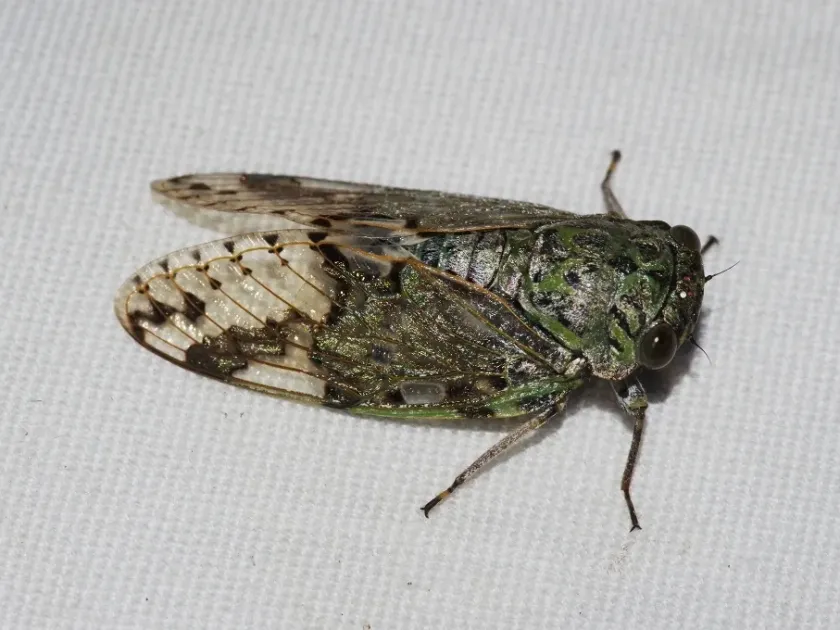
Description
How to identify
Munza kuroiwae is a species belonging to the order Orthoptera and the family Tettigoniidae, commonly known as bush crickets or katydids. The insect exhibits a morphology typical for this family, characterized by well-developed jumping hind legs.
The adult insect has a protective, camouflaging coloration that allows it to blend effectively into the plant foliage. The wings are well-developed, facilitating movement and migration between different crop areas.
Sensory organs, including long antennae, allow the insect to respond quickly to environmental changes. Sexual dimorphism is expressed in the structure of the female ovipositor, which is adapted for laying eggs in plant tissues or soil substrates.
The life cycle includes stages of egg, nymph, and adult. Nymphs resemble miniature versions of the adults but lack functional wings and developed reproductive systems.
During the growth process, nymphs undergo several molts, gradually increasing in size and acquiring characteristics of mature individuals. Development rates depend heavily on environmental temperature and humidity.
What it damages
Munza kuroiwae is a polyphagous pest that damages a wide range of agricultural crops. Both field crops and ornamental plants are at risk of infestation, making it a generalist threat in diverse agroecosystems.
Significant damage is caused by both adults and older nymphs, which actively consume plant foliage. They typically feed on leaves, stems, and reproductive structures such as flower buds and fruit sets.
In high population densities, the pest can cause severe defoliation, which drastically reduces photosynthetic activity and weakens the overall health of the crop plants.
Feeding on reproductive organs leads to direct yield losses and lower quality of agricultural produce. Additionally, mechanical injuries to plant tissues can create entry points for secondary fungal and bacterial pathogens.
Large outbreaks require immediate agronomic intervention, as the pest can rapidly spread across fields, causing irreversible damage to the harvest if not managed properly.
When it appears
The activity of the pest begins in spring with the emergence of nymphs from overwintering eggs. This is a critical period for young seedlings, which are particularly susceptible to damage.
Adult activity peaks during the summer months, which coincide with the most intensive feeding and mating processes. This is when the pest causes the greatest economic impact on crops.
The insect's life cycle is closely linked to local climate conditions. Optimal temperature and humidity levels promote higher metabolic rates, faster development, and increased fecundity.
As autumn approaches, the insects prepare for winter, laying eggs that enter a state of diapause. These eggs remain in the soil or plant debris, ensuring the survival of the species until the next season.
Consistent monitoring of seasonal dynamics is essential for any integrated pest management program, allowing for more accurate forecasting and timely application of control measures.
Signs of infestation
The presence of Munza kuroiwae in crops can be identified by characteristic feeding marks, such as ragged edges on leaves or irregular holes chewed through the leaf blades.
The presence of frass (insect excrement) on the leaf surface or within plant internodes often serves as a secondary indicator of the pest's recent activity.
During evening hours, the presence of males is often revealed by a specific chirping or stridulation sound, which is part of their mating behavior and communication.
During visual inspections, adults are often seen moving quickly into the thick foliage or jumping away when disturbed, making them relatively easy to spot if you know where to look.
- Irregular or ragged chewing marks on leaf margins
- Damage to flowers, buds, and young fruit sets
- Presence of frass in feeding areas
- Characteristic chirping sounds during evenings
- Visual observation of adults during field scouting
Control measures
The foundation of Munza kuroiwae control lies in sound agronomic practices. Proper tillage, including deep autumn plowing, helps to destroy eggs overwintering in the soil, significantly reducing the next season's population.
Maintaining fields free of weeds removes alternative food sources and shelter, making it harder for the pest to survive and reproduce within the crop environment.
Biological control, which includes encouraging natural predators like predatory insects or the use of entomopathogenic fungi, helps maintain the pest population at manageable levels.
Chemical control is applied when the pest population exceeds the economic injury threshold. Rotating insecticides with different modes of action is crucial to prevent the development of resistance.
Regular field scouting using light traps or visual counts allows for the early detection of pest hotspots, enabling targeted treatments that minimize crop loss while protecting beneficial organisms.
Taxonomy
- Latin name
- Munza kuroiwae
- Order
- Hemiptera (bugs, aphids, leafhoppers)
- Family
- Cicadidae
- EPPO code
- PLARKU
Discussion
No discussions yet — be the first.