
Poplar lace bug
Monosteira unicostata
Description
How to identify
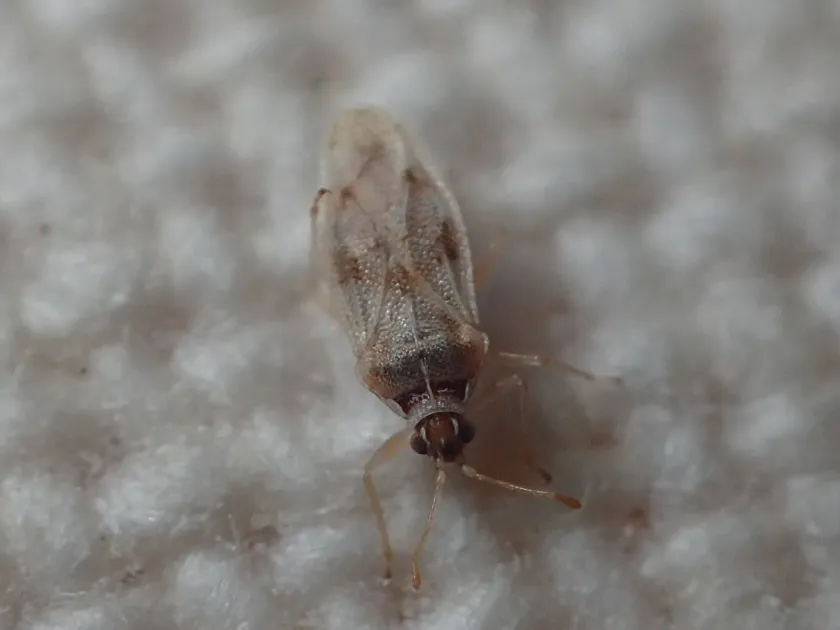
The poplar lace bug (Monosteira unicostata) is a small insect belonging to the Tingidae family. It is known for its intricate, lace-like wing structure, which is the most prominent feature for identification.
The adult bug is approximately 2.5–3.5 mm long. Its coloration ranges from light brown to yellowish, allowing it to blend perfectly with the bark and the undersides of poplar leaves.
The nymphs are smaller, wingless, and often feature small spines. They typically aggregate in large groups on the underside of leaves, where they undergo several molts before reaching the adult stage.
These insects are highly specialized, thriving primarily on various species of poplar (Populus) and willow (Salix). Their life cycle is synchronized with the bud burst and leaf development of host trees.
Eggs are typically inserted into the leaf tissue, usually near the veins. This provides excellent protection against external environmental conditions and natural predators, making control difficult.
What it damages
Monosteira unicostata primarily targets poplars and willows. While mainly a pest of urban forests, it can also affect almond trees and other woody ornamental plants in specific geographical regions.
By feeding on cellular sap, the bugs disrupt the tree's ability to perform photosynthesis. This results in significant physiological stress, weakening the tree over the course of the growing season.
In urban landscapes, severe infestations lead to a loss of aesthetic value as trees appear prematurely browned or scorched. This can necessitate costly interventions or the removal of damaged trees.
Weakened trees become significantly more susceptible to opportunistic pathogens and secondary pests, such as wood-boring beetles, which can cause long-term structural damage to the timber.
For tree nurseries, the presence of the lace bug slows growth, leads to leaf curl, and causes premature defoliation, negatively affecting the commercial quality of the plant material.
When it appears
Adults overwinter in protected sites, such as bark crevices, under fallen leaves, or in debris near the base of the trees. They emerge in spring as soon as temperatures become favorable.
The first generation appears in sync with leaf expansion. The bugs move immediately to the tender foliage to begin feeding, marking the start of the primary infestation period.
Multiple generations occur throughout the summer. The rate of reproduction is temperature-dependent; hotter summers typically result in larger population explosions and more overlapping generations.
Peak activity is usually observed in mid-summer (July and August). During this time, the entire canopy of a host tree can become heavily infested, leading to visible damage patterns across the landscape.
As autumn approaches, the drop in temperature and change in light trigger the adults to seek overwintering sites, effectively ending the active feeding season for that year.
Signs of infestation
The first sign of an infestation is the appearance of chlorotic spots on the upper leaf surface, commonly referred to as stippling. These spots grow and eventually coalesce, covering the entire leaf.
On the underside of the leaf, dark, tar-like spots indicate the presence of bug excrement. These deposits are highly characteristic and are one of the most reliable ways to diagnose an infestation.
Leaves eventually lose their green color, become brittle, curl along the edges, and may drop prematurely. This results in a canopy that looks sparse and dried out long before the natural autumn senescence.
- Stippled or speckled appearance of leaves;
- Presence of dark, lacquer-like waste spots on leaf undersides;
- Wilting, curling, and premature yellowing of foliage;
- Early seasonal leaf fall (defoliation).
Inspecting the underside of lower branches for colonies or signs of excrement is an effective early-warning method to manage populations before they spread across the entire tree crown.
Control measures
Systemic insecticides are the most effective method for controlling the poplar lace bug, as they are absorbed by the plant and kill the pests when they feed on the internal sap.
Timing is crucial; applications should ideally target the first generation of nymphs as they emerge in spring. Proper monitoring of the tree canopy is necessary to determine the optimal application window.
Cultural control includes the removal and destruction of fallen leaves in autumn. Since many adults overwinter in the leaf litter near the tree, this reduces the overwintering success rate.
Biological control agents, including predatory bugs and lacewing larvae, often provide natural suppression. Encouraging these beneficial insects can help reduce reliance on synthetic pesticides.
Integrated Pest Management (IPM) practices should be followed, utilizing pheromone traps for monitoring and prioritizing low-impact treatments to preserve beneficial insect populations in urban settings.
Taxonomy
- Latin name
- Monosteira unicostata
- Order
- Hemiptera (bugs, aphids, leafhoppers)
- Family
- Tingidae
- EPPO code
- MONSUN
Discussion
No discussions yet — be the first.