
Poplar lace bug
Monosteira lobulifera
Description
How to identify
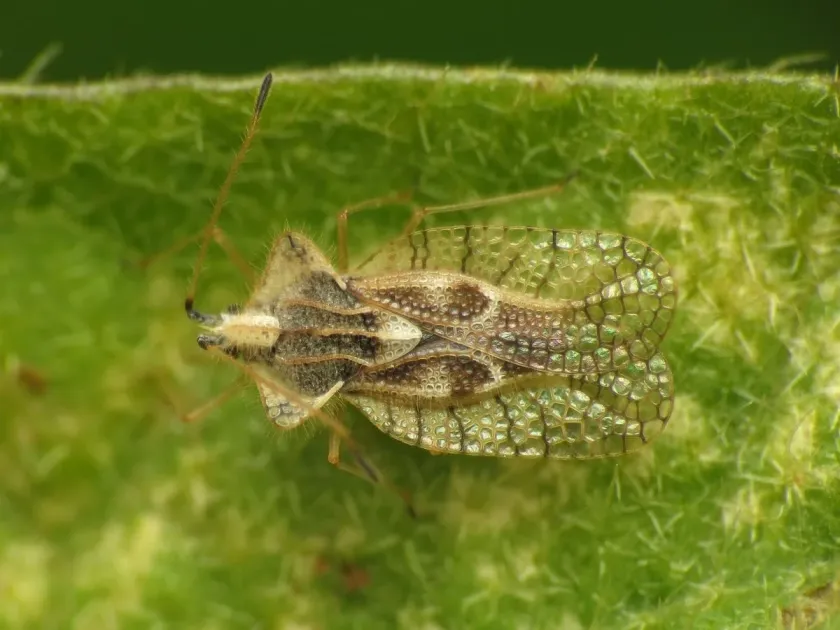
The poplar lace bug (Monosteira lobulifera) is a small insect belonging to the Hemiptera order and the Tingidae family. Adults typically measure between 2 and 3 millimeters in length.
The species is named for its distinctive, intricate wing structure, which features a lace-like pattern of veins that covers the head and thorax, providing a camouflage effect.
The insect undergoes a lifecycle consisting of eggs, nymphs, and adults. Nymphs often resemble smaller, wingless versions of the adults, though they have specialized spines for defense.
Adults are known for their ability to overwinter in protected areas such as tree bark crevices or under layers of dead leaves, ready to emerge as soon as temperatures rise.
Due to their colonial nature, these bugs are usually found in clusters on the undersides of leaves, making them relatively easy to spot upon close inspection.
What it damages
The primary hosts of this pest are poplar trees (Populus species) and willow trees (Salix species), which are frequently targeted for their foliage.
Both adults and nymphs feed by piercing the plant tissue and sucking the sap, which severely depletes the tree's vital nutrients and disrupts its normal development.
Damage symptoms usually manifest as large chlorotic or necrotic spots on leaves, which occur due to the loss of chlorophyll in the bitten areas.
Infested trees often experience a significant decline in growth rates, and in severe cases, the tree may suffer from partial branch dieback or total leaf loss.
For young saplings, high infestation rates can be fatal, making timely pest management crucial for the health and longevity of nursery or urban forest stocks.
When it appears
The active period begins in late spring, generally starting from May, depending on the climatic conditions and the average temperature of the region.
Multiple generations can occur throughout a single growing season, leading to rapid population growth if environmental conditions remain favorable.
Peak feeding activity usually occurs during the warm summer months of July and August, which is when the most visible damage to the foliage is documented.
As autumn approaches, the bugs begin to search for suitable overwintering sites, and their feeding activity gradually declines until it stops entirely.
Warm and dry summers provide an ideal climate for the species, allowing for faster maturation cycles and higher total population counts by the end of the season.
Signs of infestation
A primary visual sign of infestation is the appearance of mottled, white, or yellow speckles on the upper surface of the leaves, which eventually turn brown and crisp.
Upon turning the leaf over, you can identify the presence of the bugs by observing the cluster of nymphs and adults alongside dark, sticky fecal droplets.
Leaves tend to curl and wilt prematurely, leading to an overall thinning of the crown that can be seen even from a distance as the season progresses.
In addition to discoloration, the presence of cast skins from the nymphs left on the leaf surface is a reliable indicator of an active pest infestation.
- Mottled or stippled appearance on leaves.
- Dark, shiny excrement spots on leaf undersides.
- Early leaf senescence and premature drop.
- Wilted or distorted leaf margins.
Control measures
Effective management begins with monitoring, and if the population threshold is reached, the application of systemic insecticides is often required.
Cultural practices, such as removing and destroying fallen leaves in the autumn, can significantly reduce the number of bugs that survive to the next year.
Encouraging natural predators, including predatory bugs and ladybird beetles, can help regulate the lace bug population without the need for intensive chemical use.
Ensuring that trees are well-watered and fertilized can bolster their resilience, allowing them to recover more quickly from potential pest-related stress.
It is important to maintain cleanliness in parks and gardens to prevent the accumulation of debris where these insects could hide during the dormant season.
Taxonomy
- Latin name
- Monosteira lobulifera
- Order
- Hemiptera (bugs, aphids, leafhoppers)
- Family
- Tingidae
- EPPO code
- MONSLO
Discussion
No discussions yet — be the first.