
Poplar lace bug
Monosteira
Description
How to identify
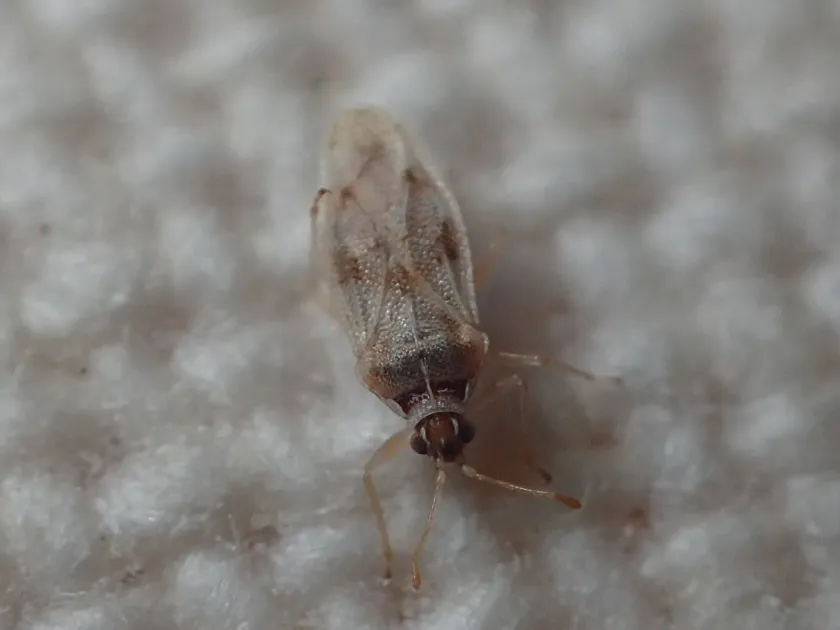
The poplar lace bug (Monosteira unicostata) is a small insect belonging to the order Hemiptera and the family Tingidae, known for their distinct lacy wings.
Adult insects are tiny, usually measuring about 2-3 mm, with a delicate, net-like appearance on their wings and thorax, which helps them blend into the leaf surface.
The eggs of this pest are deposited by females directly into the leaf tissue, usually along the veins, providing protection against predators and environmental conditions.
Nymphs go through several developmental stages, resembling miniature versions of the adults, though they lack fully developed wings during these early life phases.
They are primarily found on the underside of leaves, where they remain in colonies throughout their life cycle, making them difficult to spot without careful inspection.
What it damages
This bug primarily attacks poplar trees (Populus spp.), which are widely used in urban landscaping and forestry plantations.
While poplar is the main host, in cases of high population density, these bugs can also affect willow trees growing in the immediate vicinity.
Both adults and nymphs feed on the sap by piercing the leaf epidermis with their specialized mouthparts, leading to significant cellular damage.
Continuous feeding impairs the tree's photosynthesis, causing stress and reducing its overall vigor, especially in urban environments where trees are already prone to stress.
Severe infestations cause premature leaf yellowing and shedding, which can significantly damage the aesthetic and ecological value of public parks and alleyways.
When it appears
The insects overwinter as adults, finding shelter in the crevices of tree bark or among fallen leaves under the host tree canopy.
Activity resumes in the spring as temperatures rise, matching the timing of tree bud burst and the emergence of fresh, succulent leaves.
The population reaches its peak in mid-summer, as multiple generations are produced in succession throughout the warm season.
By late summer and early autumn, as foliage begins to senesce and temperatures drop, the bugs prepare for hibernation, moving to their overwintering sites.
Climatic conditions, particularly long and hot summers, can significantly increase the number of generations per year, leading to sudden population outbreaks.
Signs of infestation
The initial signs are small, light-colored stippling spots on the upper side of the leaf, caused by the bugs sucking sap from the leaf tissues.
As the infestation progresses, these spots expand, resulting in a mottled or chlorotic appearance, eventually causing the leaves to dry out and turn brown.
Tiny black droplets of frass (insect excrement) are commonly found on the underside of the leaves, serving as a reliable diagnostic feature of their presence.
The undersides of the leaves often host clusters of nymphs and adults, along with cast-off skins (exuviae), indicating active feeding colonies.
- Light-colored stippling on the upper leaf surface.
- Chlorosis and premature browning of leaves.
- Small black excrement spots on the leaf underside.
- Presence of colonies near the central leaf veins.
Control measures
Sanitation is key; collecting and disposing of infested fallen leaves in the autumn is crucial for reducing the overwintering population.
Maintaining healthy tree growth through proper irrigation helps trees withstand the damage caused by these sap-sucking insects.
When chemical intervention is necessary, systemic insecticides applied to the foliage or soil can effectively target the bugs during their active feeding stages.
Contact insecticides should be applied thoroughly to the underside of the leaves to ensure direct coverage of the insect colonies.
Regular monitoring of poplar plantings is recommended to catch infestations early, allowing for targeted treatments that minimize the need for broad-spectrum insecticide use.
Taxonomy
- Latin name
- Monosteira
- Order
- Hemiptera (bugs, aphids, leafhoppers)
- Family
- Tingidae
- EPPO code
- MONSSP
Discussion
No discussions yet — be the first.