
Syrian monacha
Monacha syriaca
Description
How to identify
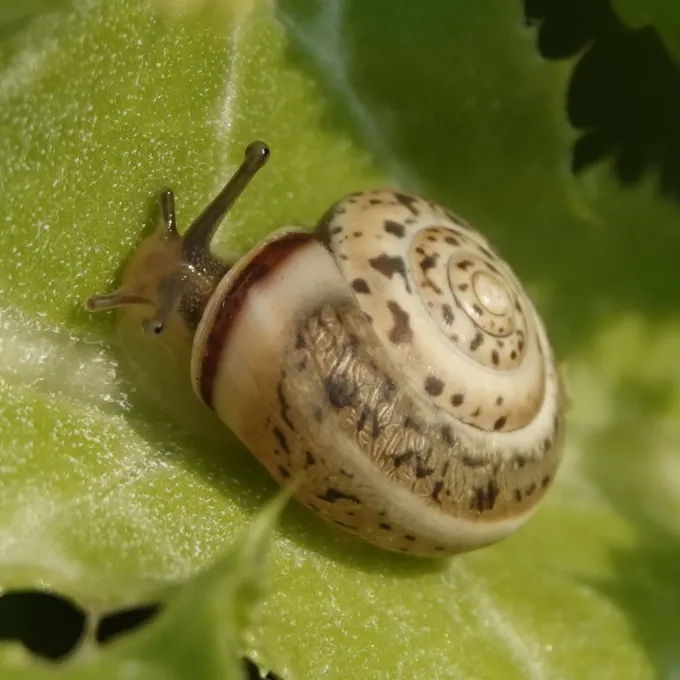
The Syrian monacha (Monacha syriaca) is a terrestrial gastropod mollusk belonging to the family Hygromiidae, within the order Stylommatophora. Their shells are typically globular or cone-shaped, measuring around 10 to 15 millimeters in diameter.
The coloration of the shell ranges from pale yellow to light brown, often featuring a distinct dark spiral band. The body is light-colored and covered in a thick layer of mucus, which is essential for their locomotion and protection against desiccation.
What it damages
This species is a known polyphage, meaning it consumes a wide variety of plants. It frequently attacks cereals, various vegetable crops, legumes, and succulent decorative plants, causing significant economic damage.
In vineyards and orchards, they feed on young foliage and delicate buds. This type of damage can weaken the plants, retard their growth, and in severe cases, result in substantial losses of the total crop yield.
When it appears
The lifecycle and activity patterns of the Syrian monacha are heavily dependent on climatic conditions, primarily air and soil humidity. They are most active during moist spring and autumn periods.
During dry and hot summer weather, these mollusks enter a state of dormancy (estivation). They hide in cracks in the ground, under debris, or deep within dense foliage to protect themselves from high temperatures and lack of moisture.
Signs of infestation
The most common symptom of infestation is the presence of irregular, ragged holes in the leaves. In cases of heavy infestation, the leaves may be completely consumed, leaving only the primary veins behind.
The presence of dried, silvery mucus trails on leaves, stems, and soil surfaces is a clear diagnostic sign. These trails are easily visible and indicate high activity of the mollusk population in the area.
Control measures
Management strategies focus on a combination of cultural practices and chemical control. Keeping fields free of weed growth and plant debris significantly reduces the available hiding spots for the snails.
In situations where manual removal is insufficient, the use of molluscicides containing metaldehyde is recommended. These baits are applied in protected areas of the fields to effectively reduce the snail density during their peak activity periods.
Taxonomy
- Latin name
- Monacha syriaca
- Order
- Molluscs
- Family
- Hygromiidae
- EPPO code
- MNACSY
Discussion
No discussions yet — be the first.