
Monacha cartusiana
Monacha cartusiana
Description
How to identify
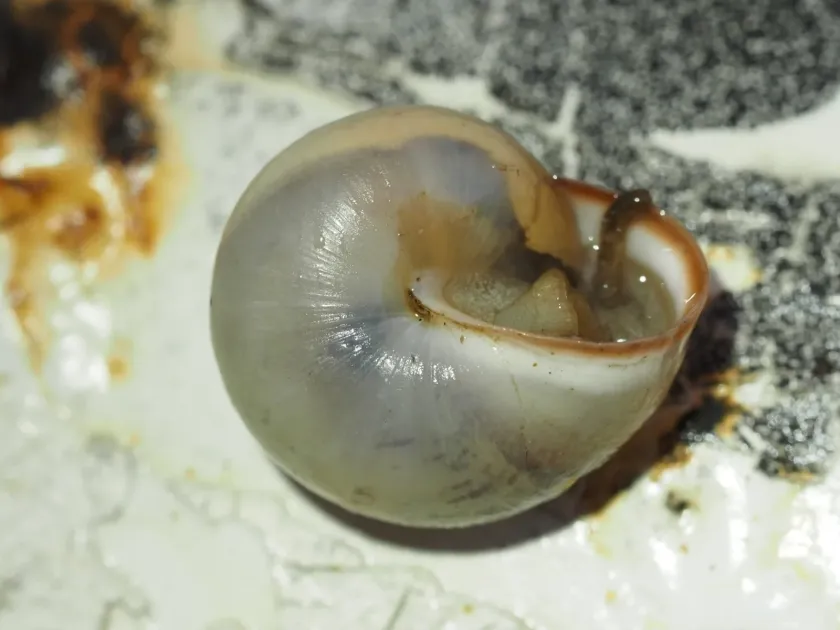
Monacha cartusiana is a terrestrial air-breathing land snail belonging to the family Hygromiidae. The adult shell is hemispherical, measuring approximately 6 to 10 mm in height and up to 15 mm in width. The shell color ranges from whitish to horn-colored, often featuring a distinct thin brown band along the periphery.
The snail's body is typically grayish-brown or whitish, which helps it blend into dry soil environments. Unlike slugs, this species possesses a sturdy shell into which it retreats during unfavorable conditions, such as drought or high heat, significantly enhancing its survival rates.
The life cycle of this mollusk is highly dependent on humidity levels and environmental temperatures. While they prefer moist and temperate conditions, their shell allows them to survive in a broader range of microclimates compared to shell-less gastropods.
Reproduction involves laying eggs in moist soil patches or under dense organic debris. Given favorable conditions, a single individual can produce dozens of eggs, leading to rapid population growth in agricultural settings if left unchecked.
This species is highly adaptable and commonly found in anthropogenic landscapes, including fields, road verges, and garden areas. Its ability to navigate diverse terrains makes it a persistent threat in many agricultural systems.
What it damages
Monacha cartusiana is a polyphagous pest, meaning it feeds on a wide variety of plant species. It poses a significant threat to vegetable crops, winter cereals, legumes, and young seedlings of industrial plants, causing severe economic damage.
The most critical stage of damage occurs during the seedling phase, where snails feed on young leaf tissues and growth points. This results in reduced plant density and, in extreme cases, total destruction of crops at the very beginning of their development.
In addition to foliage, snails feed on reproductive organs, including flower buds and young fruits. Such damage not only impacts the visual quality of the product but also facilitates the entry of secondary pathogens, such as fungal or bacterial rots.
When population densities are high, the impact on crop yield can be devastating. Plants that survive the initial attack often show stunted growth, reduced vigor, and a decreased ability to compete with weeds or withstand environmental stress.
The economic harm is exacerbated by the snail's persistence. In regions where farming practices involve minimal tillage, the population of Monacha cartusiana can accumulate over several years, leading to chronic crop health issues.
When it appears
Activity typically begins in early spring, as temperatures rise and soil moisture becomes sufficient. The snails are primarily nocturnal or active during overcast, rainy weather when the risk of desiccation is minimal.
During summer droughts, the snails become less active. They enter a state of dormancy, sheltering in root zones, under soil clods, or within dense vegetation to conserve moisture, effectively waiting for the next rainfall.
A second peak in activity usually occurs in the autumn. This period is particularly critical for winter crops, as the snails feed aggressively before retreating into their winter hibernation sites.
Hibernation occurs in the upper soil layers or under protected plant debris. Their resilience to cold weather enables this species to overwinter successfully and reappear at the start of the next growing season.
Farmers should conduct regular monitoring, especially after rain, as moisture triggers the snails to emerge from their hiding spots to feed on crops, providing the best opportunity to assess population density.
Signs of infestation
The primary sign of infestation is the appearance of irregular, window-pane-like feeding patterns on leaves, where the epidermis is scraped away while the tougher leaf veins remain untouched.
A tell-tale sign of their presence is the trail of dried, silvery mucus left on leaves, stems, and soil surfaces. These trails are most visible during the early morning hours before evaporation occurs.
Dark, granular excrement pellets located near the base of the plants are also indicative of active feeding sites. During daytime inspections, snails may be found attached to the undersides of leaves or hiding in the dense foliage of the plant crown.
Affected plants often appear weak and show delayed growth. Close examination of the basal part of the plant often reveals scraping marks, which is an early indicator that control measures are required.
Monitoring boards or wet cardboard placed in the field can be used to attract snails. Checking these traps in the morning allows for an accurate estimation of the pest population and the severity of the threat to the crops.
Control measures
Effective management begins with sound agricultural practices. Regular cultivation and weed control are essential, as they eliminate the refugia and egg-laying sites that snails rely on to survive between cropping seasons.
Improving field drainage to reduce local moisture retention can make the environment less favorable for mollusks. Keeping fields clean and free of excessive plant residues is crucial for breaking their lifecycle.
Chemical control involves the use of molluscicides, such as products based on metaldehyde or iron phosphate, when damage thresholds are exceeded. These must be applied according to instructions, ensuring uniform distribution in the areas where snails congregate.
Biological control focuses on supporting natural predators such as ground beetles, hedgehogs, and various bird species. Maintaining an ecological balance in the agrosystem helps keep the population at manageable levels.
Mechanical barriers, such as applying lime or superphosphate around sensitive areas, can discourage snails, as these materials cause irritation and dehydration upon contact, preventing them from accessing the crops.
Taxonomy
- Latin name
- Monacha cartusiana
- Order
- Molluscs
- Family
- Hygromiidae
- EPPO code
- MNACCA
Discussion
No discussions yet — be the first.